The Real Problem: A Federal Exemption Does Not Erase State Obligations
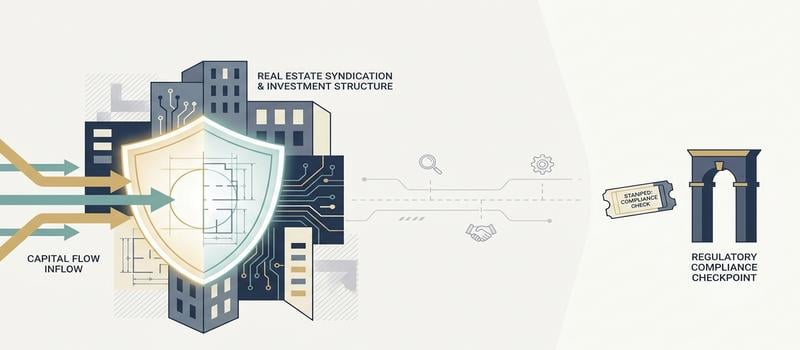
Yes, you still have to deal with the states. Filing your Form D with the SEC handles the federal side of a Rule 506 offering, but it does not clear you in all 50 states. You still owe a notice filing and a fee in every state where an investor lives.
That surprises a lot of sponsors, because “federal exemption” sounds like it should be the end of the conversation. It is not.
The Federal Preemption Myth
The common belief goes like this: once the Form D hits EDGAR, the offering is compliant everywhere. That is not how it works.
Securities in the United States run on a dual-sovereignty system. The SEC has authority, and the states have authority. Rule 506 changes what the states can do, but it does not remove them from the picture.
Here is the practical line. States cannot force you to register a Rule 506 offering with them. They cannot make you go through a state-level review before you sell.
They can, however, require you to tell them the offering is happening in their state. That requirement is a notice filing, and it comes with a fee.
So the preemption is real, but it is narrow. It preempts state registration. It does not preempt state notice and it does not preempt state fees.
What a “Notice Filing” Actually Is
A notice filing is not an application, and the state is not approving your deal. It is an administrative step that puts the state on record that you are selling into its jurisdiction.
In practice, the notice filing is usually just a copy of the federal Form D, a state-specific fee, and a Consent to Service of Process on Form U-2. The Form U-2 is the document where you agree the state can accept legal service on your behalf if there is ever a dispute in that state.
That is the whole thing. You are not asking permission. You are not submitting your PPM for review. You are notifying the state, paying the fee, and consenting to service.
The reason this matters: sponsors who treat the notice filing like a state approval process tend to over-think it, and sponsors who treat the SEC filing as the finish line tend to skip it entirely. Neither is right. It is a fee and a form, but it is a fee and a form you actually have to file.
What “Covered Securities” Actually Means in Plain English
The legal mechanism that stops a state from reviewing your PPM is a classification. Under the National Securities Markets Improvement Act, a Rule 506 offering is a “covered security,” and covered securities are exempt from state registration and merit review.
In plain English, Congress drew a line. It said certain federally regulated offerings do not have to answer to 50 different state securities boards for approval. Rule 506 is on the right side of that line.
That classification is why a state cannot demand to read your Private Placement Memorandum and decide whether your deal is good enough for its residents.
The Shield: National Securities Markets Improvement Act (NSMIA)
Before 1996, raising capital across state lines was a compliance grind. A sponsor selling into ten states had to satisfy ten different sets of rules, and some states actively judged the merits of the deal before letting residents invest.
NSMIA fixed that in 1996 by creating a category called “covered securities.” For anything in that category, states lost the power to require registration or run a merit review. The federal standard controls.
Rule 506 offerings sit squarely inside that category. Equity or debt issued under Rule 506(b) or Rule 506(c) automatically qualifies as a covered security. You do not apply for that status or argue for it – it attaches by operation of the statute the moment you rely on Rule 506.
That is the practical value of using Rule 506 instead of another exemption. You get one uniform federal standard instead of a patchwork.
Preempted Powers vs. Retained State Authority
The clean way to think about this is a split between what states lost and what states kept.
What states cannot do: They cannot demand to read your PPM. They cannot judge the merits of your deal. They cannot force you to register the offering with their state securities board or make you wait for their approval before you sell.
What states can do: They can require a notice filing. They can charge an administrative fee. They can require a Consent to Service of Process. And they retain full authority to investigate and prosecute fraud.
NSMIA preempted state registration. It did not preempt state enforcement. That distinction is the whole game.
So a state cannot second-guess your business plan, but it can still take your money for the filing and come after you if you lie. Treat the notice filing as an administrative obligation you owe, not as permission you are asking for.
Jurisdiction: Where Do You Actually Have to File?
You file based on where your investors live. Not where your LLC is formed, and not where the asset sits.
This trips up a lot of sponsors, so it’s worth being precise. The state notice filing follows your capital, not your entity paperwork and not your property address.
The Investor Residency Rule
Say you form a Wyoming LLC and use it to buy an apartment building in Texas. Your instinct might be that you only owe filings in Wyoming and Texas. That’s wrong.
Wyoming and Texas tell you where your entity lives and where your asset lives. Neither one tells you where your investors live. And your investors are the ones buying securities.
The rule is simple: if you accept money from a resident of a state, you owe that state a notice filing. If an investor lives in California and buys into your deal, you file with California and pay the California fee. It does not matter that the LLC is in Wyoming or the building is in Texas.
So walk your investor list. If you have investors in California, Florida, Ohio, and New York, those are the four states you file in. The entity’s home state and the asset’s location are irrelevant to that list unless an investor happens to live there too.
Fees Are Per-State, Not Per-Investor
The filing and fee are triggered by the first investor from a given state, and the fee is generally a flat, per-state charge.
Here’s how that works in practice. Your first California investor triggers the California notice filing and the California fee. If you then bring in ten more California investors, you generally do not pay the California fee ten more times. One filing covers the offering in that state.
That’s the good news. The fee scales with the number of states you touch, not the number of investors you close.
The flip side matters just as much. If zero investors from a state participate, you do not file there. Do not file in all 50 states “to be safe.” You only file where you actually made a sale.
Filing in states where you have no investors doesn’t buy you protection. It just costs money and creates filings you have to track and, in some states, renew. File where the sales are – no more, no less.
The 15-Day Rule and State Filing Deadlines
In most states, your Blue Sky notice filing and fee are due within 15 days of the first sale to an investor in that state. That is the standard, and it is short. If you are closing investors and not tracking this, you are already behind.
Understanding the “First Sale” Trigger
The clock starts on your first sale in a given state, not on the day you launched the offering.
In practice, “first sale” usually means the moment a resident of that state signs the subscription agreement and you accept their funds. That is the event states care about, because that is when a security was actually sold into their jurisdiction.
Marketing does not start the clock for a Rule 506 offering. Sending a pitch deck, taking a call, or listing the deal on a 506(c) portal does not trigger the notice filing. The obligation attaches when someone in that state actually buys.
That distinction matters because some other exemptions work differently. Under Rule 506, the trigger is the sale, not the solicitation.
The 15-Day Standard and State Anomalies
The 15-day post-sale deadline is the rule you should plan around. Assume the filing and fee are due within 15 days of that first accepted subscription from a state resident, and you will be right most of the time.
But “most of the time” is not “always.” State securities laws are not uniform, and the timing language varies. Some states measure from the first sale, some phrase it differently, and a few have historically taken their own approach to when and how you file.
New York is the usual example of a state that does its own thing. Its treatment of private offerings has changed over the years, and it has not always mapped cleanly onto the standard model everyone else uses.
So verify the deadline in each state at the time of your offering. Do not rely on what was true two years ago, and do not assume the state you filed in last deal works the same way this deal.
How Filings Are Actually Submitted
Most states now take these notice filings through the NASAA Electronic Filing Depository, the EFD system. You upload the Form D, pay the state fee, and submit the state-required documents through one portal.
The EFD covers a large share of states, but not all of them. Some states still require a paper filing or a submission through their own portal outside of the EFD, and a handful have their own quirks in what they want included.
None of this is intellectually hard. It is administrative work that has to be tracked, state by state, against your closing dates. That is exactly where sponsors slip – not because the rule is complicated, but because it competes with everything else happening during a raise.
If you would rather not run this checklist yourself while you are closing capital, this is the kind of thing Form D and Blue Sky filing support exists to handle. The filings get made on time, in the right states, and off your desk.
The Real-World Risks of Missing State Filings
Missing a state notice filing rarely destroys your federal Rule 506 exemption. What it does is hand the state a reason to charge you late fees, issue administrative orders, and look harder at your offering than you want them to.
The good news is that a blown Blue Sky filing is usually a fixable administrative problem, not a fatal one. The bad news is that the fix costs money and attention, and it puts you on a regulator’s radar for no good reason.
Late Fees and Financial Penalties
Many states pull the “date of first sale” straight off your Form D and compare it to the day your notice filing actually arrived. The math is not hard for them to do, and some of them do it automatically.
If the filing shows up on day 16, some states treat you as late and assess a penalty. Ohio, for example, is known for enforcing late fees when the filing arrives after the deadline.
I am not going to list specific dollar amounts, because they change and they vary by state. The point is simpler: the penalty is almost always larger than the original fee would have been, and it is entirely avoidable if you file on time.
State Enforcement and Anti-Fraud Powers
A late fee is annoying. The bigger risk is what happens when non-compliance becomes a pattern.
A state securities board can do more than charge you money. If you repeatedly ignore filings in their jurisdiction, they can issue orders suspending your ability to offer securities to their residents. That is a real problem, because it can follow you into your next deal and it is the kind of thing you have to disclose.
Remember that NSMIA preempted state registration, but it expressly preserved the states’ authority to investigate and prosecute fraud. Sloppy filings do not create fraud, but they draw attention, and attention from a regulator is not where you want to be operating a private offering.
The practical takeaway is to treat Blue Sky filings as part of your closing process, not an afterthought. When you accept a subscription from a new state, that event should trigger a task on your checklist – file the notice, pay the fee, submit the consent to service. If you build it into the closing, you never have to think about day 16.
Blue Sky Laws by State
Select a state or the District of Columbia to review its Blue Sky law notice-filing requirements for Regulation D syndications and funds.

Tilden Moschetti, Esq., is a highly sought-after syndication attorney with nearly two decades of experience. His clientele ranges from real estate developers and startups to established businesses and private equity funds. Tilden’s expertise in syndication law comes not only from his knowledge of syndication and securities law but from real, hands-on experience as an active syndicator himself in every real estate product type and nearly all markets in the US. His knowledge and experience set him apart and established him as the Reg D legal services leader.