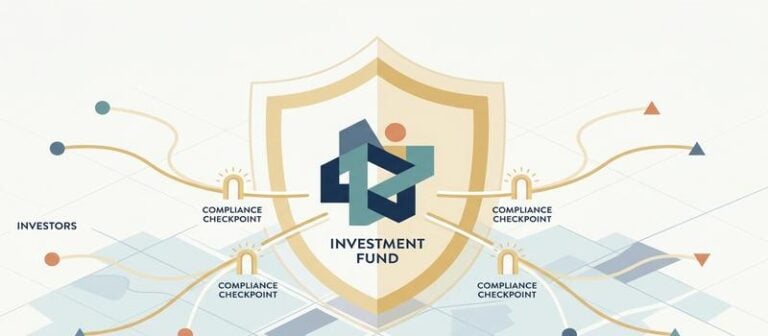

The Federal Overlay: Rule 506 Preemption in Kansas
If you are running a Rule 506 offering and taking money from a Kansas investor, federal preemption does not mean you can ignore Kansas. It means something narrower. Kansas cannot register your securities, cannot second-guess the merits of your deal, and cannot make you clear the offering with a state examiner before you sell. But the state still gets a notice filing, still gets its administrative fee, and still enforces its anti-fraud rules. Preemption is not exemption. That is the whole point of this section.
The mechanism that does this is the National Securities Markets Improvement Act of 1996, usually called NSMIA. NSMIA created a category of “covered securities,” and it took the merit-review power over those securities away from the states. Rule 506 offerings fall inside that category. So when you rely on Rule 506(b) or Rule 506(c), you are selling covered securities, and Kansas is preempted from imposing its own substantive review on top of the federal framework. If you want the longer walk through how the federal and state securities laws interact in a syndication, we cover that here.
What Federal Preemption Actually Means
A Rule 506 offering is not “registered” in Kansas, and you should not describe it that way. There is no state registration, no merit review, and no approval to wait on. Because the securities are covered under NSMIA, Kansas has no authority to demand that you register the offering at the state level the way a purely state-regulated offering would have to. This is true for both flavors of the rule. Rule 506(b), where you do not generally solicit, and Rule 506(c), where you can advertise but every purchaser must be verified accredited, are both preempted offerings. Neither one goes through Kansas registration.
So what does Kansas keep? Three things worth naming clearly.
First, the state keeps the power to require a notice filing. Preemption removed the merit review, but Congress expressly left the states their notice-filing and fee authority for covered securities. That is why a Rule 506 sponsor still has a Kansas obligation – it is a notice filing, not a registration, but it is still mandatory.
Second, the state keeps the power to enforce the timing of that filing. A notice filing you were supposed to make and did not make is still a missed obligation, and Kansas can attach consequences to it. The deadline is real, and I will get into the specific clock and the penalty structure in the sections that follow.
Third, and this is the one people forget, the state keeps its full anti-fraud authority. Preemption never touched fraud. If you mislead a Kansas investor, the fact that you were selling a federally preempted covered security does not shield you from the Kansas Securities Commissioner. The federal overlay covers registration. It does not cover lying.
That is the framework to carry into the rest of this article. Rule 506 buys you out of state registration. It does not buy you out of the notice filing, the deadline, or the anti-fraud rules.
The 15-Day Clock and Mandatory NASAA EFD Filing
The Kansas notice filing is due within 15 days of the first sale to a Kansas resident, and it goes through the NASAA Electronic Filing Depository, the EFD system. That is the whole mechanic. A Form D notice filing, routed through EFD, inside 15 days of the first Kansas sale. Everything else in this section is just making sure you know when the clock starts and where the filing actually goes.
Calculating the 15-Day Deadline
The clock starts on the first sale to a Kansas resident, not when you start marketing. This is the part people get backwards. You can talk to Kansas investors, send them the Private Placement Memorandum, and answer their questions without triggering anything. The 15-day deadline only begins running when a Kansas resident actually buys – when the sale closes.
So the practical trigger is the first accepted subscription from a Kansas investor. Once that happens, you have 15 days to get the notice filing in.
Here is the workflow problem I see. Sponsors treat the notice filing as paperwork they will get to eventually, and then a Kansas investor signs and wires, and the clock is already running while everybody is celebrating the close. If you are raising nationally, assume this is going to happen, and set it up so the filing gets triggered the moment you accept your first Kansas subscriber. Do not wait until the offering is fully subscribed. The deadline attaches to the first Kansas sale, not the last one.
If it were me, I would flag Kansas the same day I accept the subscription and hand it to whoever handles your state filings. Fifteen days sounds like plenty of time. It is not, once you are also closing the deal, funding, and moving on to the next investor.
Using the NASAA EFD Platform
Kansas takes Rule 506 notice filings through the NASAA Electronic Filing Depository. That is the checkpoint. It is where you submit the Form D to the state and pay whatever is due at the state level. If the filing did not go through EFD, from Kansas’s point of view it did not happen.
Understand that there are two Form D events, and they are not the same thing. The federal Form D goes to the SEC through EDGAR. That is your federal filing under Regulation D. The Kansas notice filing is a separate step – you take that same Form D and submit it to Kansas through EFD as the state notice filing. One filing satisfies the SEC. It does not satisfy Kansas. You need both.
Practically, EFD is centralized, which is a good thing for a national raise. You set up an account, upload the Form D, select Kansas, and submit. It is the same platform you will use for other states with notice-filing requirements, so once you are set up, adding Kansas is not a heavy lift. The lift is remembering to do it inside the 15 days.
Kansas Filing Fees, Late Penalties, and the FY26-27 Moratorium
The standard Kansas notice filing fee is $125, but Kansas has suspended that fee for Fiscal Years 2026 and 2027 under a special order. If you are filing during the moratorium period, the $125 state fee does not apply. What does apply, no matter what, is the deadline – and missing it triggers a scaling late fee that runs up to $2,500. So the money story in Kansas right now is simple: the state fee is waived, but the penalty for being late is not.
Because the moratorium is time-limited and its exact calendar boundaries are not something I would state as settled, check the current fee status in EFD before you file. The system shows you what is due at the moment you submit. Do not assume the waiver is still running just because you read about it here.
The FY26 and FY27 Fee Moratorium
Kansas has waived the $125 state notice filing fee for Fiscal Years 2026 and 2027. That is a real savings, but do not let it change your behavior on the filing itself. The waiver is about the fee. It is not about the obligation. You still have to submit the Form D notice filing through EFD, and you still have to do it inside the 15 days. A waived fee on a filing you never made does not help you.
There is also a second charge that the moratorium does not touch. NASAA EFD is a platform, and the platform carries its own system use fee for processing the filing. That fee is separate from the Kansas state fee, it is not part of what Kansas waived, and you pay it to use the system regardless of the state-fee moratorium. So even during the waiver period, expect to pay the EFD system charge when you submit. The state stopped charging its fee. The platform did not stop charging for the platform.
Practically, this means the moratorium lowers your Kansas cost – it does not zero it out, and it does not change a single thing about what you are required to file or when.
Scaling Late Penalties for Missed Deadlines
Miss the 15-day deadline and Kansas attaches a late fee. This is where the real financial risk lives, not in the modest state filing fee.
The late fee is the greater of $250 or 0.05% of the dollar value sold in Kansas, up to a maximum of $2,500. So the floor is $250, the amount scales with how much you actually sold to Kansas investors, and it caps at $2,500. If you sold a small amount in Kansas and filed late, you are looking at the $250 floor. If you sold enough that 0.05% of the Kansas dollars exceeds $250, you pay the higher number, until you hit the $2,500 ceiling.
Run the math and it is obvious why this matters. Nobody wants to pay $2,500 for a filing that would have cost $125 – or nothing during the moratorium – if they had just submitted it on time. And beyond the dollars, a late filing is a self-inflicted administrative black mark on an offering you otherwise ran cleanly. There is no upside to being late. The whole penalty is avoidable by treating the first Kansas sale as the trigger and filing inside the 15 days.
The Legal Foundation: Kansas Exempt Securities Statutes
The retained authority I described earlier – the notice filing, the fee, the anti-fraud enforcement – lives in the Kansas Uniform Securities Act, and three provisions do most of the work: KS ST 17-12a201, 17-12a203, and 17-12a204. One sets the baseline for exempt securities, one gives the Kansas Securities Commissioner room to grant additional waivers, and one preserves the state’s power to take an exemption away and to go after fraud. You do not need to memorize the text. You need to understand what each one lets the state do.
Foundational Framework and Authority to Enforce
KS ST 17-12a201 is the exempt-securities section. In plain English, it is Kansas’s list of what does not have to go through state registration – the securities the legislature already decided are exempt at the state level. This is the statutory home for the state recognizing federal covered securities and treating them through the notice-filing framework rather than through registration. It matters to a Rule 506 sponsor because it is the reason your offering slots into the notice-filing lane instead of the registration lane. The exemption is not something you argue for. It is built into the statute.
KS ST 17-12a203 gives the Commissioner room to move. This is the provision that lets the state grant additional exemptions or waivers beyond the fixed statutory list – administrative flexibility to adjust the framework by order rather than by amending the statute every time. The fee moratorium I discussed sits comfortably in this kind of authority: the state can, by order, change how it applies its own requirements. For a sponsor, the practical point is that Kansas can adjust the mechanics around your filing without the underlying law changing, which is exactly why you check the current status in EFD rather than relying on a fee figure you read somewhere.
KS ST 17-12a204 is the teeth. This is where the state keeps the power to deny, suspend, condition, or revoke an exemption, and to act against fraud. Preemption took away merit review. It did not take away this. If a sponsor abuses an exemption or misleads Kansas investors, this is the provision the Commissioner reaches for. The exemption you are relying on is not a permanent grant you own – it is a status the state can pull if you give it a reason.
Put the three together and you have the full shape of the state’s role. KS ST 17-12a201 says the offering is exempt. KS ST 17-12a203 gives the state flexibility to adjust the terms of that exemption. KS ST 17-12a204 lets the state enforce against you if you misuse it. That is the legal foundation under everything else in this article – the exemption is real, but it is granted, conditioned, and enforced by Kansas, not by you.
Rule 506 vs. Intrastate Offerings in Kansas
Most sponsors choose Rule 506 over a Kansas intrastate exemption because Rule 506 lets them raise money across state lines, and an intrastate exemption does not. That is the whole tradeoff in one sentence. An intrastate offering keeps you inside Kansas – the issuer and every purchaser have to be Kansas residents. Rule 506 lets you take a Kansas investor and a Missouri investor and a Texas investor in the same offering, subject to the notice-filing obligations we have already walked through. If you are raising nationally, or if you even might, the intrastate path boxes you in from the start.
The Limitations of Intrastate Exemptions
An intrastate exemption, such as the framework under SEC Rule 147A, is a genuinely state-bound offering. The idea is that the securities are offered and sold only to residents of one state. That means residency is not a detail – it is the exemption. Get residency wrong and you do not have a technical foul, you have lost the exemption you were relying on.
Here is where it gets dangerous in the real world. Selling to even one out-of-state purchaser can jeopardize the entire intrastate exemption, not just the one sale. This is not like Rule 506, where a national raise is expected and the framework is built to handle investors in multiple states. With an intrastate offering, one out-of-state buyer can unravel the exemption for everybody. That is a lot of risk to carry when your investor pool grows and you cannot always control who shows up wanting in.
And there is a structural point underneath the residency problem. An intrastate offering does not get the NSMIA covered-security treatment. There is no federal preemption sitting over it. The transaction falls entirely under Kansas Blue Sky regulation – state registration or a state exemption, state review where it applies, state rules on how the offering runs. Compare that to Rule 506, where NSMIA preempts the state’s merit review and leaves Kansas with the notice filing and its anti-fraud authority. With Rule 506 you get a national framework and a limited state role. With an intrastate offering you get a state-only reach and the full state regulatory apparatus.
So the choice usually is not close for a sponsor who wants flexibility. Rule 506 gives you national reach without destroying the exemption when an out-of-state investor appears. An intrastate exemption gives you a narrower offering and a residency rule you have to police perfectly. If your business plan involves investors outside Kansas – now or later – Rule 506 is the framework that does not put you in a box.
Working with Out-of-State Securities Counsel for Kansas Capital
You generally do not need a Kansas-licensed attorney to run a Rule 506 offering that happens to include Kansas investors. Rule 506 is a federal framework, and nationwide syndication counsel routinely structures these offerings and coordinates the associated state notice filings. That is the ordinary practice. The caution is at the edges: a purely state-law question or a Kansas dispute is a different animal, and I would not tell you that out-of-state counsel handles everything Kansas-related.
Coordinating Federal and State Compliance
Rule 506 relies on federal exemptions, and that is what makes the out-of-state counsel question mostly a non-issue. When you rely on Rule 506(b) or Rule 506(c), the offering exemption itself comes from federal law – Regulation D under the Securities Act. The structuring work is federal work: setting up the issuer, drafting the Private Placement Memorandum, drafting the Operating Agreement or LPA, building the subscription documents, and making sure the offering fits the rule you are relying on. None of that turns on being admitted in Kansas.
The Kansas notice filing sits on top of that federal structure, and it is administrative. NASAA EFD is a centralized platform, and submitting a Form D as a state notice filing through EFD is a filing task, not a Kansas litigation task. Nationwide counsel handles that coordination as a normal part of running a national raise – you file in Kansas, you file in whatever other states have notice-filing obligations, all through the same system. That is why a firm running Regulation D offerings across the country can take on the Kansas filing without needing local admission for that step.
Where the analysis changes is when the matter stops being a federal Rule 506 offering. A purely intrastate Kansas offering, a dispute with a Kansas investor, an enforcement inquiry from the Kansas Securities Commissioner, or a state-law question specific to Kansas is not the same as structuring a federal offering and coordinating an EFD notice filing. Those situations can call for Kansas counsel or a Kansas-specific analysis, and I would not paper over that. The clean way to think about it: federal Rule 506 structuring and the associated notice filings are handled by nationwide syndication counsel as a matter of routine, and anything that turns into purely Kansas state-law work gets a separate look.
Frequently Asked Questions About Kansas Blue Sky Laws
The questions below are the ones sponsors actually ask after they understand the framework. Short answers, direct, with the qualifications kept in place where they belong.
Does a Rule 506 offering require a Kansas Blue Sky notice filing?
Yes. If you sell to a Kansas resident under Rule 506, Kansas requires a notice filing. Federal preemption under NSMIA removed the state’s power to register your offering and review its merits, but it did not remove the state’s notice-filing authority. Congress left that in place for covered securities on purpose.
So the relationship is this: your Rule 506 offering is a federally exempt, preempted, covered security, and Kansas cannot make you register it – but Kansas can still require you to give notice that you are selling into the state, and it does. A notice filing is not a merit review. Nobody at the state is examining whether your deal is a good one or clearing you to sell. You are telling the state you are here and paying the associated administrative fee. That is the entire nature of the obligation.
Is a Kansas Blue Sky notice filing the same as registering the offering?
No. A notice filing and a registration are two different things, and it matters that you keep them straight.
Registration is what a purely state-regulated offering goes through – the state reviews it, applies its own requirements, and the offering does not proceed at the state level until that process runs. A Rule 506 notice filing has none of that. You submit a Form D through the system, the state records that you are selling into Kansas, and that is it. There is no state review, no approval, and no endorsement. Do not describe your offering as “registered” or “approved” in Kansas, because it is neither, and telling investors otherwise implies a state blessing that does not exist.
What the state does keep, alongside the notice filing, is its anti-fraud authority. Preemption never touched that. The notice filing is administrative; the anti-fraud power is real and it survives.
When is the Kansas notice filing due, and what does it cost?
The filing is due within 15 days of the first sale to a Kansas resident, and it goes through the NASAA Electronic Filing Depository. The clock starts on that first accepted sale, not when you begin marketing.
On cost, the answer needs a qualification. The standard Kansas state notice filing fee is $125, but Kansas has suspended that fee for Fiscal Years 2026 and 2027 under a special order. If you file during the moratorium period, the state fee does not apply. Because a fee waiver like this is time-limited and I would not state its exact calendar boundaries as settled fact, confirm the current fee status in EFD at the moment you file. The system shows you what is actually due when you submit – trust that over anything you read in an article.
One more piece: NASAA EFD carries its own system use fee for processing the filing, and that platform charge is separate from the Kansas state fee. The moratorium waives the state fee. It does not waive the platform charge.
How is a Rule 506 offering different from a purely intrastate Kansas offering?
The practical difference comes down to who you can sell to. An intrastate offering is narrow and residency-dependent – it is built to be offered and sold within one state. Rule 506 is built to raise across state lines.
That makes purchaser residency the pressure point in an intrastate offering. Because the exemption depends on staying in-state, who your purchasers are is not a housekeeping detail; it is central to whether the exemption holds. Rule 506 does not carry that sensitivity. You can take investors across state lines in the same offering, subject to the notice-filing obligations in each state where you sell. So if your investor pool might reach beyond Kansas, Rule 506 gives you room that an intrastate exemption does not.
Can out-of-state securities counsel handle a Kansas Rule 506 notice filing?
Usually, yes, for the federal offering and the associated notice filing. Rule 506 is a federal framework, and nationwide securities counsel routinely structures these offerings and coordinates the state notice filings that go with them – including the Kansas EFD filing. That is the ordinary practice, and it does not depend on being admitted in Kansas.
The line to respect is that a purely state-law matter is different. A Kansas intrastate offering, a dispute with a Kansas investor, or an inquiry from the Kansas Securities Commissioner is not the same as structuring a federal Rule 506 offering and submitting an EFD notice filing, and those situations can call for Kansas counsel or a Kansas-specific look. I would not tell you that state licensing rules can never apply or that local counsel is never needed. The accurate statement is narrower: federal Rule 506 structuring and the related notice filings are routine work for nationwide syndication counsel, and anything that turns into purely Kansas state-law work gets its own analysis.

Tilden Moschetti, Esq., is a highly sought-after syndication attorney with nearly two decades of experience. His clientele ranges from real estate developers and startups to established businesses and private equity funds. Tilden’s expertise in syndication law comes not only from his knowledge of syndication and securities law but from real, hands-on experience as an active syndicator himself in every real estate product type and nearly all markets in the US. His knowledge and experience set him apart and established him as the Reg D legal services leader.