What It Actually Means to Run a Rolling Subscription Cycle
A rolling fund is a fund that admits new investors on a schedule instead of all at once. The sponsor opens the fund, sets recurring windows (quarterly and semi-annual are the common ones), and lets new investors come in during each window rather than requiring everyone to sign and fund at a single initial closing. The structure stays open and keeps taking capital as it comes.
The Mechanics of Scheduled Entry
In a one-time raise, the sponsor sets a target, gathers commitments, holds a closing, and the door shuts. Everybody who’s in is in, and the fund goes to work with the capital it has.
A rolling cycle replaces that single closing with a series of them. Each window is a defined period where a new investor can sign a Subscription Agreement, clear the questionnaire, and wire funds into the issuer. When the window closes, those investors are admitted, and the fund waits for the next one to bring in the next group. Nothing about that requires an investor who missed the first window to wait years for the next fund.
The word “rolling” describes the admission mechanism, not the assets. It doesn’t mean the fund is buying and selling constantly, and it doesn’t mean investors can pull out on the same schedule they came in. It means the sponsor is raising capital continuously through repeated entry points, and the assets underneath run on their own timeline.
Why Sponsors Choose This Architecture
The problem this solves is a timing mismatch. A sponsor with a steady pipeline of acquisitions has deals showing up on their own schedule, and equity has to be there when the deal is. If the sponsor closed a fund a year ago and it’s fully deployed, the next good deal has no capital behind it, and raising a brand-new fund from scratch for that one deal is slow and expensive.
The alternative most sponsors know is the single-purpose entity, one new SPV for each property, each with its own operating agreement, its own PPM, its own set of subscription documents, and its own group of investors to assemble from zero. Do that eight times in two years and you’re running eight separate raises, eight separate cap tables, and eight separate closings. A rolling structure lets one fund keep pulling in equity across those windows so there’s capital available when the next acquisition comes up, without rebuilding the offering every time.
Why Real Estate Rolling Funds Look Nothing Like Venture Capital Rolling Funds
Most people who ask me about rolling funds got the idea from a venture capital platform, where a fund manager opens a new quarterly tranche, a few dozen accredited investors click through, and the money starts backing early-stage startups. That model works fine for what it’s built for. It falls apart when you drop cash-flowing, appreciating real estate into it, because the thing that makes the venture version simple (startups sitting on the books at what you paid for them) is exactly the thing that isn’t true once your fund owns an improving building.
The Software Dashboard Misconception
A rolling fund is a set of legal documents. It’s not a software product, even though the venture platforms have done a good job making it feel like one. The dashboard collects subscriptions, tracks cap tables, and sends the wire instructions, but all it’s doing is administering whatever your Operating Agreement and Subscription Agreement already permit. If the documents don’t allow quarterly admission at an adjusted price, no dashboard is going to create that right for you. The structure comes first, and the software runs on top of it.
The other thing I hear repeated from these platforms is the investor limit, and it’s usually wrong. Some platforms enforce a 97-investor cap and present it like a law of physics. It isn’t. The statutory number under Section 3(c)(1) of the Investment Company Act is 100 beneficial owners for a fund relying on that exclusion, and the 97 is an administrative buffer the platform chose so it doesn’t accidentally trip the real limit through a late signature or a joint subscription. Building your whole offering around another company’s internal cushion instead of the actual statute is how you end up with a structure that doesn’t match your deal. I’d rather work from the 100 and design the buffer myself.
Valuing Startups vs. Appreciating Hard Assets
Venture funds hold illiquid startup paper at cost, sometimes for five or six years, because there’s no clean way to mark it and no market to mark it against. So letting a Quarter 4 investor buy in at roughly the same value as a Quarter 1 investor is generally fine. The seed check the fund wrote in January is still carried at what it cost in January, and the next round hasn’t priced it yet.
Real estate doesn’t behave that way, which is where the venture model breaks. Say the fund buys a property in Quarter 1, puts money into it, and has new leases signed and rent flowing by Quarter 3. That asset is worth more in Quarter 3 than the day you closed, and everybody in the fund knows it, including the appraiser and the lender. If you let a Quarter 3 investor buy units at the Quarter 1 price, you’re handing that investor a slice of value the earlier investors created and paid for. The venture structure never has to solve that problem. A real estate fund has to solve it before every single cycle.
The Valuation Problem: You Cannot Admit Late Investors at Par
The moment your fund deploys capital, the original unit price stops telling the truth. If you keep selling units at that price to new investors, you’re handing them value that belongs to the people who got in first and took the early risk.
The Dilution Trap for Early Cohorts
Say Bob puts in $250,000 in Year 1 and gets 250,000 units at a dollar each. The fund uses his money, along with everyone else’s in that first cohort, to buy a building and improve it. By Year 2 the renovations are done, the leases are signed, and the property that cost the fund $1,000,000 is now worth $1,300,000. Nothing on Bob’s original subscription document changed, but his units are worth more now, because the assets behind each unit are worth more. Then Susan comes along in Year 2 and wants to invest her own $250,000. If you sell her units at the original dollar-per-unit price, she gets 250,000 units, the same as Bob, for the same money. Except her dollars didn’t do any of the work. She wasn’t in the deal when the fund carried the acquisition risk and the construction risk, and she’s now buying into a portfolio where each unit already represents $1.30 of value, not $1.00. So Susan pays a dollar for something worth $1.30, and the extra thirty cents comes out of Bob’s pocket. Multiply that across a whole cohort and you’ve quietly stripped value from every early investor to subsidize the late ones, which is exactly the kind of thing that turns into a securities claim when the early investors figure it out.
That’s a problem you don’t need, and it’s built into the structure unless you price the new money correctly.
Equalization Fees and NAV Adjustments
The fix is to revalue the fund before each new cycle opens. You calculate the net asset value, which is the current value of the assets minus liabilities, divide by the units outstanding, and that gives you the real per-unit price for the incoming cohort. In the Bob and Susan example, Susan buys in at roughly $1.30 a unit, so her $250,000 buys her about 192,000 units instead of 250,000. Now she’s paying fair value, and Bob isn’t subsidizing her.
Some funds handle this through a straight NAV adjustment to the offering price, and some layer in an equalization mechanism, where the late investor effectively pays a premium (or gets debited an interest-like charge) that trues up her position to where she’d be if she’d been in since inception. Which one you use depends on how the Operating Agreement is written and how your administrator wants to keep the books.
Here’s the practical constraint most sponsors underestimate. Revaluing real estate isn’t free and isn’t fast. A real appraisal or a defensible internal valuation costs money and takes time, so the idea of a daily or even monthly NAV, which works fine for a fund holding marketable securities, is wildly impractical for a fund holding a handful of buildings. If it were me, I’d set formal valuation intervals in the document, quarterly or annually, tied to when the subscription windows open, so you’re revaluing on a schedule you can actually afford rather than every time a new investor knocks. Annual is usually enough for a longer-hold strategy; quarterly makes sense if you’re opening windows that often. The point is to pick an interval, write it into the Operating Agreement, and price every new cohort off the most recent valuation rather than off a stale par value that hasn’t been true since Year 1.
Structuring the Operating Agreement for Cohorts
Once you’ve solved the valuation math, the Operating Agreement has to actually record it, and that means the document can’t treat everyone as one undifferentiated pool of investors who all came in on the same day at the same price.
Why You Cannot Lump Everyone Together
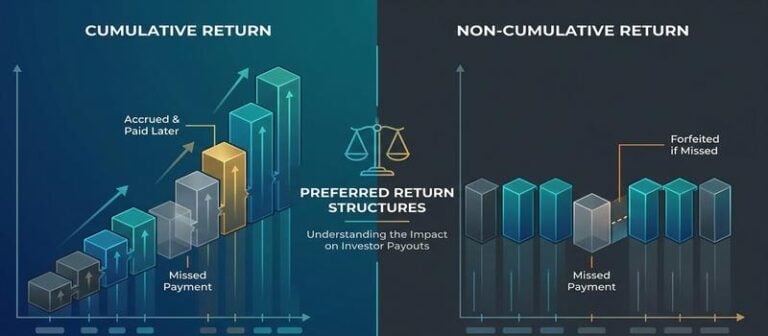
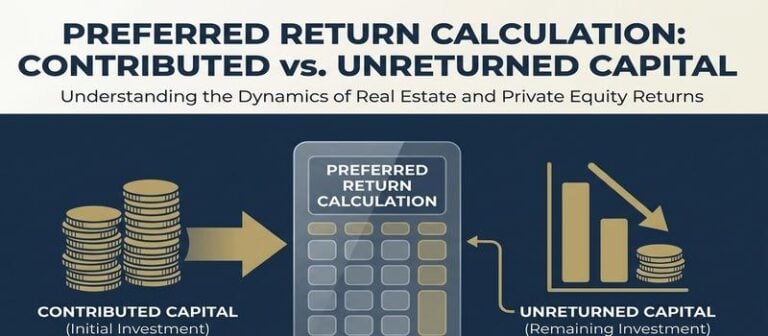
A preferred return starts running when an investor’s capital goes to work, not when the fund happens to close its books at year-end. So if Bob funds in January and Susan funds in October, and they’re both promised a 7% pref, Bob has been accruing that pref for nine months longer than Susan has.
If the document doesn’t keep those two clocks separate, the manager is left trying to reconstruct entry dates and accrual periods by hand every time a distribution goes out, which turns the waterfall into a bookkeeping problem that gets worse with every new cycle. You’ve got some capital that’s owed nine months of pref, some that’s owed one, and a single waterfall trying to pay all of it out of the same distribution. That’s not impossible to calculate, but it’s the kind of thing that produces errors, and errors in a distribution waterfall are the errors investors notice.
Using Distinct Classes or Series
The cleaner approach is to give each cycle its own class of interests. Q1 investors take Class A, Q2 investors take Class B, and so on, with each class carrying its own funding date, its own pref accrual, and its own share price reflecting the NAV at the time that cohort came in. The economics stay attached to the class, so the manager and the accountant are reading off a schedule instead of rebuilding history.
For sponsors who also want to wall off assets and liabilities by cohort, a Series LLC or a series limited partnership can do that, holding each cycle’s deals inside its own series so the risk in one doesn’t bleed into another. Whether that’s worth the added complexity depends entirely on the strategy, because a series structure carries its own administrative and state-law wrinkles, and plenty of rolling funds run perfectly well on plain classes inside a single entity. If it were me, I’d want to see the deal pipeline and the asset mix before deciding, and that’s the sort of mapping that private fund formation legal services exist to work through with you.
Continuous Fundraising Requires Continuous Regulation D Compliance
Yes. A rolling fund raises your disclosure burden, and it keeps raising it for as long as the door stays open.
The Friction of Keeping a PPM Alive
A Private Placement Memorandum describes the fund’s risks as they exist on the day you publish it. The asset list, the leverage, the track record, the market conditions, the specific risk factors, all of it is a snapshot of that moment.
That snapshot is fine for the investors who come in that quarter. The problem shows up later.
Say the fund launches, and over the next two years it buys three properties, refinances one of them, and takes on a new construction loan you didn’t contemplate at launch. The original PPM doesn’t mention any of that. If you hand that same document to Susan when she wires her money in Year 2, you’re describing a fund that no longer exists, and you’re leaving out things a reasonable investor would want to know before buying in. Under Rule 10b-5, an omission of a material fact is just as much of a problem as an affirmative misstatement, so a stale PPM isn’t a paperwork issue, it’s a fraud exposure.
The fix is to keep the disclosure current for each incoming cohort. Most of the time that means issuing PPM supplements before a new subscription cycle opens, updating the asset schedule, the debt, the track record, and any risk factors that have changed, so that the investors coming in under Rule 506 are looking at the fund as it actually stands. You’re not rewriting the whole document every quarter. You’re bolting on what’s changed and making sure the person signing the Subscription Agreement saw it.
The Real Administrative Burden
Rolling cycles are expensive to run. You’re paying for the accounting work behind each quarterly valuation, the legal work to update the disclosures for each cohort, and ongoing fund administration to track everyone’s entry dates and cost basis.
A closed-end fund does most of that once and then goes quiet. A rolling fund does a version of it every cycle, indefinitely. If it were me, I’d want to see the projected annual cost of that maintenance next to the amount of new capital each cycle is realistically going to bring in, because if the friction eats the margin on the new money, you’ve built machinery you don’t need.
The Difference Between Rolling Cycles and a Standard Multiple-Closing Fund
A rolling fund is not just a closed-end fund that leaves the door propped open a little longer. The two structures are built to do different jobs, and the difference shows up in how the capital comes in and when it stops.
Closed-End Funds with a Final Closing Date
The standard private equity model has a beginning and an end that everyone agrees to up front. The sponsor opens the fund, holds an initial closing to bring in the first batch of committed capital, maybe holds a second closing 90 days later to catch the stragglers, and then shuts the door. After the final closing date, no new money comes in. The capital is committed, the sponsor goes and executes the business plan, and the fund runs toward a defined exit, whether that’s selling the portfolio in year five or winding down after the assets are realized.
Everyone in a closed-end fund is investing in roughly the same thing at roughly the same time, which is why the distinction between closed-end and open-end funds matters before you pick a lane. The economics are cleaner because there isn’t a Q7 investor buying into assets that have already appreciated.
A rolling fund flips the timing. The door opens every quarter, on a schedule, to feed capital into a pipeline that keeps producing deals. There’s no final closing date pushing everyone to commit at once. New investors keep arriving as long as the fund is buying, which is the whole reason for all the NAV work and PPM supplements covered above.
Making the Structural Choice
If you don’t actually have a continuous pipeline of deals that need constant equity, don’t build a rolling fund. I mean that plainly. The administrative friction of quarterly valuations, equalization math, class-by-class waterfalls, and PPM supplements will eat your margins for no reason, and you’ll have spent real money building machinery you never needed.
Most sponsors I talk to who ask about rolling structures are really describing a closed-end fund with two closings, and once they see the ongoing accounting and legal cost, they land there anyway. That’s fine. If your model is buy three assets, improve them, and sell in five years, a closed-end fund with an initial and a final closing does everything you need with a fraction of the overhead.
The rolling structure earns its keep when the deal flow genuinely doesn’t stop, when you’re acquiring on a rhythm and would otherwise be spinning up a new SPV every few months just to hold the next property. That’s the sponsor who benefits from paying the friction. The structure should follow the pipeline, not the other way around.