Regulation D Is a Safe Harbor, Not Just a Label
An operating business uses Regulation D by choosing an exemption from SEC registration, filing a Form D, and then building the legal package that actually governs the deal. That last part is where most founders get it wrong. Picking the exemption is the easy step. The exemption alone does not protect you.
Regulation D is the federal rulebook that lets a company raise money without registering the offering with the SEC. Registration means an IPO, and an IPO is functionally off the table for most growing businesses. The cost and ongoing compliance burden are enormous, and you do not need public markets to raise a few million dollars from private investors.
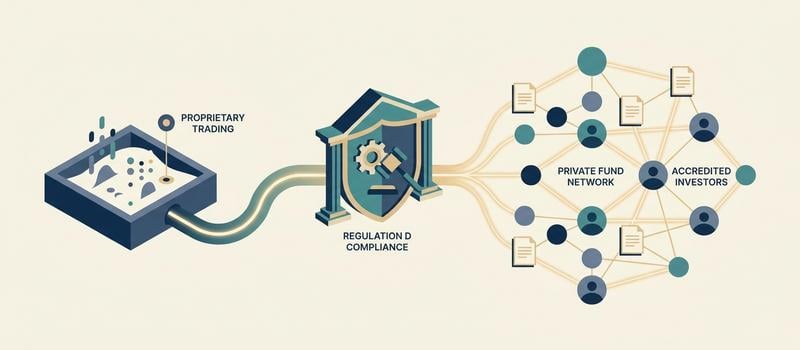
Regulation D works as a safe harbor. If you follow the rule exactly, you get the exemption. That is the practical value of a safe harbor – it is predictable. You are not arguing with a regulator about whether you qualified. You either met the conditions or you did not.
The Function of the Safe Harbor
The safe harbor gets you out of registration. It does not build your deal.
Filing a Form D is the regulatory notice that you are relying on the exemption. It is a short filing. It tells the SEC and the states that you are conducting a private offering under Regulation D.
The Form D does not describe your business risks, define what investors are buying, or set out how you run the company after the money comes in. That is the job of the legal package – the Private Placement Memorandum, the Operating Agreement or LPA, and the subscription documents. Those documents help structure the deal and manage the investor relationship.
So think of it in two layers. Regulation D is the exemption. The PPM and the Operating Agreement are the architecture. You need both.
One more distinction matters here. Raising capital for an active operating business is not the same as raising capital for a blind-pool private equity fund. In a fund, investors are betting on a sponsor and a mandate before the assets exist. In an operating business, investors are buying into a real, identifiable company with actual operations. The exemption rules are similar. The disclosure and governance work is not.
What an Operating Business Capital Raise Actually Looks Like
A typical raise starts with a founder who needs money the bank will not give on good terms.
The founder wants to open a second location, scale the software, or fund inventory and payroll through a growth phase. The number is usually somewhere between $2 million and $10 million. Bank debt is either unavailable or too restrictive, so the founder decides to bring in outside investors.
Those investors take passive stakes. They put in money and expect a return based on how the founder runs the business. They do not manage anything.
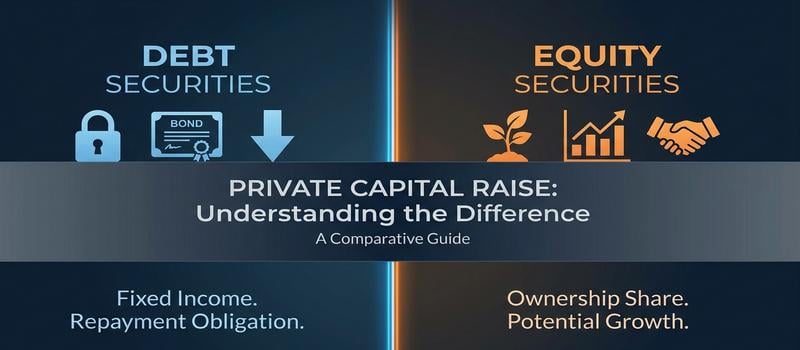
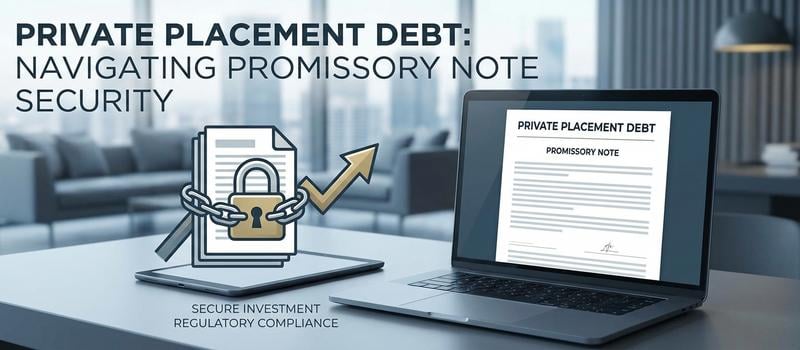
The money flows into the corporate entity – the Issuer. In exchange, the investors receive either equity units in the company or promissory notes if the raise is structured as debt. That exchange is the offering, and that exchange is what Regulation D governs.
The Core Misconception: Why a Simple Contract Is Not Enough
No, you cannot just use a standard business contract to bring in investors. The moment you sell equity or debt to someone who is counting on your work to make them money, you are selling a security. That triggers federal and state securities laws, and it does not matter what you titled the document.
The security is the relationship, not the label. A promissory note can be a security. An LLC membership interest can be a security. Calling it a “loan” or a “partnership” does not change the analysis.
The ‘Handshake’ and ‘Basic LLC’ Trap
Most founders assume securities law is a Wall Street problem, or something that only applies to big real estate syndications. It is not. It applies to the operating company owner raising $2M to open two new locations just as much as it applies to a hedge fund.
Here is where it goes wrong. A founder finds a standard LLC admission agreement online, or downloads a basic promissory note template, signs up three friends and a former colleague, and takes their checks. The paperwork looks clean. The problem is that the paperwork was never the issue.
The test is practical. If the investor is passive and is relying on your efforts to generate the return, you have sold a security. That is the core of the Howey analysis, and it is why the label on the contract does not save you.
Now the consequence. If you sell a security that is neither registered nor exempt, you have handed every investor a rescission right. In plain English, that is a put option. If the business struggles, the investor can demand their money back, plus interest, and unwind the deal.
This is not about the SEC sending a swat team to your office. The real-world risk is a disgruntled investor. When the business underperforms and someone wants out, the first thing their lawyer looks for is whether you followed securities law. If you did not, they now have leverage you gave them for free.
Why Software Platforms Cannot ‘Automate’ Compliance
A digital portal that collects signatures does not make an offering sound. Software can move documents around and track who signed what. It cannot decide what you need to disclose or how to structure investor rights.
Those are judgment calls. What risks are material to this business? How do you handle a future capital need? What happens if an investor wants out? A signature platform does not answer any of that.
And the liability does not sit with the software vendor. It sits with you, the sponsor. If a material fact is omitted from what investors saw, the anti-fraud exposure is yours. The tool helps with delivery. It does not help address disclosure, and it does not support the legal package in any meaningful way.
Rule 506(b) vs. Rule 506(c): The Practical Tradeoff
Rule 506(b) and Rule 506(c) are the two lanes inside Regulation D for finding investors, and they differ on one core point: how you are allowed to find them. Rule 506(b) lets you raise money quietly from people you already know, without strict verification. Rule 506(c) lets you advertise publicly, but it forces you to prove that every single investor is accredited.
Neither one is better. It comes down to how you actually plan to find your investors.
Rule 506(b): The Relationship Lane
Rule 506(b) is the quiet lane. You can raise an unlimited amount, and you can take money from accredited investors and a limited number of sophisticated non-accredited investors.
The catch is that you cannot use general solicitation. No public website advertising the raise. No social media blasts. No cold outreach to people you have never met. If it looks like you are broadcasting the deal to the world, you have a solicitation problem.
To use 506(b), you need a pre-existing substantive relationship with the investor. In plain English, that means you knew the person, and you knew enough about their financial situation, before you pitched them the deal.
Here is where 506(b) gets misunderstood. Under 506(b), you can accept an investor’s self-certification of accredited status, as long as you have a reasonable belief they are accredited.
People hear “self-certification” and assume the checked box does all the work. It does not. Blindly accepting a checkbox from someone you do not really know does not protect you.
The relationship is what supports the reasonable belief. If you have known Susan for eight years, you know she runs a successful business and owns her home free and clear, her checked box means something. If she is a stranger who filled out a form, the box means nothing.
So the relationship is not just a solicitation requirement. It is the thing that lets you rely on self-certification in the first place.
Rule 506(c): The Verification Lane
Rule 506(c) is the advertising lane. You can market the offering freely – website, email, social media, conferences, wherever your investors are.
The tradeoff is absolute. Every single purchaser must be a verified accredited investor. There is no room for non-accredited investors, and there is no room for a checkbox.
The burden shifts from knowing the person to taking reasonable steps to verify their status. In practice, that usually means reviewing tax returns, W-2s, bank and brokerage statements, or getting a written confirmation from the investor’s CPA, attorney, or registered advisor.
That verification requirement creates real sales friction. A high-net-worth investor who has never met you is often not thrilled about handing over two years of tax returns to a founder they just found online. Some will walk rather than do it.
So the choice is not really legal. It is a question about your network. If you already have relationships with people who trust you and could invest, 506(b) is usually the cleaner path. If your investors are strangers you need to reach through marketing, 506(c) is the only lane that lets you advertise – and you accept the verification burden as the price of admission.
You cannot mix the two mid-raise, either. If you start under 506(b) and then decide to advertise, you have likely blown the 506(b) exemption. Pick the lane based on how you actually intend to raise, and commit to it before you say a word to anyone.
Why the Private Placement Memorandum (PPM) Remains Practically Necessary
Founders raising from all-accredited investors often ask whether they really need a PPM. The technical answer is that the SEC may not strictly require one for an all-accredited Rule 506 offering. The practical answer is that you almost always want one, because a PPM is how you address the anti-fraud rules and build a defensible disclosure record.
The Difference Between Exemption Rules and Anti-Fraud Rules
The SEC runs two separate layers, and people confuse them all the time.
The first layer is the exemption. When you rely on Regulation D and file your Form D, you are excused from registering the offering with the SEC. That is what the exemption buys you.
The second layer is anti-fraud, and no exemption touches it. Rule 10b-5 applies to every securities offering, registered or not. It says you cannot make a material misstatement, and you cannot leave out a material fact that an investor would need to make an informed decision.
So qualifying for a Reg D exemption does not mean you are done. It means you skipped registration. You still owe investors full and accurate disclosure of everything that matters.
What the PPM Actually Does for the Sponsor
The PPM is the document that carries your disclosure. It lays out the business, the risks, the market, the competition, the operational hazards, the capital structure, and the terms of what the investor is actually buying.
That does real work for the founder. When you disclose a risk clearly and the investor buys anyway, the risk of that outcome has shifted from you to them. They were told. They signed. They cannot later claim they had no idea the business might fail.
The PPM also acts as the single source of truth for the offering. Founders get excited in pitch meetings and say optimistic things. A pitch deck rounds the numbers up. The PPM sits above all of that and controls what the investor is legally deemed to have been told.
To be clear on the requirement: a formal PPM may not be strictly mandated depending on the exemption you use and your investor mix. Even so, it usually remains central to the disclosure record. It helps structure the legal package, and it supports your defense if the venture struggles and investors start looking for someone to blame.
That last point is the one founders underestimate. Nobody sues when the deal is printing money. The disgruntled investor shows up after a loss, and the first question is always the same: what were you told, and what did they leave out? A well-built PPM is how you answer that question with a document instead of a memory.
The Broker-Dealer Trap: Never Pay a Finder a Percentage
No, you cannot pay someone a percentage of the money they raise for your business unless they are a registered broker-dealer. This is one of the fastest ways to blow up an otherwise clean Regulation D offering, and it usually happens because a founder does not realize the person raising money for them counts as a broker.
The rule is simple. If you pay someone based on how much capital they bring in, you are paying transaction-based compensation. Receiving transaction-based compensation for selling securities is the hallmark of broker-dealer activity. If that person is not registered, the payment is illegal, and the problem lands on you.
The Myth of the “Consulting Fee”
Here is how it usually happens. A founder has a well-connected friend or former colleague who knows a lot of people with money. The friend offers to introduce investors in exchange for 5% of whatever comes in. The founder agrees, and to make it feel clean, they write it up as a “consulting fee” or a “marketing fee” in the contract.
The label does not control the analysis. The SEC and state regulators do not care what you call it. They care whether the payment is tied to the success of the raise.
If the friend gets paid only when money comes in, and gets paid more when more money comes in, that is transaction-based compensation. Calling it consulting does not change what it is. You can flat-fee someone for genuine consulting work that is not tied to the raise, but the moment the payment moves with the capital, you are in broker territory.
The Consequence of Paying an Unlicensed Finder
The consequence is not just that the finder has a problem. The whole offering has a problem.
Using an unregistered broker can taint the entire round. That gives every investor in the offering a potential rescission right – the right to demand their money back. If the business struggles and investors go looking for a way out, this is the thread they pull.
It can also draw regulatory enforcement against both the business and the founder personally. That is the part founders underestimate. This is not an abstract technicality. It is a live exposure that sits over the deal for years.
If you have someone who genuinely wants to help you raise money and get paid for it, the clean answer is to work with a registered broker-dealer, or to structure their role so their compensation is not tied to the capital raised. Do not rely on a creative label to fix it.
Aligning Your Operating Agreement with Outside Capital
Before you take a dime, your Operating Agreement has to define what the investors actually get and what they do not. Outside investors do not fit neatly into a corporate structure that was built for the founders and nobody else.
Most operating businesses start with governance documents that assume everyone in the room is running the company. Passive Reg D investors break that assumption. If you do not update the Operating Agreement, you end up handing outside investors control rights you never intended to give them.
Transitioning to a Manager-Managed Structure
Most small operating businesses start as member-managed LLCs. In a member-managed LLC, every member has a vote and a say in how the business runs. That is fine when the members are the two or three people actually doing the work.
It stops being fine the moment you bring in passive investors. You do not want ten passive Members voting on vendor contracts or hiring decisions. You also have a securities problem if the investors are actively involved, because part of what makes their interest a passive investment is that they are relying on your efforts, not their own.
So the entity shifts to a manager-managed LLC. The founder is the Manager and holds day-to-day operational control. The investors are Members with economic rights – the right to their share of profits and distributions – but no authority to run the business.
That split is the whole point. You raised the money to operate the company. The structure has to let you operate it.
Drafting for Future Business Realities
The Operating Agreement also has to answer the questions that show up 18 months later, not just the ones you have on day one.
Start with dilution and capital calls. If the business needs more money down the road, what happens? Can you raise a second round that dilutes the first investors? Can you call additional capital? Decide this now and write it down, because a capital call is really an investor-sales problem. Investors hate surprise capital calls, and you do not want to be negotiating that term after the check has cleared.
Then handle transfer restrictions. You do not want an investor selling their interest to a competitor, and you do not want so many holders that you accidentally trip into public reporting obligations. The Operating Agreement should give you approval rights over transfers and a clear process for handling them.
Then set the distribution waterfall. Spell out exactly how and when profits get paid – who gets paid first, what any preferred return looks like, and how the split works after that. Vague distribution language is where founders and investors end up fighting.
The takeaway is simple. A Reg D raise is not just getting the check. It is structuring the business so you can actually run it after the money comes in.
The PPM, the Subscription Agreement, and the Operating Agreement are not three separate documents that happen to arrive together. They work as one package. The PPM discloses the deal, the Subscription Agreement brings the investor in, and the Operating Agreement governs how everyone lives together once they are in. Get all three pointing the same direction, and you have the legal architecture the raise actually needs. That is exactly the work behind legal services for businesses raising private capital – not just picking the right exemption, but building the documents that let you run the business after the money comes in.

Tilden Moschetti, Esq., is a highly sought-after syndication attorney with nearly two decades of experience. His clientele ranges from real estate developers and startups to established businesses and private equity funds. Tilden’s expertise in syndication law comes not only from his knowledge of syndication and securities law but from real, hands-on experience as an active syndicator himself in every real estate product type and nearly all markets in the US. His knowledge and experience set him apart and established him as the Reg D legal services leader.