The Choice Between Debt and Equity Dictates the Entire Legal Package
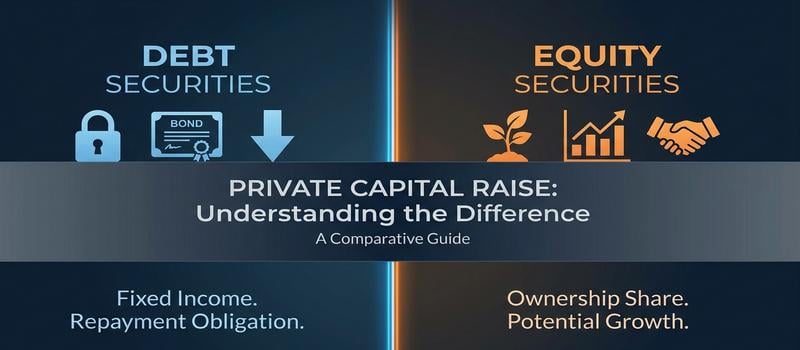
The practical difference between a debt fund and an equity fund is what the investor actually buys. In a debt fund, the investor buys a Promissory Note and becomes a lender to your fund. In an equity fund, the investor buys a Membership Unit and becomes a part-owner of your fund.
That single choice controls everything downstream. It changes the core document the investor signs, the rules that govern your offering, and the specific risks you have to disclose in the Private Placement Memorandum.
So this is not a marketing decision, even though sponsors often treat it that way. Deciding whether to “sell notes” or “sell equity” is deciding what legal machine you are building, and the two machines do not share parts.
The Underlying Asset Profile Controls the Structure
The structure should follow the math of the asset, not what you think investors want to buy.
If the asset throws off predictable, fixed cash flow, a debt structure usually fits. You can promise a fixed interest rate and a maturity date because the cash is there to support it.
If the return depends on appreciation, a sale event, or variable operating upside, you need equity. You cannot promise fixed payments on cash flow that does not show up on a schedule.
The failure mode is forcing variable cash flow into a fixed debt obligation. You promise a note payment, the asset has a slow quarter, and now you are in default on your own fund. That is not a market problem you can explain away. It is a contract you signed and cannot pay.
Two Completely Different Legal Frameworks
Debt and equity create two different legal relationships between the sponsor and the investor.
Equity makes the investor a part-owner of the fund entity. They share in the upside, they absorb their share of the losses, and their return comes out of whatever the fund actually distributes. The Operating Agreement or LPA defines what they get and when.
Debt makes the investor a lender. They hold a contractual right to be repaid principal plus interest on set terms, and they do not get operational control or a share of the upside. They are owed a number, not a piece of the business.
Those are not two flavors of the same deal. They are different obligations, and they need different documents to work.
The Core Instrument: Promissory Notes vs. Membership Units
Investors in an equity fund buy membership units in the fund entity. Investors in a debt fund buy a promissory note from the fund entity. Those are two different instruments, and they create two different legal relationships.
The instrument dictates the paperwork. Units mean an Operating Agreement and a Subscription Agreement. Notes mean a Note Purchase Agreement and the note itself. You cannot swap one set of documents for the other and expect it to hold.
Buying Ownership Through Membership Units
In an equity offering, the investor signs a Subscription Agreement to purchase units in the LLC or LP. That signature makes them a partial owner of the fund.
The Operating Agreement (or the LPA in a limited partnership) controls the relationship after they are in. It sets out voting rights, manager discretion, and whatever capital call mechanics you decide to include. This is where the sponsor’s authority to run the fund actually lives.
The economics run through a distribution waterfall based on available cash flow. A typical waterfall might return capital first, then pay a preferred return, then split the remainder between the investors and the sponsor’s promote or carried interest. The point is that these payments follow the deal terms and the cash the fund actually generates. If there is no cash, there is nothing to distribute.
That is the tradeoff an equity investor accepts. They share in the upside, and they share in the downside.
Buying Contractual Rights Through Promissory Notes
In a debt offering, the investor signs a Note Purchase Agreement and receives a promissory note. They are not an owner. They are a lender, and the note is the contract that spells out what the fund owes them.
The note states the principal amount, the interest rate, how interest accrues, and the maturity date. Those terms are a fixed obligation, not a share of profits. The fund owes the money whether or not the fund had a good year.
There is no waterfall and no promote on the note side. If the fund misses a scheduled payment, it is in default under the note. That default triggers whatever remedies you wrote into the note and the Note Purchase Agreement.
This is the practical difference that trips sponsors up. Equity payments depend on cash flow and priority. Note payments are a hard promise. When you draft a debt fund, you are writing a repayment obligation, not a profit-sharing arrangement, and the documents have to reflect that from the first page.
Issuing Promissory Notes Does Not Bypass Securities Laws
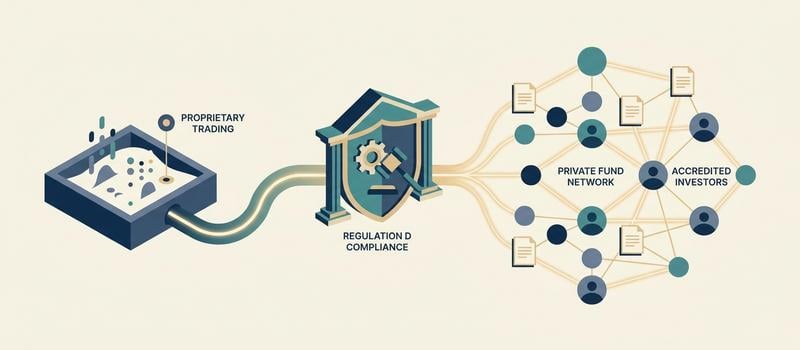
A lot of sponsors assume that if they are borrowing money instead of selling ownership, they are outside securities law. That is wrong. Under the SEC’s Reves test, when you pool capital from passive investors by issuing promissory notes, you are generally selling securities, and you have to run the offering under Regulation D just like an equity fund.
The label on the instrument does not control. The economic reality does.
The Reves Test in Plain English
The Reves test comes from a Supreme Court case, but you do not need the case law to understand the practical rule. A note is presumed to be a security, and the SEC applies a set of factors to decide whether that presumption holds.
Here is what it comes down to. If you are selling notes to a broad group of passive individuals to raise capital for an enterprise, the SEC treats those notes as securities. The investor is not making a business loan on negotiated terms – they are buying an investment product because they expect a return.
A commercial bank loan is different. When a bank lends to your fund, that is a negotiated, arms-length transaction between sophisticated parties, and it is not a security. The moment you turn to a pool of investors and offer them notes to fund your lending business, you are on the securities side of the line.
So no, calling it a “loan” does not get you out of anything.
Applying Regulation D to the Debt Fund
Once the notes are securities, the debt fund follows the same exemption path as any other private offering. You have to either register or find an exemption, and in practice that means Rule 506(b) or Rule 506(c).
The mechanics do not change because you are issuing debt. If you use Rule 506(b), you cannot generally solicit, and you have to respect the same limits on how you find and communicate with investors. If you use Rule 506(c), you can advertise, but every purchaser must be accredited and you must take reasonable steps to verify it. Either way, the fund files a Form D.
The takeaway is simple. A debt fund is a Reg D offering. Treating it as an unregulated lending arrangement is the fastest way to turn a note program into a securities problem you did not need.
The Vocabulary Boundary: Keep Equity Terms Out of Debt Documents
No, you cannot offer a “preferred return” in a debt fund. If you are issuing notes, you are paying interest, and the words in your documents need to match that.
This sounds like nitpicking. It is not. Mixing equity language into a debt deal creates structural ambiguity that a court or the IRS can use against you, and it can undo the tax treatment and payment priority your investors thought they were getting.
The rule is simple: debt documents use debt words. Do not borrow language from your equity template because it sounds familiar.
Interest vs. Preferred Returns
A preferred return and interest are not the same thing, even though both describe money going to the investor.
A preferred return is an equity concept. It sets a priority of payment out of available cash flow. The investor is an owner, and the preferred return tells you who gets paid first before the promote or common equity sees anything. If there is no cash, there is no preferred return, and nobody has breached anything.
Interest is a debt concept. It is a fixed, legally binding obligation to pay a set rate regardless of profitability. If the fund does not pay interest when it is due, the fund is in default. That is the whole point of a note.
So do not write “preferred return” when what you actually mean is a fixed interest rate on a promissory note. The two words carry different legal consequences. One describes a priority in a waterfall; the other describes a debt the fund owes no matter what.
The same goes for “promote” and “carried interest.” Those are equity concepts describing the sponsor’s share of upside after investors are paid. A noteholder has no upside to share. They get principal and interest, and that is it.
The Danger of IRS and Legal Reclassification
Sloppy vocabulary creates a real risk: the IRS or a bankruptcy court can look at your documents and decide your “debt” is actually equity.
If a note calls the sponsor’s payment a “promote,” or ties the noteholder’s return to a “waterfall,” you have told the world this is not a straight loan. You have described participation in the venture’s profits. That is the fingerprint of equity, not debt.
When that reclassification happens, two things break at once.
First, the tax treatment changes. Interest is ordinary income, and the fund can generally deduct it. If the note gets recharacterized as equity, that deduction can disappear, and the investor’s expected treatment shifts. Nobody signed up for that surprise.
Second, the liquidation priority breaks. A lender sits ahead of equity when the fund runs into trouble. If a court decides your noteholder is really an equity owner, that investor drops down the priority ladder at the exact moment it matters most. The protection they thought they bought is gone.
None of this comes from a bad deal. It comes from bad drafting. Keep the equity vocabulary out of the debt documents, and you avoid handing anyone the argument.
How Your Private Placement Memorandum Disclosures Must Shift
The Private Placement Memorandum for a debt fund is not the same document as the one you use for an equity fund. The risks are different, so the disclosures are different.
An equity PPM spends most of its risk section on asset performance and business execution. Will the portfolio appreciate? Will the operating company hit its numbers? Will the manager execute the plan? Those are the risks equity investors are actually taking.
A debt PPM points somewhere else. The main risk to a noteholder is not that the assets underperform their upside case. It is that the fund does not have the cash to pay the note when it comes due.
Disclosing Default Risk in Debt Funds
The core risk to your noteholders is that the borrowers you lend to stop paying.
Your fund borrows money from investors and lends it out. If those underlying borrowers default, the fund’s cash flow dries up, and the note payments you owe your investors are now at risk. That chain has to be spelled out in the PPM in plain terms.
The PPM should explain what you actually do when a borrower stop paying. Do you foreclose? Do you negotiate a workout? Do you extend the loan? Investors need to understand your process, because your process determines how long their money is tied up when something goes wrong.
You also need to address interest rate movement. If your fund borrows short and lends long, or lends at fixed rates while your own cost of capital floats, that mismatch is a risk the PPM has to name.
Most importantly, the PPM must say what happens to the investor’s fixed return if the cash is not there. A note promises a fixed rate. It does not promise that the fund will always have the money to pay it. Say so directly.
The ‘Guaranteed Return’ Trap
Do not describe a debt fund return as guaranteed. That is the fastest way to create a fraud problem you do not need.
Sponsors like to pitch debt funds as the “safe” option because the interest rate is fixed. The rate is fixed. The payment is not guaranteed. Those are two different things, and the difference is where sponsors get into trouble.
A fixed rate means the amount owed per dollar is set by the note. It does not mean the fund will have the dollars to pay it. If the borrowers default and the cash stops, the note is in default too, no matter how “fixed” the rate looked in the pitch deck.
Calling that return guaranteed, or promising it is safe, runs straight into the SEC anti-fraud rules. Those rules apply to every Regulation D offering, whether you use Rule 506(b) or Rule 506(c), and they do not care what you called the investment.
The clean way to say it is that the fund targets a specific yield, then discloses that the yield remains subject to borrower default and market conditions. That framing is accurate, it protects you, and it still tells the investor what you are trying to deliver. Getting this right is the core of what legal services for private lending and debt funds actually do – build the disclosure language around the real risk a noteholder is taking, not the risk profile of an equity deal wearing different labels.
The Structural Cleanse: Why Repurposing Equity Templates Fails
The last mistake I see is the cheapest one to make and the most expensive one to fix. A sponsor has an old equity syndication package from a prior deal, and they want to edit it into a debt fund to save time and money.
No. That does not work. A debt fund is not an equity deal with different labels. It is a different legal instrument governed by different mechanics, and the documents have to be built for that from the start.
Scrubbing the DNA of Ownership
The find-and-replace approach fails because ownership language is baked into every provision of an equity document, not just the parts that use the word “unit.”
Here is what happens. A sponsor opens the old Operating Agreement, crosses out “Unit” and writes in “Note,” changes “Member” to “Noteholder,” and thinks the job is done.
It is not. That document still contains a distribution waterfall, manager removal rights, capital call provisions, reinvestment plans, and a dozen other rights that only make sense for an owner. A noteholder does not own the fund. They lent it money and expect fixed repayment.
Now you have a document that promises a noteholder a fixed interest rate in one section and drops them into an equity waterfall in another. When there is a dispute, nobody can tell what the investor actually bought. That is a broken legal package, and it is the kind of ambiguity that a court or the IRS uses to reclassify the whole arrangement.
Building the Right Legal Architecture
A debt fund has to be built from the ground up around the note. That means a Note Purchase Agreement that governs how the investor acquires the note, a PPM written around borrower default and lending risk, and precise definitions for the interest rate, accrual period, and maturity date.
You also need real default consequences spelled out – what happens when the fund misses a payment, and what remedies the noteholder actually has. Those provisions do not exist in an equity template because equity investors do not have a right to strict repayment.
Get the foundation right and the fund runs the way you designed it. The note says what the investor is owed, the PPM discloses the real risks, and the repayment mechanics do the work. That is what lets you operate the fund without fighting your own paperwork later.

Tilden Moschetti, Esq., is a highly sought-after syndication attorney with nearly two decades of experience. His clientele ranges from real estate developers and startups to established businesses and private equity funds. Tilden’s expertise in syndication law comes not only from his knowledge of syndication and securities law but from real, hands-on experience as an active syndicator himself in every real estate product type and nearly all markets in the US. His knowledge and experience set him apart and established him as the Reg D legal services leader.