The Wisconsin Filing Snapshot for Rule 506 Offerings
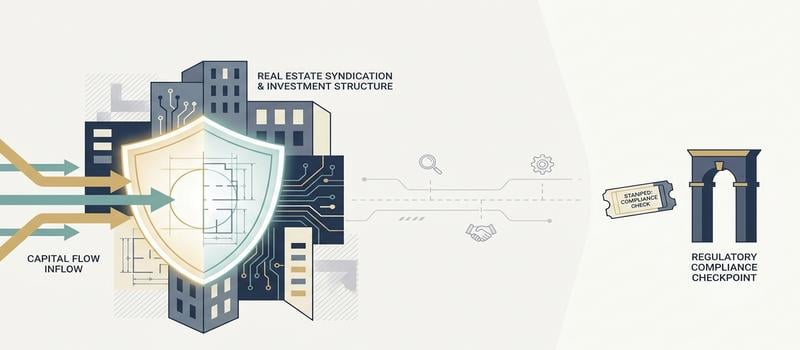
If you sell securities to a Wisconsin resident under Rule 506, here is the practical answer: Wisconsin wants a notice filing and a $200 fee, submitted electronically, within 15 days of your first sale to a Wisconsin investor. It does not want your Private Placement Memorandum, and it does not require a separate Consent to Service of Process for a Rule 506 offering.
That is the whole snapshot. Wisconsin is not running your deal through a review process, and it is not asking you to hand over your offering package. It is collecting a short notice and a fee. But the deadline is real, and it is short, so this is not something you push to the bottom of the closing checklist.
The Wisconsin DFI Reg D Instruction is the authoritative source for how the Wisconsin Department of Financial Institutions (DFI) treats these filings. That is the page to check before you rely on anything else, because it reflects the DFI’s current position on what a Rule 506 issuer actually has to submit.
The 15-Day Deadline and NASAA EFD Requirement
Wisconsin requires a $200 notice filing fee, and the notice goes through the NASAA Electronic Filing Depository (NASAA EFD). This is the same platform issuers use to make Rule 506 state notice filings across most of the country, so if you are filing in several states, Wisconsin fits the same workflow. You submit the notice, pay the fee, and Wisconsin has its filing.
Now the part people get wrong. There is a specific deadline, and it is 15 days. I have heard sponsors assume they can file “when things settle down” or “as soon as practicable.” That is not how Wisconsin works. The rule sets a hard 15-day window, and blowing past it turns a routine administrative task into a compliance problem you did not need.
Be precise about what starts the clock. The 15 days run from your first sale to a Wisconsin resident – meaning the first signed subscription and funded commitment from someone who lives in Wisconsin. It is not tied to your first sale anywhere in the fund. If your first three investors are in Illinois and Minnesota and your fourth is in Milwaukee, the Wisconsin clock starts with the Milwaukee investor, not the Illinois one.
What Wisconsin Does Not Require
Wisconsin does not make you submit a PPM. Some states want the offering document uploaded as part of the notice filing. Wisconsin does not, for a Rule 506 offering. You keep your Private Placement Memorandum where it belongs, in the hands of your investors, and the state is not part of that exchange.
Wisconsin also does not require a Consent to Service of Process (Form U-2) for these filings. In other jurisdictions, Form U-2 is a standard piece of the notice package. For a Rule 506 filing in Wisconsin, per the DFI guidance, it is not on the list.
The takeaway is simple. Wisconsin has kept the Rule 506 notice light: a fee, a short electronic filing, and a tight deadline. The work is not in assembling a thick submission. The work is in catching the 15-day window every time a new Wisconsin investor comes in.
How Federal Preemption Interacts with Wisconsin Retained Authority
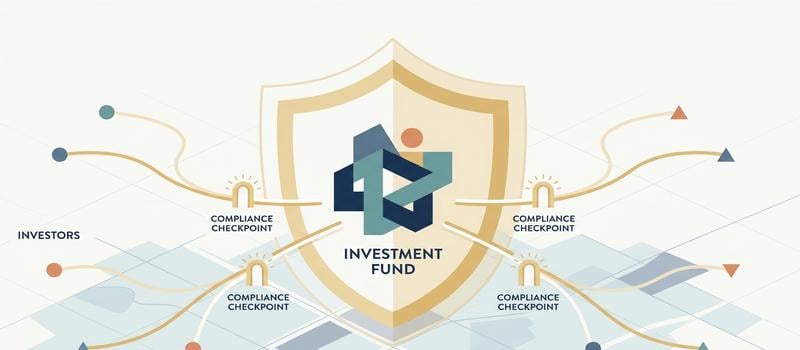
Preemption is narrower than most sponsors think. Rule 506 is a rule the Securities and Exchange Commission (SEC) adopted under Regulation D, and it is the SEC that regulates the exemption itself at the federal level – who can offer under it, what disclosure applies, and how the offering can be marketed. Under the National Securities Markets Improvement Act (NSMIA), 15 U.S.C. § 77r, securities sold under Rule 506(b) and Rule 506(c) are classified as “covered securities.” That classification is what strips Wisconsin of its power to run your offering through a substantive review. It does not strip Wisconsin of everything. The state keeps a defined lane: notice, fee, and anti-fraud enforcement. In practical terms, the SEC owns the exemption; Wisconsin keeps the notice filing and the right to police fraud. That split is the whole model. Federal law shields the review; the state keeps the paperwork and the police power.
What Federal Law Shields (Merit Review)
The practical benefit of “covered security” status is that Wisconsin cannot make you qualify the offering. In states without preemption, a securities administrator can put an offering through merit review – looking at the deal terms, the sponsor’s compensation, the fairness of the economics, and the sponsor’s track record – and can refuse to let it proceed if the regulator does not like what it sees. That is the process Rule 506 takes off the table.
So Wisconsin cannot force your issuer through a state registration and qualification process. It cannot tell you your promote is too high, your fees are excessive, or your structure is unfair. It cannot dictate the deal’s economics. Those decisions stay between you and your investors, disclosed in your Private Placement Memorandum and governed by federal anti-fraud law. That is the real value of Rule 506 at the state level: you get a national framework that no single state administrator can second-guess on the merits.
What Wisconsin Retains Under WI ST 551.204
What Wisconsin keeps is spelled out in WI ST 551.204. This is the provision that reconciles federal preemption with continued state involvement. It confirms that even for federal covered securities, the state administrator can require a notice filing and the associated fee, and it preserves the state’s anti-fraud authority.
That is why the $200 fee and the 15-day deadline are not optional courtesies. They are grounded in Wisconsin law. Preemption removed the merit review, but WI ST 551.204 is the hook that lets the DFI still demand the post-sale notice through NASAA EFD and collect its fee.
The anti-fraud piece matters just as much. Nothing about Rule 506 or covered-security status insulates you from Wisconsin’s authority to investigate deceptive practices. If a sponsor lies to a Wisconsin investor, the fact that the offering was a preempted federal offering does not shut the door on the state. The DFI can still pursue fraud. So the notice filing is the easy, mechanical part. The anti-fraud exposure is the part that follows you regardless of how clean your filing was.
Navigating Deadlines, Penalties, and Ongoing Wisconsin Compliance
Timing is where Wisconsin compliance actually gets tested. If you miss the 15-day window, you have a problem to fix, not a formality to shrug off – and the right move is to get counsel involved before you file late, not after. For offerings that stay open a long time, the practical concern is not the original filing; it is whether continued Wisconsin investment activity requires you to keep your filing current.
The Consequences of Missing the 15-Day Trigger
Missing the 15-day deadline is a compliance violation, plain and simple. Once your first Wisconsin sale closes and 15 days pass without a filing, you are late, and being late creates a state-level deficiency in your Wisconsin notice.
I am not going to quote you a specific late-fee figure, because the exact administrative penalty is not something I can state reliably from the DFI’s published materials. What I can tell you is this: do not assume there is no consequence. Wisconsin can impose administrative penalties, and the older idea that a late filing costs nothing is not something you should rely on.
So here is what I would do. If you realize a Wisconsin filing is late – or you catch it during a review and cannot tell when the first Wisconsin sale actually closed – talk to your securities counsel before you submit anything. There may be a cure path with the DFI, and there may be a penalty attached. You want counsel evaluating that with you so you file correctly the second time and address the deficiency head-on rather than quietly hoping no one notices. The quiet approach is not a strategy. It is just a later problem.
Ongoing Offerings and the One-Year Renewal Logic
A lot of offerings do not close in 30 days. Funds in particular stay open for months, sometimes well past a year, taking in new capital the whole time. So the fair question is whether your original Wisconsin notice covers you indefinitely or whether you have to refresh it.
The practical standard I use is a one-year renewal logic. A single notice filing generally carries the offering for about a year. The renewal question comes up when two things are both true: the offering runs longer than twelve months, and the fund is still accepting new or repeat investments from Wisconsin residents during that extended period. If both are happening, you should treat your Wisconsin filing as something that may need to be refreshed rather than assuming the original notice runs forever.
I am framing this as operational logic rather than pointing you to a specific Wisconsin renewal statute, because the right approach here is to build the review into your calendar. If your offering is going to live past a year and you expect continued Wisconsin subscriptions, put a one-year check-in on the schedule and confirm your filing status with counsel at that point. That is far cleaner than discovering a stale filing after you have already taken more Wisconsin money.
Wisconsin State Exemptions vs. The Federal Safe Harbor
Everything above assumes you are relying on Rule 506 and its federal preemption. Drop that, and the picture changes completely. If you skip Rule 506 and try to raise money purely under Wisconsin state law, you lose the covered-security shield and step directly into the state exemption regime – which is narrower, more fact-dependent, and far less forgiving than the federal safe harbor. That is the tradeoff, and for most sponsors it is not a close call.
Understanding Wisconsin’s Statutory Framework (WI ST 551.201 & 551.203)
Wisconsin’s own exemptions live primarily in two statutes. WI ST 551.201 defines the categories of exempt securities – the kinds of instruments that are exempt because of what they are or who issued them, such as government obligations, securities of certain regulated institutions, and other enumerated categories. This is the “status” side of the exemption analysis. The security qualifies because it fits a listed category, not because of how you sold it.
WI ST 551.203 covers the transactional exemptions – the exemptions that turn on how the offering is conducted rather than what the security is. This is where you find things like limited-offering exemptions tied to a restricted number of purchasers or specific transaction structures. For a sponsor raising private capital without Rule 506, this is the statute you would actually be working within, because a typical fund or syndication interest is not going to fit the exempt-security categories in 551.201.
I am pointing you to these statutes to show you the alternative, not to steer you into it. The point is that if you leave the federal framework, this is the body of law you have to satisfy, condition by condition, with no preemption backstop.
The Intrastate Trap
The real problem with a state-only offering is residency. Wisconsin’s intrastate exemptions generally require that the issuer, the business, and every single investor stay inside Wisconsin. It is not enough for most of your investors to be Wisconsin residents. The exemption is built around keeping the entire offering in-state, and it does not tolerate much slippage.
Here is the practical consequence. One sale to a non-Wisconsin resident can blow the exemption for the whole offering. Say you run a clean Wisconsin-only raise, and then a doctor in Minnesota – a friend of one of your investors – asks to come in. You take his money. That single out-of-state sale can destroy the exemption you were relying on, and now the securities you sold to everyone, including your Wisconsin investors, may have been sold without a valid exemption. That is not a paperwork problem. That is a “the whole offering is now defective” problem.
Rule 506 does not work that way, and that is exactly why sponsors use it. Under Rule 506, an investor in Minnesota, or Texas, or anywhere else does not destroy your federal exemption. You take the out-of-state investor, you make the appropriate state notice filing where that investor lives, and you keep going. The exemption is national by design.
So when you weigh a state-only Wisconsin exemption against Rule 506, the difference is not subtle. The state exemptions box you into a single state and punish any deviation. Rule 506 gives you a national framework where interstate investors are expected, not fatal. For most private raises, that flexibility is the entire reason to be in the federal system in the first place.
Managing the Multi-State Blindspot and Legal Counsel
No, you do not need a Wisconsin-licensed attorney to file a Rule 506 notice. Rule 506 is a federal framework, and nationwide securities counsel routinely handles these offerings and coordinates the associated NASAA EFD filings across whatever states your investors happen to live in. Wisconsin is one of those states, not a special case that requires its own local lawyer.
The bigger practical risk is not which lawyer you hire. It is that most sponsors watch the wrong location.
The Operational Directive for Fund Managers
The multi-state blindspot is simple: sponsors focus on where the fund is based instead of where the money comes from. Blue sky obligations do not follow your headquarters. They follow your investors.
So if your fund is organized in Delaware, managed out of Texas, and holds assets in three other states, none of that determines your Wisconsin obligation. What determines it is whether an investor resides in Wisconsin. The moment a Wisconsin resident subscribes and funds, Wisconsin’s rules apply and the 15-day clock starts – regardless of where everything else in your deal sits.
This is not a Wisconsin quirk. It is the structural reality of any multi-state raise. Every state where an investor lives can have its own notice filing, its own fee, and its own deadline. Wisconsin’s 15-day window is just one instance of a pattern you will hit again with the next state.
That is why I tell fund managers to treat a new-state investor as a trigger event. The moment you bring in an investor from a state you have not filed in yet, tell your securities counsel. Do not wait for the closing to wrap up. The deadlines are short, and in Wisconsin the 15 days do not care that you were busy. If counsel does not know the investor came in, counsel cannot file, and you are the one holding the deficiency.
The Role of Out-of-State Securities Counsel
Because Rule 506 is federal, out-of-state securities counsel routinely runs the offering end to end – structuring the deal, drafting the documents, and coordinating the resulting state notice filings through NASAA EFD. Filing a Wisconsin Rule 506 notice through EFD is part of that ordinary coordination, and it does not turn on holding a Wisconsin license.
I want to be careful here, though. This is not a blanket statement that an out-of-state lawyer can do anything touching Wisconsin without regard to state licensing rules. The practical point is narrower: handling a federal Rule 506 offering and its EFD notice filings is standard nationwide securities work.
A purely state-law offering is a different animal. If you left Rule 506 behind and tried to raise under Wisconsin’s own exemptions – the intrastate path discussed earlier – you would be working entirely inside Wisconsin law, and that raises local-law questions that a federal Rule 506 analysis simply does not. That is the situation where you would want to think harder about Wisconsin-specific counsel. For a preempted federal offering, nationwide securities counsel coordinating your EFD filings is the normal and expected setup.
Frequently Asked Questions About Wisconsin Blue Sky Laws
These are the questions sponsors ask most often once they understand the basic framework. Short answers here, with the qualifications intact.
Does a Rule 506 offering require a Wisconsin Blue Sky notice filing?
Yes. If you sell securities to a Wisconsin resident under Rule 506, Wisconsin expects a notice filing. Rule 506 securities are federal “covered securities,” so Wisconsin cannot make you register or qualify the offering – but preemption does not wipe out the state’s notice-and-fee obligation. Those are two different things.
That is the distinction to hold onto. Merit review is what preemption takes away: no state administrator gets to look at your economics and decide whether to let the offering proceed. The notice filing is what survives preemption: a short electronic filing that tells the state you sold into Wisconsin. You are not asking permission. You are giving notice.
Is a Wisconsin Blue Sky notice filing the same as registering the offering?
No. A notice filing is not registration, and it is not state approval of your deal.
When a state registers or qualifies an offering, a regulator reviews the substance and can say no. A Rule 506 covered-security notice filing is nothing like that. You submit a notice and pay a fee, and Wisconsin does not review the merits, bless the terms, or endorse the offering. Do not describe your Wisconsin filing to investors as state registration or clearance, because it is neither.
What the state keeps is its anti-fraud authority. The notice filing is administrative. The fraud exposure is real and independent, and it does not go away because your paperwork was clean.
When is the Wisconsin notice filing due, and what does it cost?
The filing goes through NASAA EFD, the fee is $200, and the clock is 15 days from your first sale to a Wisconsin resident – meaning the first signed, funded subscription from a Wisconsin investor. That is a firm deadline, not a “when you get to it” deadline.
One thing I will not do is quote you a specific late-fee amount if you miss the 15 days. I cannot state that figure reliably from the DFI’s published materials, and I am not going to invent one. Assume a late filing can carry an administrative penalty, and confirm the current fee, deadline, and any EFD platform charge against the Wisconsin DFI Reg D Instruction before you rely on it. If you are already late, talk to counsel before you file rather than after.
How is a Rule 506 offering different from a purely intrastate Wisconsin offering?
The short version is residency sensitivity. A purely intrastate Wisconsin offering is narrow and fact-dependent, and purchaser residency is at the center of it. The exemption is built around keeping the raise inside Wisconsin, and an out-of-state purchaser can put the whole exemption at risk.
Rule 506 does not carry that fragility. Under Rule 506, an investor in another state does not blow your federal exemption. You take the investor, you make the state notice filing where that investor lives, and you keep going. The offering is national by design, subject to those state notice obligations – which is exactly why most sponsors raising real private capital stay in the federal framework rather than trying to thread a state-only exemption.
Can out-of-state securities counsel handle a Wisconsin Rule 506 notice filing?
Usually, yes. Rule 506 is a federal framework, and nationwide securities counsel routinely handles these offerings and coordinates the resulting state notice filings through NASAA EFD. Filing your Wisconsin Rule 506 notice is part of that ordinary coordination and does not turn on holding a Wisconsin license.
I would not stretch that into a claim that state licensing rules never apply, because that is not true. A purely state-law or intrastate Wisconsin offering is a different analysis. That path lives entirely inside Wisconsin law and can raise local-law questions a federal Rule 506 matter does not – the kind of situation where you would think harder about Wisconsin-specific counsel. For a preempted federal Rule 506 offering and its EFD filings, nationwide securities counsel is the normal setup.

Tilden Moschetti, Esq., is a highly sought-after syndication attorney with nearly two decades of experience. His clientele ranges from real estate developers and startups to established businesses and private equity funds. Tilden’s expertise in syndication law comes not only from his knowledge of syndication and securities law but from real, hands-on experience as an active syndicator himself in every real estate product type and nearly all markets in the US. His knowledge and experience set him apart and established him as the Reg D legal services leader.