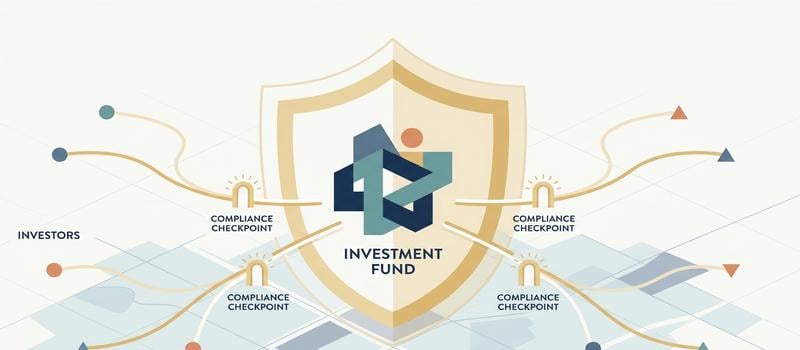
The Federal Overlay: Rule 506 Preemption vs. Washington State Authority
No, using Rule 506 does not mean you can ignore Washington. That is the misconception I want to kill right at the start. Federal preemption limits what Washington can do to your offering. It does not switch Washington off.
Here is the practical model. Think of it as a federal overlay. Underneath, state Blue Sky laws govern securities offerings inside each state. When you run a Rule 506 offering under Regulation D, a layer of federal authority sits on top. That top layer takes away Washington’s power to review the merits of your deal. It does not take away Washington’s power to require a notice filing, collect a fee, and come after fraud.
So the real question is not “state or federal.” The answer is both. The issue is knowing exactly where federal power ends and Washington’s retained power begins.
How NSMIA Preempts Washington from Substantive Review
The National Securities Markets Improvement Act of 1996, usually called NSMIA, is the reason Washington cannot register or second-guess your Rule 506 offering. NSMIA created a category called “covered securities.” Securities sold under Rule 506(b) or Rule 506(c) are covered securities. Because they are covered, no state can require you to register them at the state level, and no state can run a substantive merit review of the deal.
In plain English, a merit review is where a state regulator looks at your offering and decides whether it is fair, whether the sponsor fees are too high, whether the projected returns are reasonable, and whether investors should be allowed to buy it. Some state exemptions still work that way. Rule 506 does not. Washington does not get to sit in judgment of whether your syndication is a good deal. That call belongs to your investors.
Both flavors of Rule 506 get this protection. The difference between them is solicitation. Rule 506(b) prohibits general solicitation and general advertising, so you cannot publicly market the deal, and you rely on preexisting relationships. Rule 506(c) permits general solicitation, but every purchaser must be accredited and you must take reasonable steps to verify that accreditation. Both create covered securities. Both keep Washington out of the merits.
The Regulatory Authority Washington Retains
Washington keeps three things: the notice filing, the fee that comes with it, and its anti-fraud jurisdiction. Preemption tells Washington what it cannot do to your offering. It does not hand you a pass on what Washington can still require.
The way I think about it is jurisdiction versus timing. Federal law sets the outer limits of what Washington can review. Timing and process are still Washington’s to run. That means when you sell to a Washington investor, the state still expects a notice filing so it can recognize the Rule 506 exemption on its books, and that filing carries a fee. I will cover the current filing mechanics, the fee, and the deadline later, because those procedural details need to be verified against the Washington Department of Financial Institutions before you rely on them. For now, the point is simpler: the filing is not optional courtesy paperwork. It is a real state requirement layered underneath the federal exemption.
The other piece Washington never gives up is anti-fraud authority. If you market a security to a Washington resident and you lie, omit something material, or mislead, Washington can act regardless of your covered-security status. Preemption protects you from merit review. It does not protect you from fraud enforcement. Nothing does.
Washington’s Registration Requirement (WA ST 21.20.140)
The law that forces the whole conversation is WA ST 21.20.140. It makes it unlawful to offer or sell a security in Washington unless the security is registered with the state or it fits an exemption. That single sentence is why the Rule 506 notice filing matters. It is not a courtesy. It is how you stay on the right side of a prohibition that already applies to you the moment you approach a Washington investor.
The Prohibition on Unregistered Securities
Start with the default rule, because the default is not friendly. Under WA ST 21.20.140, every security offered or sold in Washington has to be registered with the state unless something takes it out of that requirement. Registration is the baseline. Exemption is the exception.
Full state registration is exactly what it sounds like – costly, slow, and paperwork-heavy. You would be filing your offering with the state and going through a substantive process before you could sell. For a private syndication, that is not a realistic path, and it is not the path anyone in this space actually takes.
So the statute does something useful for you, even though it reads like a wall. It forces you to point to a specific exemption. You do not get to assume your private deal is fine because it feels private. In Washington, the security is presumed to need registration, and the burden is on the issuer to show it qualifies for an exemption. That framing matters. If a regulator ever asks, the question is not “why did Washington require this,” it is “which exemption were you relying on, and did you satisfy it.”
How Rule 506 Satisfies the State Exemption Framework
Rule 506 is the exemption most syndicators use to get out from under WA ST 21.20.140. Because Rule 506(b) and Rule 506(c) offerings create covered securities, Washington cannot force you into full state registration. That is the relief the federal overlay provides.
But here is the part sponsors get wrong. Washington honors the Rule 506 exemption. It does not hand it to you automatically. The state recognizes your covered-security status through a formal notice filing, not by assumption. You claim the exemption by filing, not by simply being federally exempt in the abstract.
Think of it as two moving parts. Federal law gives you the covered-security status that blocks state registration and merit review. Washington’s own procedure – the notice filing – is how the state records that you are relying on that status when you sell to its residents. You need both. The federal exemption without the state filing leaves you exposed under WA ST 21.20.140, because from Washington’s side of the table, an unrecognized exemption is not much better than no exemption at all.
I will get into the actual filing mechanics, the trigger, and the fee next, and those procedural details need to be verified against current Washington Department of Financial Institutions guidance before you rely on them. The point here is the legal foundation: WA ST 21.20.140 sets the prohibition, Rule 506 is your way out, and the notice filing is how you actually claim it.
The First Sale Trigger and Notice Filing Workflow in Washington
Your Washington notice filing is triggered by the first sale to a Washington investor, and the filing itself is expected to go through the NASAA Electronic Filing Depository, the EFD system. That is the general workflow. The exact current deadline and the current fee are the two pieces you have to verify with the Washington Department of Financial Institutions before you rely on them, and I will flag that clearly below.
The First Sale Timing Rule
The clock does not start when you form the fund. It does not start when you write the PPM. It starts on the first sale to a Washington investor.
In plain English, the first sale is the moment a Washington purchaser actually subscribes and the deal closes on that investor – the subscription is accepted and the money comes in. Talking to a Washington prospect is not a sale. Sending the offering documents is not a sale. The trigger is the completed purchase by someone in the state.
Washington has historically required the notice filing within 15 days of that first sale. Treat that 15-day figure as a historical expectation, not a settled current deadline. I am not going to tell you to bank on it. Verify the current deadline directly with the Washington DFI before your first Washington investor closes, because the window is short and you do not want to be reconstructing dates after the fact.
The practical takeaway is to watch investor residency in real time. The day a Washington subscription is accepted, your filing clock is running. Know that date, because everything downstream keys off it.
Using NASAA EFD and Filing Fees
The NASAA Electronic Filing Depository, usually called EFD, is the expected clearinghouse for getting your notice to Washington. In practice, you file your Form D and the consent to service of process through EFD, and the system routes the notice to the state. It is the modern replacement for mailing paper to each regulator, and it is how most Rule 506 state notices get processed today.
I am not going to walk you through the EFD screens here. That is a tutorial for a different day, and the platform changes. What matters is the concept: EFD is the pipe, the Form D and consent to service are what you push through it, and Washington is the destination.
On the fee, Washington has historically required a filing fee of $300. Again – historical expectation, not a guarantee of the current number. Verify the current fee against the DFI’s current fee schedule before you file. Fee schedules change, and the last thing you want is a filing that gets kicked back because the payment was short. Confirm the current amount, confirm the current deadline, and file once you have both right.
The Real Cost of Missing Washington Deadlines
Missing the Washington notice filing window is not a clerical footnote. It puts you on the wrong side of WA ST 21.20.140, and it hands Washington a reason to scrutinize an offering that was otherwise fine. The federal exemption does not fail because you filed late, but your standing with the state does get shaky, and that is a problem you do not need.
I want to be careful here, because this is exactly where sponsors have been told the wrong thing. An older version of this discussion suggested Washington does not charge a late fee. Do not rely on that. Late-filing practices vary by state and change over time, and I am not going to tell you Washington imposes no penalty for a late notice. If you are late, assume there may be a consequence and confirm the current position with the Washington Department of Financial Institutions.
Administrative Scrutiny and Enforcement
A late or missing filing invites administrative attention you would rather avoid. When the state does not have your notice on file, it has nothing recognizing that you claimed the Rule 506 exemption when you sold to its residents. That gap is what draws questions.
Washington’s securities regulator holds broad enforcement authority under its Blue Sky statute, including provisions like WA ST 21.20.360. At a general level, this framework is part of how the state investigates conduct and addresses offerings that are non-compliant or misleading. I am not going to build granular rules on the exact text of that statute here, because the current text needs to be verified against the state’s official source before anyone relies on the specifics. The point for you is the shape of the authority, not a line-by-line reading: Washington retains real tools to look into an offering, and a missed filing is the kind of thing that can put you in front of those tools.
So treat the deadline as a hard operational line. The downside of filing late is not just a possible fee. It is the administrative scrutiny, the follow-up questions, and the time you spend explaining a gap that never had to exist.
Operational Coordination for Fund Managers
The fix is boring and it works: know where your investors live, in real time, and tell your securities counsel the moment a new state enters the pipeline. Do not wait until the round closes to assemble the investor list.
The most common way sponsors blow a state deadline is by treating residency as end-of-round bookkeeping. You raise for three months, close the round, and then sit down to figure out who came from where. By then, your Washington filing clock has already run, and you are reconstructing a subscription date after the fact to see whether you are late. That is backwards.
Here is how I would run it. The day a Washington subscription is accepted, that fact goes to your syndication attorney. Not the day you get around to it – that day. The capital raiser and the attorney need a live line of communication, because the person taking subscriptions usually knows about a new-state investor long before the person handling filings does. One quick note when a new state shows up keeps every state filing on schedule and keeps you out of the late-filing conversation entirely.
Rule 506 vs. Intrastate Offerings in Washington
If all your assets are in Washington, you might be tempted to skip the federal framework entirely and run a purely intrastate offering under Washington law. You can do that. I just do not think you will like the problem it creates. For most syndicators, Rule 506 is the safer and more flexible choice, even with the notice filings, because an intrastate exemption is brittle in a way Rule 506 is not.
The Double-Edged Sword of State-Only Exemptions
A purely intrastate offering puts your entire deal under Washington Blue Sky law and takes federal Rule 506 off the table. The federal intrastate concept, reflected in Rule 147A, exists so a genuinely local offering can stay local without SEC registration. The appeal is obvious: no federal exemption to maintain, no Form D, no multi-state notice filings.
The problem is what you give up to get there. An intrastate exemption leans heavily on purchaser residency, and residency is a fact you do not fully control. Your investors have to be Washington residents, and that has to actually be true, not just true on paper.
That is the double-edged part. The exemption that frees you from federal involvement is also the exemption that can come apart if your investor base does not stay inside the state lines you promised. This is fact-dependent, and the facts can shift under you – someone moves, someone you assumed was local turns out not to be, someone forwards the deal to a cousin in Oregon. From your point of view, that is a lot of exposure riding on where your investors happen to live. If flexibility matters to you at all, an intrastate exemption fights you.
Why Syndicators Generally Prefer Rule 506
Rule 506 gives you a clean national framework, and that is why most syndicators land there. Under Rule 506, an out-of-state investor is not a disaster. It is a filing.
That is the whole tradeoff in one sentence. If a Colorado investor and a Nevada investor come into your Rule 506 deal, you have not broken anything – you have simply picked up notice-filing obligations in Colorado and Nevada on top of your Washington filing. You pay the fees, you make the filings, and the exemption holds. Compare that to an intrastate offering, where an out-of-state purchaser is not a paperwork item, it is a threat to the exemption itself.
From your point of view, paying a handful of state filing fees is a much better problem than watching your exemption wobble because one investor lives across a state line. The filings cost money and time. Losing your exemption costs you the offering. That is not a close call for most sponsors, and it is why the federal overlay – notice filings and all – usually wins.
Out-of-State Securities Counsel and Washington Offerings
You generally do not need a Washington-licensed attorney to run a Rule 506 syndication that reaches Washington investors. Rule 506 is a federal securities exemption under Regulation D, and nationwide securities counsel routinely structure these offerings and coordinate the Washington notice filing as part of that federal work. The state notice filing is an administrative component of a federal offering, not a separate practice of Washington law.
Managing the Federal Rule 506 Framework Nationwide
Most of a syndication attorney’s work lives in federal law, not Washington law. The attorney drafts the Private Placement Memorandum, the Operating Agreement or LPA, the Subscription Agreement, and the federal Form D, all under Regulation D and the federal Rule 506 framework. None of that is Washington-specific. A Rule 506 offering built in Seattle looks the same as one built in Miami, because the exemption is federal.
The Washington notice filing rides along with that federal work. When a Washington investor comes in, counsel makes the state notice filing through the NASAA EFD system as an administrative step tied to the federal exemption. That is the same thing counsel does when a Colorado or Nevada investor shows up. A securities attorney who handles Rule 506 offerings nationally is coordinating a stack of these state notice filings as a matter of routine, keyed to where the investors actually are.
I am not going to tell you that an out-of-state attorney can practice Washington law generally, because that is a state licensing question and it depends on what the work actually is. What I can tell you is the practical reality: structuring the federal Rule 506 offering and coordinating the associated state notice filings is federal securities work that nationwide counsel handles every day.
When Local Washington Counsel Becomes Necessary
Washington-licensed counsel becomes necessary when the work is genuinely Washington law, not federal securities law. Two situations come up most often.
The first is a purely intrastate offering. If you decide to run a state-only offering under Washington law instead of Rule 506, you have taken the federal overlay off the table and put the entire offering under Washington’s Blue Sky framework. That is Washington securities law, interpreted under Washington authority, and it is a different analysis. A sponsor going that route wants counsel comfortable with Washington’s own exemption rules.
The second is the underlying asset. If your syndication is buying Washington real estate, the purchase and sale agreement, title, financing, and closing are Washington real estate matters, and those are handled by Washington counsel. That work is separate from the securities offering.
So the practical division of labor is clean. Your syndication attorney handles the securities side – the PPM, the Operating Agreement, the Form D, and the state notice filings – under the federal Rule 506 framework. Local Washington counsel handles the local real estate acquisition and any purely state-law securities question. Two different jobs, and most deals need both.
Frequently Asked Questions About Washington Blue Sky Laws
Most of the questions I get about Washington come down to five things: whether you have to file, whether that filing is the same as registering, when it is due and what it costs, how Rule 506 stacks up against a state-only offering, and whether your out-of-state attorney can handle it. Here are the short answers. The details behind each one live in the sections above.
Does a Rule 506 offering require a Washington Blue Sky notice filing?
Yes. When you sell to a Washington investor under Rule 506, Washington still expects a notice filing so it can recognize that you are relying on the exemption. Rule 506(b) and Rule 506(c) offerings create covered securities under federal law, and that covered-security status blocks Washington from making you register or from reviewing the merits of your deal. It does not switch off the state’s notice-filing framework.
That is the part that trips sponsors up. Federal preemption limits what Washington can do to your offering. It does not eliminate every state obligation. A notice filing is not a merit review – the state is not deciding whether your syndication is a good deal – but it is still a real requirement, not optional paperwork.
Is a Washington Blue Sky notice filing the same as registering the offering?
No. A notice filing and state registration are two different things. Registration is the full process WA ST 21.20.140 sets as the default – substantive, slow, and paperwork-heavy. A Rule 506 notice filing is the state simply recording that you are claiming a federally covered-security exemption when you sell to its residents.
Do not read a notice filing as Washington approving, clearing, or endorsing your offering. It does none of that. The state is acknowledging your claimed exemption, not blessing the deal. And filing the notice does not buy you anything against fraud – Washington keeps its anti-fraud authority regardless of your covered-security status.
When is the Washington notice filing due, and what does it cost?
The filing clock starts on the first sale to a Washington investor – the moment a Washington purchaser’s subscription is accepted and the money comes in, not when you form the fund or send the documents.
On timing and cost, I am not going to hand you a hard number, because these are the two pieces that need current verification. Washington has historically required the notice filing within 15 days of that first sale, and has historically charged a $300 filing fee. Treat both as historical expectations, not settled current facts. Confirm the current deadline and the current fee directly against the Washington Department of Financial Institutions before you file. Fee schedules and deadlines change, and you do not want a filing kicked back or a deadline missed because you relied on a stale figure.
How is a Rule 506 offering different from a purely intrastate Washington offering?
The practical difference is how each one handles an out-of-state investor. A purely intrastate offering is narrower and heavily fact-dependent, and purchaser residency is central to it – your investor base has to actually stay inside the state lines you are relying on. That is exposure you do not fully control.
Rule 506 gives you a national framework instead. Investors across state lines do not break a Rule 506 exemption; they create additional state notice-filing obligations. You pick up a filing in each state where you sell, subject to that state’s rules, and the exemption holds. For most syndicators, trading a few extra filings for that flexibility is the easy call.
Can out-of-state securities counsel handle a Washington Rule 506 notice filing?
Generally, yes. Rule 506 is a federal exemption, and nationwide securities counsel routinely structure these offerings and coordinate the Washington notice filing as an administrative part of that federal work. That is different from practicing Washington law generally.
Where the analysis changes is when the work is genuinely Washington law – a purely intrastate offering under Washington’s own exemption framework, or a Washington real estate acquisition. Those can call for Washington-licensed counsel. I am not going to tell you a state licensing question never applies or that you will never need local counsel; it depends on what the work actually is. But for the federal Rule 506 offering and its associated state notice filings, nationwide securities counsel handles that routinely.

Tilden Moschetti, Esq., is a highly sought-after syndication attorney with nearly two decades of experience. His clientele ranges from real estate developers and startups to established businesses and private equity funds. Tilden’s expertise in syndication law comes not only from his knowledge of syndication and securities law but from real, hands-on experience as an active syndicator himself in every real estate product type and nearly all markets in the US. His knowledge and experience set him apart and established him as the Reg D legal services leader.