The Federal Overlay: Rule 506 Preemption vs. South Carolina’s Retained Authority
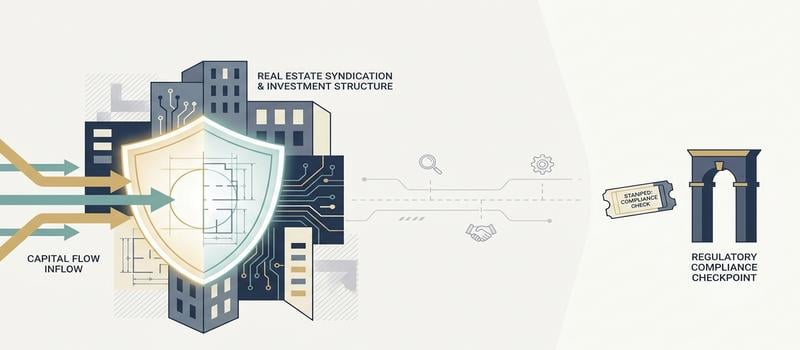
No, a Rule 506 offering does not have to be registered in South Carolina, and that is the single most important thing to understand before you raise a dollar from a South Carolina resident. Regulation D Rule 506 offerings are “covered securities” under federal law, which means South Carolina cannot put your offering through a substantive state registration review. What the state can still do is require a notice filing, collect a fee, and enforce its anti-fraud laws against you.
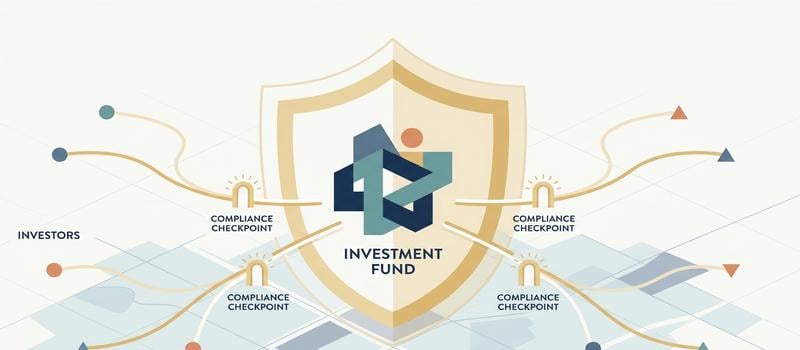
That is the practical model for this whole discussion. Federal law sits on top and blocks state merit review. State Blue Sky Laws still operate underneath, but only in a narrower administrative and enforcement role once a South Carolina investor comes into your deal.
What Federal Preemption Actually Means
Start with the state statute. Under SC ST § 35-1-301, it is unlawful to sell a security in South Carolina unless the security is registered, is exempt under state law, or is a federal “covered security.” That third category is the one that matters for Rule 506.
The term “covered security” comes from the National Securities Markets Improvement Act of 1996, known as NSMIA. NSMIA drew a line down the middle of securities regulation. For certain categories of offerings, Congress said the states no longer get to run their own registration or merit review. Rule 506 offerings fall squarely inside that protected category. Both Rule 506(b) and Rule 506(c) qualify a security as a covered security, so both give you this federal preemption of state registration.
In plain English: because your Rule 506 offering is a covered security, South Carolina cannot make you go through the expensive, discretionary state registration process that unprotected offerings face. The state regulator does not get to second-guess the merits of your deal, tell you your fees are too high, or decide whether your investment is fair enough to be sold to its residents. That is a real benefit, and it is the reason most sponsors use Rule 506 in the first place.
But preemption is not the same as the state disappearing. It only relieves you of substantive registration. It does not switch off everything else.
South Carolina’s Retained Administrative Authority
South Carolina keeps two categories of authority underneath the federal overlay: an administrative layer and an anti-fraud layer. This section deals with the administrative layer, and the rest of the article works through the details.
Even though your offering is a covered security, the state can still require you to file a notice, pay a state filing fee, and submit a consent to service of process. That last item matters more than sponsors expect. A consent to service of process is your agreement that South Carolina can reach you for legal service inside the state, which is how the regulator preserves jurisdiction over an out-of-state issuer selling to its residents.
So the model to keep in your head is this. Federal Rule 506 applies universally and takes state registration off the table. State rules do not vanish – they apply beneath the federal layer, and they get triggered once a South Carolina resident invests. You still file. You still pay. You are still on the hook for the anti-fraud rules. Preemption bought you relief from registration, not a pass on compliance.
The “First Sale” Trigger and South Carolina Notice Deadlines
The compliance clock starts when you accept funds from your first South Carolina resident, and you have 15 days from that first sale to get your Form D notice on file with the state. Not 15 days from your closing. Not 15 days from when you feel organized. Fifteen days from the first sale to a South Carolina investor.
That single date drives everything in this section.
Defining the 15-Day Compliance Window
The “first sale” is the administrative trigger, and the 15-day deadline that applies to your federal SEC Form D filing carries over to the state notice as well. So the same event that starts your federal clock starts your South Carolina clock.
In practice, the first sale happens when you formally accept an investor and their funds clear. It is not when you send someone a Private Placement Memorandum. It is not when they say they are interested. It is the point where you have actually taken their money into the deal. If your first accepted, funded investor is a South Carolina resident, that is your trigger date, and the 15 days run from there.
Here is the practical protocol I would put in place. Make it a hard rule inside your own operation: the moment capital clears from a South Carolina investor, someone tells your securities counsel that day. Not next week. Not at the next check-in call. Same day. The window is short, and it is easy to blow through 15 days while you are busy chasing the next commitment.
Do not wait until the offering closes to file the state notice. Sponsors talk themselves into batching everything at the end because it feels efficient. It is not efficient. It is late. The state notice obligation is tied to the first sale, not the final one, so waiting for the close means you have already missed the deadline for your earliest South Carolina investor.
The Legal Risk of Missing the Deadline
Missing the 15-day deadline is a violation of state law, and that is true whether or not the state publishes an explicit dollar figure for a late fee. The absence of a posted late-fee schedule does not mean the risk is zero. It just means you cannot look up the exact price of being late.
Think about the two ways this bites you. First, a late or missing notice filing is exactly the kind of thing a state regulator can point to if it ever looks at your offering. You do not want your first conversation with the South Carolina Securities Commissioner’s office to open with an admission that you were out of compliance from the start.
Second, it follows you into your next raise. Blue Sky filings leave a record. A history of late or missing notice filings is the sort of thing that surfaces during due diligence, complicates a future capital raise, and makes sophisticated investors and their counsel ask what else you were sloppy about.
The point is not to scare you with a specific penalty number. The point is that the deadline is real, the filing is not optional, and the cost of being casual about it shows up later at the worst possible time. File on time and the whole issue disappears.
Filing the Form D Notice and Fees via NASAA EFD
You submit the South Carolina notice filing and the fee online through the NASAA EFD platform. That is the practical mechanism for Rule 506 filings today. You are not mailing paper to Columbia and hoping it lands on the right desk. You file the Form D data electronically, and South Carolina is set up to receive it through that same national system.
Using the NASAA EFD System
South Carolina’s use of a shared electronic system is not an accident of technology. It flows from the state’s own statute. Under SC ST § 35-1-608, the Securities Commissioner is authorized to cooperate with other securities regulators and organizations to develop uniform procedures for filings. In plain English, the statute gives the Commissioner room to plug South Carolina into a coordinated national process rather than forcing sponsors through a one-off state-only format. NASAA EFD is what that coordination looks like in practice for modern Rule 506 notice filings.
The practical benefit is that EFD lets you file the same Form D data with South Carolina that you are already filing federally. You are working from one dataset, not rebuilding your offering information from scratch for the state.
Your EFD submission also carries the consent to service of process. This connects back to the administrative layer discussed earlier: by filing, the issuer agrees that South Carolina can reach it for legal service inside the state. That consent is how the state keeps jurisdiction over an out-of-state issuer that has sold to its residents. It is a routine part of the filing, but it is a real legal commitment, not a formality.
South Carolina Filing Fees
You pay the state filing fee at the time of your EFD submission. The fee is a required cost of the notice filing, not something you can defer or negotiate.
Historically, the South Carolina notice filing fee has been reported at $300. Treat that number as historical, not as a current, confirmed figure. State fee schedules change, and I am not going to tell you the exact current amount is locked in when I cannot verify it. Confirm the current fee through EFD or directly with the South Carolina regulator before you submit.
Expect that EFD may also charge its own separate system or processing fee on top of the state fee. That is a platform charge, distinct from what the state collects. Again, verify the current amount at the time you file rather than relying on a number from an old filing.
The takeaway is simple. Budget for a state fee plus a possible platform charge, pay both at submission, and confirm the exact current figures on EFD before you click submit. Do not let a stale fee number be the reason your filing is short or rejected.
State Anti-Fraud Jurisdiction and Misrepresentation
No, federal preemption does not protect you from South Carolina enforcement. Preemption took state registration off the table. It did not touch the state’s authority to come after fraud, misrepresentation, and deceit in a securities transaction involving its residents. This is the second retained layer I flagged earlier, and it is the one that actually gets sponsors in trouble.
Preemption Does Not Excuse Misrepresentation
South Carolina’s anti-fraud rule lives in SC ST § 35-1-506, and it applies to your Rule 506 offering regardless of covered-security status. The statute makes it unlawful, in connection with the offer, sale, or purchase of a security, to make an untrue statement of a material fact, to omit a material fact needed to keep your statements from being misleading, or to engage in any act or practice that operates as a fraud or deceit. That reaches your Private Placement Memorandum, your subscription documents, your emails, and whatever you say on a call with an investor.
Here is the distinction that matters. Preemption blocks merit review. It does not block fraud enforcement. The South Carolina Securities Commissioner cannot tell you your fees are too high or your deal is too risky to sell – but the Commissioner absolutely can act if you lied about those fees or hid that risk. Being a covered security buys you nothing on the anti-fraud side.
Watch one specific trap: the “approval” claim. Filing a Form D notice with South Carolina does not mean the state reviewed, approved, or endorsed your offering. It is a notice, not a blessing. If you tell a South Carolina investor that the state “signed off” on the deal, or you let them believe the filing means the state vetted it, you have made a false statement about the offering. That is exactly the kind of misrepresentation § 35-1-506 is written to catch.
So the practical takeaway is simple. The preemption you get under Rule 506 is real, but it protects the registration process only. Every word in your PPM and your investor communications still has to be true and complete. Accuracy is not a nicety here – it is where your state-law exposure actually sits.
Rule 506 Offerings vs. Purely Intrastate South Carolina Offerings
Most sponsors should not reach for a purely intrastate South Carolina exemption, and the reason is practical, not theoretical. An intrastate exemption keeps your offering entirely inside South Carolina – the issuer, the money, and every investor. Rule 506 gives you a cleaner framework: you can take investors across state lines and the worst that happens is an administrative notice filing in each new state, not the collapse of your exemption.
If you are deciding between the two, the question is really about flexibility. An intrastate exemption locks you into one state. Rule 506 does not.
The Rigid Requirements of South Carolina Intrastate Exemptions
A purely intrastate offering puts your deal entirely under South Carolina’s scrutiny, with no federal covered-security preemption sitting on top of it. That is the core tradeoff. When you rely on state law alone, you give up the preemption benefit this article has been describing, and the state’s substantive authority applies to your offering directly.
SC ST § 35-1-201 sets out the categories of securities that are exempt from South Carolina’s registration requirement. It is a list of specific, defined exemptions – the kinds of securities and transactions the state has decided do not need to go through registration. The important point for a sponsor is that these are state-law exemptions. They live and die under South Carolina law, and they come with conditions you have to meet exactly.
For an intrastate exemption, the defining condition is residency, and it is unforgiving. The issuer needs to be a South Carolina entity doing business in the state, and every single investor generally has to be a South Carolina resident. There is no rounding here. Take in one out-of-state investor – one person who moved to Charlotte last month, one LLC organized in Delaware – and you can knock the exemption out from under the entire offering. That is a fragile thing to build a raise on.
The state also holds the enforcement end of these exemptions. Under SC ST § 35-1-204, the Securities Commissioner has authority to deny, condition, suspend, or revoke an exemption. In plain English: a state-law exemption is not a permanent grant you claim once and forget. It is a status the regulator can act against. With Rule 506, the state cannot revoke your covered-security treatment – preemption comes from federal law. With a state-only exemption, the state that granted it can take it away.
Why Sponsors Prefer the Federal Framework
Rule 506 wins for most real estate and private equity sponsors because it does not box you in on geography. You can raise capital nationally under one federal framework instead of confining your investor pool to South Carolina residents.
Here is the practical difference. Under an intrastate exemption, an out-of-state investor is a fatal problem. Under Rule 506, an out-of-state investor is a paperwork problem. When someone in Georgia or Texas comes into your deal, you have not shattered anything – you have simply triggered an administrative notice filing in that additional state, the same kind of filing this article has been walking through for South Carolina.
That is the flexibility you are paying for. You keep one offering structure, one set of documents, and one federal exemption, and you layer state notice filings on top as your investor base spreads. You do not have to rebuild the deal every time your capital comes from a new zip code. For a sponsor who wants to grow beyond a single state – or who just does not want a stray investor destroying the raise – that flexibility is usually worth far more than anything an intrastate exemption offers.
Using Out-of-State Securities Counsel for South Carolina Investors
You usually do not need a South Carolina-licensed attorney to run a Rule 506 syndication that happens to include South Carolina investors. Rule 506 is a federal framework, so nationwide securities counsel routinely drafts the offering documents and coordinates the state notice filings that go with them. Where local South Carolina counsel comes in is narrower – a purely intrastate offering built on state law, or a state-specific enforcement matter.
Federal Exemptions and Nationwide Counsel
The work that drives a Rule 506 raise is federal work. Structuring the entity, drafting the Private Placement Memorandum, preparing the subscription documents, and filing the federal Form D all run on federal law. None of that depends on where your lawyer is admitted, because the governing rules are the same in every state.
The state notice filings sit on top of that federal work, and they are standardized. Because South Carolina and the other states receive Rule 506 notice filings through the shared NASAA EFD system, a real estate syndication attorney who handles these regularly can coordinate the South Carolina filing centrally alongside every other state where you take an investor. That is the whole point of the federal overlay: one federal exemption, one set of documents, and administrative notice filings layered on as your investor base spreads across state lines.
So in practice, the same counsel who structures your Rule 506 deal maintains the compliance posture across all 50 states. That is normal, and it is how most syndications and funds are run.
I am describing the standard practice for coordinating a federal Rule 506 offering and its accompanying state notice filings. I am not telling you that state licensing rules can never come into play for any task. The point is narrower: for the core federal offering and routine Blue Sky notice filings, nationwide securities counsel is the ordinary answer.
When Local South Carolina Counsel is Required
Local South Carolina counsel earns its keep when the work is genuinely state-law work rather than federal offering work.
A purely intrastate offering is the clearest example. If you are relying on a South Carolina state-law exemption instead of Rule 506 – the fragile, residency-locked path discussed earlier – you are living entirely under South Carolina law, with no federal preemption on top. That is a state-law analysis from start to finish, and it is the kind of thing where a lawyer who practices in front of the South Carolina regulator adds real value.
State-law contract work is another example. If your deal involves a South Carolina real estate purchase contract, a local title issue, or a state-specific commercial agreement, that is not federal securities work – it is South Carolina transactional work, and it often calls for South Carolina counsel.
The third scenario is enforcement. If the South Carolina Securities Commissioner opens an inquiry or brings an action against your offering, you are now in a state proceeding under state law. That is exactly the situation where you want counsel admitted in South Carolina, either leading or working alongside your securities lawyer.
The distinction is not about prestige or preference. It comes down to what kind of law the task actually runs on. Federal Rule 506 offering and notice-filing work travels nationally. Purely state-law offerings, state contracts, and state enforcement matters stay local.
Frequently Asked Questions About South Carolina Blue Sky Laws
Sponsors tend to circle back to the same handful of practical questions once the framework is clear: whether they have to file, whether a notice filing is the same as registration, when it is due and what it costs, how Rule 506 compares to a state-only offering, and whether their out-of-state lawyer can handle it. Here are the short answers.
Does a Rule 506 offering require a South Carolina Blue Sky notice filing?
Yes. When you sell a Rule 506 offering to a South Carolina resident, the state notice-filing obligation applies even though your security is a federal covered security.
This is the point people get backwards. They hear “preemption” and assume the state is out of the picture entirely. Preemption does one specific thing: it takes state registration and merit review off the table. It does not eliminate the state’s authority to require a notice filing, collect a fee, and take a consent to service of process.
So keep the two ideas separate. Merit review is the discretionary process where a state regulator second-guesses the terms of your deal – and that is preempted for Rule 506. A notice filing is an administrative filing that tells the state you are selling into it under a covered-security exemption. That still applies.
Is a South Carolina Blue Sky notice filing the same as registering the offering?
No. A notice filing and a registration are two different things, and the difference matters both legally and in how you talk to investors.
A registration is the substantive process Rule 506 lets you skip. A notice filing is just that – notice. You are informing the state that you are selling a covered security into its borders. The state is not reviewing the merits of your deal, and it is not approving or endorsing anything.
That distinction has a practical edge. Because the state is not approving your offering, you cannot tell investors it did. And as covered earlier, filing the notice does not buy you anything on the anti-fraud side. South Carolina keeps its authority over misrepresentation regardless of the notice filing.
When is the South Carolina notice filing due, and what does it cost?
The filing clock starts at the first sale to a South Carolina resident, and you have 15 days from that first sale to get the Form D notice on file with the state. The trigger is the first sale, not your closing.
On cost, be careful. The South Carolina notice filing fee has historically been reported at $300, but treat that as a historical figure, not a confirmed current amount. State fee schedules change, and you should verify the current fee directly through NASAA EFD or with the South Carolina regulator before you submit.
Expect that EFD may also charge its own separate system fee on top of whatever the state collects. That is a platform charge, distinct from the state fee, and you should confirm the current amount at the time you file rather than relying on an old number. The safe move is simple: budget for a state fee plus a possible platform charge, and verify both current figures on EFD before you click submit.
How is a Rule 506 offering different from a purely intrastate South Carolina offering?
The core difference is geographic flexibility, and it turns on where your investors live.
A purely intrastate South Carolina offering is narrow and fact-dependent. It relies on state law alone, without federal covered-security preemption, and purchaser residency is central to keeping it valid. If your investor pool has to stay inside South Carolina, that is a real constraint on how you can grow the raise.
Rule 506 does not confine you that way. You can accept investors across state lines under one federal exemption. When an investor from another state comes in, you are generally looking at an administrative notice filing in that state, not a threat to your underlying exemption. For most sponsors, that flexibility is the whole reason to use Rule 506 instead of a state-only path.
Can out-of-state securities counsel handle a South Carolina Rule 506 notice filing?
Usually, yes. Rule 506 is a federal framework, so nationwide securities counsel commonly structures the offering, drafts the documents, files the federal Form D, and coordinates the associated state notice filings – including South Carolina’s – through the shared NASAA EFD system.
That is the ordinary way syndications and funds are run. The core work is federal, and it does not depend on where your lawyer is admitted.
The analysis changes when the work is genuinely state-law work. A purely intrastate South Carolina offering, a South Carolina-specific contract, or a state enforcement matter is not federal offering work, and those situations can call for local South Carolina counsel. So the practical answer is narrow: for the federal Rule 506 offering and routine Blue Sky notice filings, out-of-state securities counsel is the norm, but that does not mean state licensing rules never come into play for other tasks.

Tilden Moschetti, Esq., is a highly sought-after syndication attorney with nearly two decades of experience. His clientele ranges from real estate developers and startups to established businesses and private equity funds. Tilden’s expertise in syndication law comes not only from his knowledge of syndication and securities law but from real, hands-on experience as an active syndicator himself in every real estate product type and nearly all markets in the US. His knowledge and experience set him apart and established him as the Reg D legal services leader.