The Core Framework: Federal Preemption vs. New York’s Martin Act
No, Regulation D does not exempt your offering from New York entirely. Rule 506 stops New York from registering or merit-reviewing your securities, but the state keeps real authority. It can require a notice filing, collect a fee, and enforce its anti-fraud laws under the Martin Act. Those are two different layers, and sponsors get into trouble when they assume the federal exemption clears both.
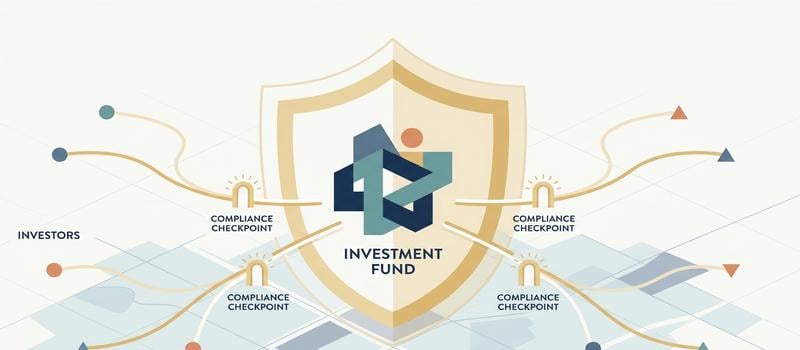
Here is the mental model. Rule 506 offerings create what federal law calls a “covered security.” Under the National Securities Markets Improvement Act of 1996 – NSMIA – a covered security is preempted from state registration and state substantive review. That is the layer New York cannot touch. What New York can still do is demand a notice filing, charge you for it, and come after fraud. This is the same dual-layer structure you see in state Blue Sky Laws across the country, and New York is one of the more aggressive states on the enforcement side.
Bypassing the ‘Issuer-Dealer’ Quirk Under Rule 506
New York’s Martin Act reads strangely to any out-of-state sponsor, and the reason is NY GEN BUS § 359-e. Historically, the Martin Act treated an issuer selling its own securities as a “dealer.” In plain English, when you raised money for your own fund or operating company, New York’s framework wanted to treat you like a securities broker selling to the public, with the registration and disclosure steps that come with that label. That is not how most sponsors think about their own deal, and it is why the statute looks so foreign when you read it cold.
Rule 506 bypasses that. Because a Rule 506 offering produces a covered security, NSMIA preempts New York’s ability to force you through that dealer-style registration for the offering itself. You do not register the securities with New York. You do not submit to a merit review. The old “issuer-dealer” registration machinery in § 359-e does not apply to your Rule 506 raise.
Now the important part. Preemption of registration is not a total hall pass. New York explicitly retains the power to require a notice filing for a Rule 506 offering sold to its residents, and it retains its full anti-fraud jurisdiction. The way I think about it: jurisdiction defines applicability, and timing defines compliance. Whether New York’s rules reach your deal is one question. Whether you actually did what New York requires, and did it on time, is a separate one.
So do not skip the state filing just because you have a valid federal exemption. That is one of the most common mistakes I see. The federal exemption answers whether you can sell. It does not answer whether you satisfied New York’s notice obligation, and treating the two as the same thing exposes you to compliance violations you did not need.
New York’s Modern Notice Filing Process and the 15-Day Deadline
The practical answer is that you file a Form D notice with New York electronically, through the NASAA Electronic Filing Depository, and you pay the state’s fee at the same time. You do this within 15 days of your first sale to a New York resident. There is no merit review and no waiting for approval. You submit the notice, pay, and you are done for that filing.
The Transition to NASAA EFD
New York now handles Rule 506 notice filings through the NASAA Electronic Filing Depository, or EFD, and that changes how you file. The state moved to electronic filing, and the EFD portal is the mechanism you use to submit the Form D notice and pay the fee for a New York resident.
This matters because a lot of older guidance is wrong now. If you find an article telling you to prepare a paper Form 99 and mail it to the New York Department of Law, that guidance is stale. Do not follow it. Sponsors relying on outdated instructions will either file the wrong way or assume they filed when the state never received anything. The filing lives in the EFD system, tied to the same Form D you file with the SEC. If it is not in EFD, for practical purposes it is not filed.
Tracking the ‘First Sale’ Trigger
The 15-day clock starts at your first sale to a New York resident, not at your final closing. That distinction is where sponsors get hurt. “First sale” means the first time a New York investor is irrevocably committed and you have accepted their funds. Once that happens, you have 15 days. Not 15 days after the fund closes. Not 15 days after you get around to it.
Here is the trap. A fund can stay open for months. Sponsors mentally file the state notice under “things I do when the raise wraps up.” Meanwhile, a New York investor wired money in week two, and the clock already started. By the time the fund closes, you are long past the deadline and you did not realize it.
The fix is a process, not a memory. The moment you accept funds from an investor in a new state, tell your counsel. That single habit prevents almost every late-filing problem I see. You want the person tracking your Blue Sky filings to know about the New York investor the week the money comes in, not the week the fund closes.
Missing the 15-day deadline is not something to shrug off. A late New York filing exposes you to potential administrative liability, regulatory scrutiny, and compliance violations. The filing itself is routine. Missing it is not, and it is entirely avoidable if you treat the first New York dollar as the event that starts the clock.
The Economic Reality of New York Filing Fees
New York charges a state-mandated filing fee that is tiered based on the size of your offering, and here is the part that catches sponsors off guard: the fee is assessed per state, not per investor. One New York investor triggers the same fee as ten New York investors. The number of checks does not change the cost. Crossing the state line does.
Evaluating the Cost of Capital Across State Lines
Think about what that means for a small check. Say you have a $50,000 investor in New York, and everyone else in the deal is somewhere else. That single New York investor pulls you into New York’s fee structure, and you pay the same state-mandated fee you would pay if you had raised a million dollars from New York residents. The fee follows the jurisdiction, not the dollar amount that came from any one person.
New York sits on the higher end of that range. As a rough illustration of what a high-fee state can look like in the real world, a New York notice filing on a larger offering can run in the neighborhood of $1,200. Treat that as a conceptual example of how expensive a single state can be, not as a guaranteed statutory number. The exact tier depends on your offering amount, and you should confirm the current schedule before you file.
Here is the practical calculus. If your minimum investment is low and you are letting small checks in from every state, you are stacking up per-state fees against small dollars. That is not a reason to turn away a New York investor. It is a reason to think about your minimum. If it were me, I would not set a $25,000 minimum and then accept one investor from each of fifteen states without doing the math on what those fifteen state filings cost. Sometimes the fee is trivial next to the raise. Sometimes a small out-of-state check costs you more in filing fees than it is worth. Decide that on purpose, not by accident.
There is also a timing dimension for funds that stay open. A syndication with a hard close is usually a one-time filing event. A fund that stays open across calendar years and keeps taking new investors is different. State notice filings generally carry a renewal concept – after roughly a year, an open, ongoing offering may need its notice filing renewed to stay current. I am not going to quote you an exact New York renewal fee here, because the amount is the kind of thing you confirm against the current regulator schedule rather than trust from memory. The point is structural: if your fund is going to live for years and keep raising, build renewal tracking into your compliance process from the start. Do not let the New York notice quietly lapse while you are still accepting New York money.
Real Estate Syndications and New York’s Anti-Fraud Jurisdiction
Yes, New York still cares a great deal about real estate syndications under Rule 506 – just not in the way most sponsors expect. Rule 506 stops New York from putting your real estate offering through registration or merit review. It does nothing to strip the state of its anti-fraud and investigative powers under the Martin Act. So the paperwork hurdle drops away, and the enforcement hurdle stays fully in place.
New York has one of the most developed bodies of real estate syndication law in the country, and the anchor is NY GEN BUS § 352-e. That section governs offerings of interests in real estate located in or offered from New York and, in the purely state-regulated context, requires a detailed offering statement – the New York “offering plan” – to be filed with and reviewed by the Department of Law before interests are sold. If you have ever heard someone talk about filing a real estate syndication offering plan with the New York Attorney General, that is § 352-e.
The Boundaries of Federal Preemption
Rule 506 preemption changes which part of § 352-e reaches your deal. Because a Rule 506 offering produces a covered security, NSMIA preempts New York from requiring you to register that real estate offering or clear a § 352-e offering-plan review as a condition of selling to New York residents. You are not filing the full New York offering plan and waiting for the Department of Law to review it. That is the registration-style layer preemption takes off the table.
What preemption does not touch is fraud. The distinction is between preempting the registration of the security and retaining anti-fraud authority over how the security is sold. Rule 506 answers the first. It says nothing about the second. If your real estate syndications offering materials misstate the asset, hide a conflict, or paint a return picture the deal cannot support, New York can still come after you.
That anti-fraud power is not theoretical, and it is one of the reasons the Martin Act has the reputation it does. New York’s framework lets the Attorney General investigate suspected fraudulent practices in securities and real estate offerings and seek injunctive relief – in plain English, the state can move to halt an offering it believes is fraudulent, not just impose a fine after the fact. The historical mechanics of that injunctive and investigative power sit in the enforcement provisions of the Martin Act, and they operate independently of whether your offering is a Rule 506 covered security.
So here is the practical takeaway for a real estate sponsor. Federal preemption saves you from the New York offering-plan registration process. It does not lower the bar on your disclosure. If anything, knowing that New York keeps its full anti-fraud reach is a reason to be more careful with your Private Placement Memorandum, not less. The state cannot make you register. It can absolutely make you answer for what you told investors.
Intrastate Offerings: When Full New York Compliance is Required
If you skip a federal Regulation D exemption and structure the deal as a purely intrastate offering, you lose federal preemption completely. That is the whole tradeoff. Rule 506 gave you a covered security and kept New York out of registration. An intrastate offering has no covered security, so there is nothing preempting New York, and the state’s registration and exemption rules apply to your deal in full.
The Tradeoffs of a State-Only Approach
An intrastate offering is a federal concept – the federal intrastate exemption, including the modern version under Rule 147A, lets you raise money without SEC registration if the offering stays within a single state. In exchange for staying out of the federal system, you also stay out of federal preemption. There is no NSMIA covered-security shield. So the offering falls squarely under New York’s Blue Sky framework, and you are back to dealing with state registration or a state exemption directly.
Residency is the pressure point. An intrastate exemption is built around keeping the offering in-state, which means purchaser residency actually matters here in a way it does not under Rule 506. Under Rule 506 you can take investors across state lines and handle each state with a notice filing. An intrastate offering does not give you that flexibility – the whole structure depends on who your investors are and where they reside. I am not going to tell you every asset and every activity has to sit inside New York, because that overstates the rule, but the exemption is genuinely fact-dependent and it collapses if you are not careful about who you sell to.
When preemption does not apply, NY GEN BUS § 359-f is where you look. Section 359-f sets out exemptions from New York’s standard registration and dealer-registration requirements under § 359-e – the same registration machinery Rule 506 preempted for your covered-security offering. In plain English, § 359-f is the statute that tells you which offerings and transactions New York will let through without going through its full registration process. For a Rule 506 sponsor, § 359-f is largely academic, because NSMIA already took registration off the table. For an intrastate or state-only offering, it is the front door. You either fit a § 359-f exemption or you deal with New York registration, and there is no federal exemption standing between you and that choice.
None of this makes an intrastate offering a bad idea. It makes it a narrower one. It can be the right tool for a genuinely local deal with in-state investors and no plan to raise nationally. But it is more fact-dependent and less forgiving than Rule 506, and it puts you fully inside New York’s rules instead of using a federal exemption to limit the state to a notice filing. Most out-of-state sponsors end up on Rule 506 for exactly that reason – it travels across state lines, and the intrastate route does not.
Navigating New York Blue Sky Compliance with Out-of-State Counsel
For a Rule 506 offering, you generally do not need a separately New York-licensed attorney to handle the federal exemption and the New York notice filing. Regulation D is a federal securities-law framework, and nationwide securities counsel routinely runs Rule 506 offerings and coordinates the associated state notice filings – including the New York EFD filing – across all fifty states. Where a New York-specific analysis actually becomes necessary is the purely state-law offering, not the federal one.
Federal Exemptions vs. State Practice
Start with what Rule 506 actually is. It lives in Regulation D, which is federal. When you rely on Rule 506, the core legal work – the exemption analysis, the Private Placement Memorandum, the subscription documents, the Form D filed with the SEC – is federal securities practice. It is the same framework whether your investors sit in New York, Texas, or California.
The state notice filings ride along with that federal offering. Because New York’s Rule 506 filing goes through the NASAA Electronic Filing Depository and is tied to the same Form D you file with the SEC, syndication counsel commonly handles the New York EFD notice filing as part of managing the federal offering nationally. That is the normal way multi-state Reg D raises get run. You are not hiring a different lawyer in every state your investors happen to live in. You have counsel coordinating one federal offering and the notice filings that attach to it.
A purely state-law offering is a different animal. Once you drop the federal exemption and rely on a New York intrastate or state-only structure, you are inside New York’s own registration and exemption rules, and those raise New York-specific questions that can call for local analysis. I am not going to tell you a New York license is never relevant to any transaction – it can be, particularly on genuinely state-law offerings. The clean line is this: federal Rule 506 offerings and their EFD notice filings are handled at the federal level by nationwide securities counsel, while a purely New York state-law offering is where state-specific legal input belongs.
Frequently Asked Questions About New York Blue Sky Laws
Most sponsors leave the main discussion with a handful of the same practical questions. Here are short, direct answers. None of this is individualized legal advice, and where a number or procedure needs current confirmation, I say so.
Does a Rule 506 offering require a New York Blue Sky notice filing?
Yes. When you sell a Rule 506 offering to a New York resident, the covered-security treatment under NSMIA keeps New York out of registration and merit review, but it does not eliminate the state’s notice filing. New York still expects a Form D notice filed through the NASAA Electronic Filing Depository, along with its fee.
That is the point people miss. Federal preemption is narrow. It takes registration and substantive review off the table. It does not take the notice filing off the table. A notice filing is not a merit review – New York is not evaluating whether your deal is good, fair, or likely to work. It is recording that a covered-security offering is being sold to its residents and collecting the fee that comes with it.
Is a New York Blue Sky notice filing the same as registering the offering?
No. A registration is a substantive process where the state can review the offering and decide whether it clears. A Rule 506 notice filing is not that. You submit the Form D notice, pay the fee, and you are done. There is no approval to wait for and no review to pass.
Do not read anything into the filing beyond what it is. New York accepting your notice filing is not the state approving, endorsing, or blessing your deal. It is an administrative record, nothing more. And it does not soften New York’s anti-fraud authority – the state keeps its full Martin Act reach over how you sell, regardless of the notice filing.
When is the New York notice filing due, and what does it cost?
The filing is due within 15 days of your first sale to a New York resident – the first time a New York investor is irrevocably committed and you have accepted funds, not your final closing. You file through EFD and pay the state fee at the same time.
On cost, I am going to be careful. New York’s fee is tiered based on the size of the offering, and it sits on the higher end compared to many states. I am not going to quote you an exact current tier as settled law, because the precise schedule is the kind of thing you confirm against the current New York regulator source before you file rather than trust from an article. Treat any specific dollar figure you have seen as a rough illustration, not a guarantee. Confirm the current tier for your offering amount before you submit.
How is a Rule 506 offering different from a purely intrastate New York offering?
The short version: Rule 506 travels across state lines, and a purely intrastate offering does not. Under Rule 506 you can take investors in multiple states and handle each one with a notice filing. That is why most out-of-state sponsors use it.
A purely intrastate offering is narrower and far more fact-dependent. Because it relies on staying within a single state instead of a federal covered-security exemption, purchaser residency becomes critical – who your investors are and where they reside drives whether the structure holds. Rule 506 does not put that kind of weight on residency. I would not treat the intrastate route as broadly usable for a sponsor who wants to raise nationally, and I would not oversimplify how those in-state rules work. It is a genuine tool for a genuinely local deal, and it demands careful state-law analysis.
Can out-of-state securities counsel handle a New York Rule 506 notice filing?
Generally, yes, for the federal offering. Regulation D is a federal securities-law framework, and nationwide securities counsel routinely runs Rule 506 offerings and coordinates the associated state notice filings – including the New York EFD filing – as part of managing one federal raise. Because the New York filing rides along with the same Form D you file with the SEC, that coordination is the normal way multi-state Reg D deals get run.
A purely New York state-law or intrastate offering is where the analysis shifts. Once you are inside New York’s own registration and exemption rules rather than a federal exemption, you are dealing with state-specific questions that can call for local input. I am not going to tell you a New York license is never relevant – it can be, particularly on genuinely state-law offerings. The clean line is that federal Rule 506 work and its EFD notice filings are handled at the federal level, while purely state-law offerings are where state-specific legal analysis belongs.

Tilden Moschetti, Esq., is a highly sought-after syndication attorney with nearly two decades of experience. His clientele ranges from real estate developers and startups to established businesses and private equity funds. Tilden’s expertise in syndication law comes not only from his knowledge of syndication and securities law but from real, hands-on experience as an active syndicator himself in every real estate product type and nearly all markets in the US. His knowledge and experience set him apart and established him as the Reg D legal services leader.