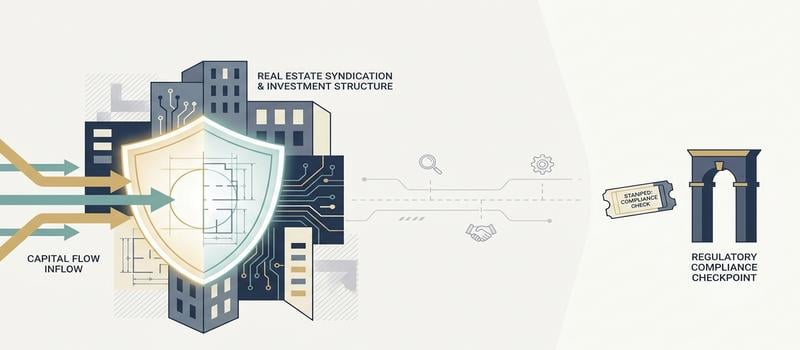
How Rule 506 Preemption Interacts with Louisiana Blue Sky Laws
If you are raising capital under Rule 506 and taking money from a Louisiana resident, the short answer is this: Louisiana cannot register or approve your offering, but you almost certainly still have to file something with the state and pay a fee. Federal law took away Louisiana’s power to review the deal on its merits. It did not take away the state’s power to require a notice filing and to go after fraud.
That is the whole mental model for this article. Rule 506 sits inside federal Regulation D securities laws, and a compliant Rule 506 offering produces “covered securities.” Congress, through the National Securities Markets Improvement Act (NSMIA), said that states cannot register or impose merit review on covered securities. So Louisiana does not get to look at your offering and decide whether it is fair, whether the terms are good, or whether your investors are being treated well.
But NSMIA left a carve-out. States can still require a notice filing, charge a fee, and enforce their anti-fraud statutes. That is the part sponsors miss. They hear “preemption” and assume Louisiana is out of the picture entirely. It is not.
The Limits of Federal Preemption in Louisiana
A properly conducted Rule 506 offering creates federal covered securities, and Louisiana cannot subject those securities to state registration or merit review.
In plain English, a covered security is a security that Congress decided the states no longer get to regulate at the substantive level. Rule 506(b) and Rule 506(c) both produce covered securities. That means the Louisiana securities regulator cannot make you go through a state registration process, cannot demand that you justify your economics, and cannot block a compliant offering because it dislikes the structure.
Here is the practical reality. If your Rule 506 offering is done correctly, no Louisiana regulator has the authority to stop it or reject it on the merits. That is a real benefit, and it is the reason most syndicators rely on Rule 506 instead of trying to register.
The distinction to hold onto is between two very different things. Substantive merit review – the state deciding whether your deal is good enough to be sold – is preempted. An administrative notice filing – telling the state you are selling covered securities to its residents – is not. One is gone. The other survives.
What Authority Louisiana Retains
Louisiana keeps three specific powers over a Rule 506 offering: it can require a notice filing, it can collect a fee, and it can enforce its anti-fraud laws.
The notice filing is exactly what it sounds like. It gives the state a record of who is raising capital from Louisiana residents. It is not an application for permission. The state is not reviewing it and deciding whether to say yes. It is a filing that puts you on the record, and it is triggered when you sell to a Louisiana investor. The specific deadline and mechanics are covered later in this article, and current details should be verified against the state’s current requirements before you file.
The fee is the second retained power. States are allowed to charge for the notice filing, and that fee funds state regulatory operations. Historically, Louisiana has charged a set fee for a new Regulation D notice filing, but the current amount and any separate platform charge need to be confirmed against the current schedule rather than assumed. The later section handling filing mechanics gets into that.
The third power is the important one to internalize: anti-fraud enforcement. Preemption protects you from registration and merit review. It does not shield you from a fraud investigation. If you make a material misstatement, omit something an investor needed to know, or run a deceptive offering, Louisiana can investigate and pursue you regardless of your Rule 506 exemption. Preemption is about who gets to require registration. It is not immunity.
Louisiana’s Base Registration Requirement Under Title 51
To understand why Rule 506 matters so much in Louisiana, you have to see what it saves you from. Louisiana’s default rule is that a security must be registered with the state before it is sold. Rule 506 preemption is the legal mechanism that lets you skip that default requirement. Without it, you would be looking at a full state registration process.
The Default Rule: LA R.S. 51:705
LA R.S. 51:705 is the provision that says, in effect, you cannot sell a security in Louisiana unless it is registered or unless it fits an exemption. Title 51 is where Louisiana keeps its trade and commerce laws, and the securities rules live inside it. This statute is the starting point for everything else.
In plain English, the state’s baseline position is registration first. If you were forced to comply with LA R.S. 51:705 on its own terms, you would be filing a registration for your offering with the state and going through a state-level process before you could take a dollar from a Louisiana investor. That is the burden most sponsors want to avoid, and it is exactly the burden that full state registration imposes.
Rule 506 is what gets you out of that. Because a compliant Rule 506 offering produces federal covered securities, the state registration requirement in LA R.S. 51:705 is preempted. You are not fulfilling its substantive registration steps. You are relying on federal law to bypass them.
That is the practical takeaway. LA R.S. 51:705 is the rule you would be stuck with if Rule 506 did not exist. It is not a checklist you work through in a Rule 506 deal. It is the reason the federal exemption is worth using in the first place – and it is why the only Louisiana obligation that remains is the notice filing, not a state registration.
Compliance Timing and the Immediate Legal Notification Protocol
The Louisiana notice filing is a timing problem, not just a paperwork problem. The clock starts at your first sale to a Louisiana resident, and if your offering stays open long enough, you have to renew. Sponsors who treat the state filing as a cleanup task at the end of the raise are the ones who get it wrong.
The First Sale Trigger
Your Louisiana filing obligation is triggered by the first sale to a Louisiana resident – meaning the point at which you accept investment funds or execute a subscription agreement with someone who lives in Louisiana. That is the event that starts the clock. Not the day you launch the offering. Not the day you file your federal Form D. The first Louisiana sale.
Here is where sponsors get into trouble. They decide they will handle all their state filings once the offering closes, because it feels more efficient to batch the work. That approach invites a compliance failure. If a Louisiana investor comes in early and the offering runs for eight months, you have already blown past the filing window long before you sat down to do the paperwork.
So the practical rule is simple. The moment you receive funds from a resident of a new state, tell your securities counsel. Not next week. Immediately. That is the whole point of treating this as an immediate notification step rather than an end-of-raise task – the deadline attaches to the sale, so counsel needs to know about the sale when it happens.
On the deadline itself: Louisiana notice filings are typically due within 15 days of the first sale, historically aligning with the federal Form D timeline. Treat that as the working assumption, not the settled current rule. The exact deadline must be verified against Louisiana’s current requirements before you file, because a timing rule you assumed from memory is exactly the kind of thing that changes without anyone telling you.
The 365-Day Renewal Rule
A single Louisiana notice filing does not cover your offering forever. If your fund or syndication stays open and keeps taking new Louisiana investors, you generally have to renew the state filing on roughly a 365-day cycle. The initial filing covers a window. It does not cover the life of an open-ended raise.
This matters most for long-running funds. Say you file with Louisiana when your first resident invests in March, and the fund is still open the following spring. If you accept a new Louisiana investor more than a year after that initial filing, you cannot rely on the original notice. You have to actively renew.
The trap is quiet. Nobody sends you a reminder. A sponsor who filed correctly in year one can drift into year two, keep accepting Louisiana money, and effectively be selling without a current filing on record. That is not a paperwork oversight – it is unlicensed selling into the state during the exact period the sponsor assumed they were covered.
If it were me, I would calendar the renewal date the same day I make the initial filing, and I would track it per state. The 365-day cycle is the general administrative rhythm for these notice filings, and the specific renewal timing and requirements should be confirmed against Louisiana’s current rules before you rely on them.
Submitting the Notice Filing: NASAA EFD and Administrative Fees
Once you know a Louisiana filing is due, the actual submission runs through the NASAA Electronic Filing Depository (EFD), and it comes with a state fee. You are not drafting a Louisiana-specific document from scratch. You are transmitting a copy of your federal Form D to the state and paying to have it on file.
Using NASAA EFD for Louisiana Filings
The NASAA EFD platform is the modern, expected route for getting your Form D notice to Louisiana. It is the online system state securities administrators use to receive federal covered-security notice filings, and it standardizes the process so you are sending the same Form D data set to each participating state rather than reformatting it for every regulator.
In practical terms, you are not printing a Form D and mailing it to Baton Rouge. You file your Form D with the SEC federally, and then you use EFD to transmit that same filing to Louisiana and pay the associated fee. The two steps are connected – the federal filing comes first, and the state transmission through EFD follows.
I would treat EFD as the working method, not as something to reinvent. It is the route the research points to and the one most sponsors and their counsel actually use. If you have a reason to think Louisiana accepts or requires a different method for a particular filing, confirm it against the state’s current instructions before you assume the platform is the only accepted channel.
Filing Fees and Costs
The Louisiana notice filing carries a fee, and you pay it as part of the EFD submission. This is the state’s retained power to charge for the filing, and paying it is part of keeping the notice on record.
Historically, the fee for a new Regulation D notice filing in Louisiana has been $300. Treat that as a typical historical figure, not a guaranteed current number. Fee schedules change, and the amount you actually owe should be confirmed against the current Louisiana Office of Financial Institutions schedule before you submit.
There is also a separate question of whether EFD itself adds a platform processing charge on top of the state fee. That is the kind of detail that shifts over time, so verify both the state fee and any platform charge at the moment you file rather than budgeting off an old number.
Rule 506 vs. Intrastate Offerings in Louisiana
For most syndications, federal Rule 506 is the better tool than a Louisiana-only exemption, and the reason is flexibility. Louisiana has its own exemptions on the books, but they are narrow, fact-specific, and unforgiving if a single investor falls outside the box. Rule 506 lets you raise from investors across the country. A state exemption ties you to Louisiana and punishes you the moment that assumption breaks.
The Narrow Scope of Louisiana Exemptions
Louisiana’s own securities exemptions are targeted at specific issuers and instruments, not at general private syndications. They are not a broad substitute for Rule 506.
LA R.S. 51:708 is the statute that lists Louisiana’s exempt securities and exempt transactions. It covers things like securities issued by governmental entities, certain obligations of nonprofit organizations, and specific categories of promissory notes and transactions. These are carve-outs for particular kinds of issuers and deals. If you are a real estate sponsor or a private equity fund manager raising money for a portfolio, most of these exemptions were not written with you in mind. They fit legacy structures and specific instrument types, not a standard investor syndicate.
LA R.S. 6:923 sits in Title 6, which is Louisiana’s banking law, and it addresses narrow exemptions tied to specific banking or association structures. For a normal syndication, this one is essentially background noise. It exists to handle particular financial-institution arrangements, and it is generally irrelevant to a sponsor forming an LLC or LP to hold assets and take in outside investors. I mention it only so you understand the pattern: Louisiana’s exemptions are aimed at defined, specialized structures, not at the general private offering you are running.
That pattern is the point. State exemptions are keyholes. Rule 506 is a door.
The Practical Risk of Intrastate Offerings
The real danger with a purely intrastate offering is that it collapses if you accept the wrong investor. If you rely on a Louisiana state-only exemption keyed to in-state offerings, your compliance depends on keeping the entire offering inside Louisiana – and that is much harder to control than it sounds.
Purchaser residency is where these deals break. An intrastate exemption generally depends on selling only to residents of the state, along with rules about the issuer doing business in the state. Accept one investor who is actually domiciled somewhere else, and you can lose the exemption for the whole offering. That is a serious consequence for a single mistake.
And residency is slippery in the real world. Investors move. Someone who was a Louisiana resident when you started your raise buys a place in Texas six months later. People invest through trusts, LLCs, and other entities where the “resident” question is not obvious. You are relying on a status that can shift underneath you, and you often cannot verify it as cleanly as you would like.
Rule 506 avoids the whole problem. It does not care whether your investors are all in Louisiana or spread across fifteen states. You can take capital from wherever your investors happen to live, subject to making the state notice filings this article has been walking through. That flexibility is why nationwide syndicators default to Rule 506. You do not want your entire exemption riding on the residency of every person who wires you money.
Retained State Anti-Fraud Authority and Burden of Proof
Yes, Louisiana can still investigate your syndicate. Federal preemption stopped Louisiana from registering or merit-reviewing your Rule 506 offering. It did nothing to touch the state’s power to investigate and prosecute securities fraud. Those are two different questions, and sponsors who confuse them are setting themselves up for a nasty surprise.
Policing Deception and Fraud
Louisiana’s anti-fraud authority under Title 51 stays fully active against any sponsor selling into the state, Rule 506 exemption or not. If you make a false statement, leave out something a Louisiana investor needed to know, or run a deceptive offering, the state can come after you.
The mistake to avoid is treating preemption as a shield. It is not. Preemption is narrow. It says Louisiana cannot make you register a covered security or pass judgment on the merits of your deal. It says nothing about fraud. A material omission is still a material omission. A misleading projection is still a misleading projection. The federal exemption that lets you skip state registration does not buy you any protection if you deceive an investor.
Think of it this way. Preemption governs who gets to require registration. Anti-fraud enforcement governs whether you told the truth. Congress took the first power away from Louisiana. It left the second one exactly where it was.
The Burden of Proving the Exemption (LA R.S. 51:721)
If a dispute arises about whether your offering was actually exempt, LA R.S. 51:721 puts the burden of proving that exemption on you – the person claiming it. Not on the state. On the sponsor.
That is a meaningful allocation. In a regulatory dispute, Louisiana does not have to prove you were required to register. You have to prove you qualified for the exemption you relied on. If you cannot produce the record that shows you did everything Rule 506 required and made the notice filing the state expected, you are the one holding the empty hand.
This is why the record-keeping matters so much. The timely notice filing, the Form D, the accredited-investor verification or the accredited/non-accredited investor list, the subscription documents – those are the evidence that you qualified. Keep them clean and keep them current. Under LA R.S. 51:721, the burden of proving compliance is going to land on you, so the file you build during the raise is the file you will be defending later.
The Role of Out-of-State Securities Counsel
You do not need a local Louisiana lawyer to structure a Rule 506 offering or to make the Louisiana notice filing. Rule 506 is federal law, and nationwide syndication counsel routinely builds the offering and coordinates the state notice filings that go with it. The Louisiana filing is an administrative coordination step in a federal offering, not a Louisiana-specific legal proceeding that requires a Louisiana bar card.
Federal Law vs. State-Specific Advice
The distinction that matters is between federal securities structuring and state-specific legal work. Those are not the same thing, and they do not require the same lawyer.
Rule 506 lives in federal Regulation D. When counsel drafts your PPM, your Operating Agreement or LPA, and your subscription documents, and builds the offering to satisfy Rule 506(b) or Rule 506(c), that is federal work. It does not change from state to state. That is why experienced syndication counsel can run offerings for sponsors raising money across the country without hiring a separate attorney in every state where an investor happens to live. The federal framework is the same in Louisiana as it is in Texas or Ohio.
The Louisiana notice filing fits inside that same federal offering. Transmitting your Form D to the state through NASAA EFD and paying the fee is administrative coordination tied to your federal exemption, not a standalone Louisiana legal matter. Counsel handling your Rule 506 offering handles that step as part of the same engagement. You are not retaining a Louisiana lawyer to argue anything or appear before anyone. You are putting a covered-security notice on file.
Where a local Louisiana lawyer actually becomes relevant is a different situation. If you were relying purely on a Louisiana state exemption instead of Rule 506 – the narrow, state-law path this article already walked through – you would be operating under Louisiana law, and that is genuinely state-specific work. The same is true if you were facing a Louisiana enforcement action or a state-court dispute. At that point you are inside Louisiana’s legal system, and local counsel matters.
So the practical answer is this. For a standard Rule 506 raise, your syndication counsel structures the deal and coordinates the Louisiana notice filing as part of the federal offering. If you drop into a purely state-law exemption or a Louisiana enforcement fight, that is a different question, and you should treat local Louisiana counsel as something to evaluate rather than assume you can skip.
Frequently Asked Questions About Louisiana Blue Sky Laws
Most of the questions that come up after the main discussion are short, practical ones. Here are the ones sponsors ask most often, with direct answers. Where a detail still needs to be confirmed against Louisiana’s current requirements, I say so.
Does a Rule 506 offering require a Louisiana Blue Sky notice filing?
Generally, yes. If you sell to a Louisiana resident under Rule 506, the state can require a notice filing, and you should plan on making one. Federal preemption took away Louisiana’s power to register or merit-review your offering, but it did not take away the state’s power to require a notice filing when covered securities are sold to its residents.
That is the piece people get backwards. Preemption is not “no state involvement.” It is “no state registration and no merit review.” The notice filing is a separate, surviving obligation – a record that you are selling covered securities into the state, not an application the regulator approves or rejects. The trigger and mechanics track what the earlier sections covered, and the specific timing and procedure should be verified against Louisiana’s current requirements before you file.
Is a Louisiana Blue Sky notice filing the same as registering the offering?
No. A notice filing and a registration are two different things, and it matters that you keep them straight.
A registration is what LA R.S. 51:705 would demand if Rule 506 did not preempt it – a state-level process where the regulator can review and pass judgment on the offering. A Rule 506 notice filing is not that. You are putting a covered-security notice on file and paying a fee. The state is not reviewing it, not approving it, and not endorsing your deal. Do not describe a notice filing to investors, or to yourself, as Louisiana having “cleared” or “approved” the offering. It did neither.
What Louisiana does keep, notice filing or not, is its anti-fraud authority. The filing does not buy you approval, and the absence of merit review does not buy you immunity from a fraud investigation.
When is the Louisiana notice filing due, and what does it cost?
The filing clock starts at your first sale to a Louisiana resident – the point at which you accept funds or execute a subscription agreement with someone who lives in the state. That is the triggering event.
On the deadline and the fee, I am going to be honest about what is settled and what is not. Louisiana notice filings are typically due within 15 days of the first sale, historically aligning with the federal Form D timeline, and the historical fee for a new Regulation D notice filing has been $300. Treat both as working assumptions, not current guarantees. Deadlines and fee schedules change, so confirm the current deadline and the current fee against the Louisiana Office of Financial Institutions schedule before you file. If there is a separate NASAA EFD platform charge on top of the state fee, verify that at the same time rather than budgeting off an old number.
How is a Rule 506 offering different from a purely intrastate Louisiana offering?
The practical difference is flexibility versus fragility. A purely intrastate Louisiana offering is narrow and fact-dependent, and it lives or dies on purchaser residency. Rule 506 does not.
An intrastate exemption generally depends on selling only to residents of the state, along with rules about the issuer doing business there. That makes residency the pressure point – and residency is hard to control, because investors move and often invest through trusts and entities where the “resident” question is not obvious. Rule 506 sidesteps that. It lets you accept investors across state lines, subject to making the state notice filings this article has been walking through. For most syndications, that is why Rule 506 is the safer, more flexible choice.
Can out-of-state securities counsel handle a Louisiana Rule 506 notice filing?
For a standard Rule 506 raise, yes – nationwide securities counsel commonly structures the federal offering and coordinates the associated state notice filings, including the Louisiana filing. Rule 506 is federal law, so the structuring work does not change from state to state, and transmitting your Form D to Louisiana through NASAA EFD is administrative coordination tied to that federal exemption.
The analysis changes when you leave the federal framework. If you were relying purely on a Louisiana state exemption, or you were dealing with a Louisiana enforcement action or a state-court dispute, that is state-specific work, and local Louisiana counsel becomes something you evaluate rather than skip. I am not telling you state licensing rules can never apply or that you will never need a local lawyer – only that coordinating a federal Rule 506 notice filing is a normal part of a nationwide securities engagement.

Tilden Moschetti, Esq., is a highly sought-after syndication attorney with nearly two decades of experience. His clientele ranges from real estate developers and startups to established businesses and private equity funds. Tilden’s expertise in syndication law comes not only from his knowledge of syndication and securities law but from real, hands-on experience as an active syndicator himself in every real estate product type and nearly all markets in the US. His knowledge and experience set him apart and established him as the Reg D legal services leader.