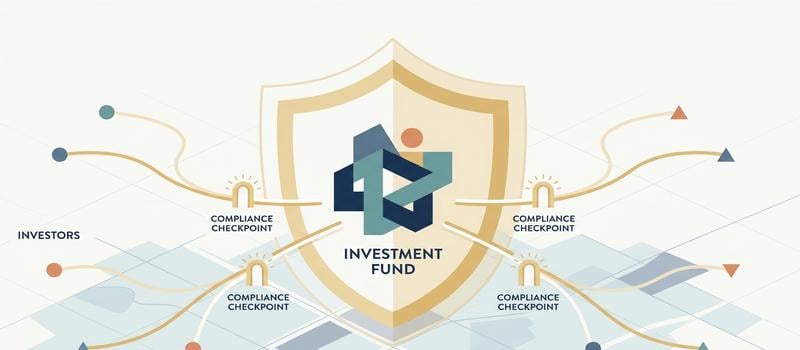
The Federal Overlay: Rule 506 Preemption vs. Florida State Authority
Federal Rule 506 preemption does not mean you can ignore Florida securities law. It means one specific thing: Florida cannot put your Rule 506 offering through its substantive registration review. The state still keeps real authority over your deal. It can require a notice filing, it can collect a fee, and it can enforce its anti-fraud statutes against you. So the honest answer to “Do I have to worry about Florida?” is yes – just not in the way most sponsors assume.
Think of it as an overlay. Florida’s securities framework, Chapter 517, sits underneath as the baseline. Rule 506 is the federal layer that switches off one piece of that baseline – the registration review – while leaving the rest of Florida’s authority intact.
The Baseline Rule: Registration Under Section 517.07
Start with the default rule in Florida. Under Section 517.07, it is unlawful to sell or offer to sell any security in Florida unless the security is registered with the state or the transaction qualifies for an exemption. That is the starting point for everything.
Registration is not a rubber stamp. It is a substantive process where the state can examine the terms of the offering itself. For a sponsor running a private capital raise, going through full state registration in Florida – and then again in every other state where an investor lives – would be slow, expensive, and impractical. That is exactly why sponsors do not do it. They rely on an exemption instead. And the exemption almost every private syndication reaches for is federal Rule 506.
How Rule 506 Preempts State Registration Review
Rule 506 works because securities sold under it are treated as “covered securities” under federal law. Covered-security status is what triggers preemption. In plain English, that means Florida cannot force your Rule 506 offering through the Section 517.07 registration process or apply its own merit review to the deal. The federal government has occupied that space.
Here is where sponsors get into trouble. They hear “preemption” and assume it means Florida has no say at all. That is a dangerous mistake. Preemption is narrow. It knocks out state registration and merit review. It does not knock out Florida’s authority to require a notice filing, to charge a state fee for that filing, or to come after you under its anti-fraud laws if something goes wrong.
So the mental model is simple. Rule 506 buys you out of Florida’s registration line. It does not buy you out of Florida entirely. You still have to deal with the notice filing, the fee, and the fraud statutes – and those are the parts sponsors actually get wrong.
Florida’s Required Notice Filing: NASAA EFD and the First Sale Trigger
Florida requires a notice filing and a state fee for your Rule 506 offering. This is the part sponsors most often get wrong, so let me be blunt about it: when you sell to a Florida resident under Rule 506, you owe Florida a notice filing, and that filing carries a fee. Preemption knocked out registration. It did not knock out the notice.
Correcting the Myth: Florida Does Require a Notice and Fee
There is a myth floating around that because Rule 506 preempts state registration, Florida just gets nothing. That is not true. A notice filing and a state fee are required for Rule 506 offerings that reach Florida investors. The state gave up merit review. It did not give up its notice-and-fee authority.
The filing goes through NASAA EFD – the North American Securities Administrators Association’s Electronic Filing Depository. Here is the distinction that matters. EFD is just the software platform. It is the pipe. The substantive requirement to file a notice and pay a fee belongs to Florida, not to NASAA. EFD is simply how you get the notice and the money to the state.
I am not going to quote you a dollar figure. There is a state filing fee, and the EFD platform charges its own separate fee to process the submission. Both amounts change, and I would not want you relying on a number from an article. Verify the current state filing fee with the Florida Office of Financial Regulation and confirm the current platform charge on NASAA EFD before you file. Do not assume last year’s number still holds.
SEC EDGAR vs. NASAA EFD
SEC EDGAR and NASAA EFD are two different systems doing two different jobs. Sponsors conflate them and then think they are done when they are not.
SEC EDGAR is where your federal Form D gets filed with the SEC. That is the federal side. NASAA EFD is the separate system that transmits your state-level notice – and the state fee – to Florida.
Filing your Form D on EDGAR does not complete your Florida obligation. That is the trap. You can be perfectly current with the SEC and still owe Florida a notice that has never been submitted. Two systems. Two filings. Do not treat the federal Form D as if it satisfies the state.
The First Sale Trigger Rule
Your Florida filing obligation is triggered by the first sale to a Florida resident. It is not a post-closing cleanup item you get to handle whenever the raise wraps up.
This is what I call the first sale trigger. The moment you take money from your first Florida investor, the clock has started. The obligation is live. It does not wait for you to close the round, and it does not wait for you to get around to it.
Florida sets a specific deadline running from that first sale, but I am not going to give you a day count, because the exact deadline is the kind of thing you need to confirm against the current rule rather than an article. Verify the precise filing deadline with the Florida Office of Financial Regulation. The practical takeaway is simpler than the day count anyway: the first Florida dollar starts the clock, so treat the notice filing as something you prepare before you take that dollar, not after.
The Burden of Proof and Florida Anti-Fraud Authority
If Florida regulators challenge your offering, the burden of proving your exemption is on you – not on the state. That is the practical reality of the two parts of Florida’s retained authority you cannot ignore: the burden of proof and the anti-fraud statutes. Preemption took registration off the table. It did not take these off the table.
Section 517.171: The Sponsor’s Burden of Proof
Under Section 517.171, the burden of proving an exemption or an exception from a definition rests on the person claiming it. In a Rule 506 offering, that person is you – the sponsor or issuer.
Read that again, because it flips the instinct most people have. Florida does not have to assume you are compliant. If the Office of Financial Regulation questions your offering, the state is not required to prove you did something wrong first. It is up to you to come forward and prove your exemption was valid. The default is not “innocent until proven otherwise.” The default is “prove it.”
That changes how you should think about your records. Your EFD notice filing, your Form D, your investor accreditation and suitability records, your subscription documents – all of it exists partly so that if you ever get the question, you can answer it with a paper trail instead of a story. If you took money from a Florida investor and cannot show the notice was filed and the investors qualified, you are the one holding the bag. So keep the file. Keep it organized. That is not paranoia; it is the statute telling you where the burden sits.
Section 517.311: False Representations of State Approval
Florida’s anti-fraud law strictly prohibits telling investors that the state has endorsed, approved, sponsored, or guaranteed your offering. Your notice filing does not create any such approval, and you cannot imply that it did.
This is the point sponsors trip over right after they file. You submit your notice, you pay the fee, and it feels like Florida “signed off.” It did not. A notice filing is a notice – nothing more. The state did not review your terms, did not bless your economics, and did not vouch for you to investors. Saying otherwise, or even hinting at it in a pitch deck or an investor email, is a misrepresentation Florida takes seriously.
So watch the language. Do not let “we filed with Florida” drift into “Florida approved this deal.” Those are two very different statements, and only one of them is true.
The Role of the PPM in Satisfying Anti-Fraud Scrutiny
The Private Placement Memorandum is your central disclosure record, and it is the primary tool you use to defend against an anti-fraud claim. It is where you tell investors what the deal actually is – the risks, the conflicts, the fees, the assumptions – in writing, before they invest.
A PPM is not strictly required in every Rule 506 scenario. Under Rule 506(c), and under a Rule 506(b) offering sold only to accredited investors, the specific formal disclosure mandates that attach to non-accredited investors do not apply the same way. So technically, you may not be legally forced to produce a PPM in those situations.
But “not strictly required” and “not needed” are two different things. In the real world, the PPM is usually where your accurate-disclosure defense lives. Anti-fraud liability does not turn on whether a document was mandatory. It turns on whether you told investors the truth and disclosed the material risks. If a Florida investor later claims you left something out, the PPM is the record that shows what you actually disclosed and when. Skip it, and you are defending an anti-fraud claim with emails, phone calls, and memory. I would not want to be in that position, and I would not put a client there either. Build the PPM even when the statute does not force you to.
Rule 506 vs. Intrastate Offerings in Florida
Florida offers purely state-level exemptions for offerings conducted entirely within the state, but most sponsors still choose federal Rule 506. The reason is practical: an intrastate exemption is fragile, and a single out-of-state investor can break it. Rule 506 gives you a national framework that does not shatter the moment an investor lives across the state line.
Florida-Specific Exemptions Under Section 517.051
Florida’s transactional exemptions live in Section 517.051. These are the exemptions that let a security be sold in Florida without going through the Section 517.07 registration process on a purely state-law basis – separate from the federal Rule 506 route.
An intrastate offering is the classic example. The idea is that if your issuer and every investor are in Florida, and the offering stays inside the state, you can skip the SEC entirely. That sounds clean. But bypassing the SEC does not mean bypassing regulation – it puts the deal squarely under Florida’s jurisdiction, and Florida’s residency requirements are strict. The issuer has to qualify as in-state, and every purchaser has to be a Florida resident. There is no “close enough.” One purchaser outside the definition and the whole exemption is in jeopardy. So treat intrastate rules as narrow and fact-dependent, not as a shortcut.
Florida also draws hard lines around certain sensitive asset classes. Some investments – viatical settlement investments are the standard example – do not get to lean on the ordinary registration exemptions the way a typical private offering does. Florida has historically treated those assets as higher-risk and stripped away the usual exemption path to force more oversight. If your deal touches one of those niche categories, do not assume the standard exemption analysis applies. It may not.
Why Syndicators Prefer Rule 506 Geographically
The single biggest reason sponsors reach for Rule 506 instead of an intrastate exemption is durability across state lines. An intrastate exemption is an all-or-nothing bet on residency. Bring in one out-of-state purchaser and you can destroy the exemption for the entire offering – not just for that one investor.
Rule 506 does not work that way. Under Rule 506, an investor in another state does not blow up your federal exemption. It simply adds a state notice-filing obligation in that investor’s state. So instead of an exemption that collapses when your investor base spreads out, you get a federal framework that scales – you just pick up additional notice filings and fees as you go.
That difference matters more than it looks on paper, because residency is genuinely hard to pin down. An investor with homes in Florida and North Carolina, or a family trust organized in one state with beneficiaries in another, or someone mid-move – these are the situations that quietly break an intrastate exemption after the fact. Under Rule 506, a mistake about where someone “really” lives is a state notice-filing question, not a fatal defect. Under an intrastate exemption, the same mistake can unravel the whole raise. For most sponsors, that is the end of the debate.
Out-of-State Counsel and Multi-State Syndications
You generally do not need a Florida-licensed attorney to structure a Rule 506 offering, because Rule 506 is a federal exemption. The offering itself lives under Regulation D and federal law, so nationwide securities counsel routinely builds the deal and coordinates the state notice filings that come with it, including the Florida EFD submission. A purely intrastate Florida offering is a different animal, and that is where local-counsel questions get more serious.
Managing the Federal Framework Nationally
Rule 506 is a creature of federal law. The Private Placement Memorandum, the Operating Agreement or LPA, the Subscription Agreement, the Investor Questionnaire, the Form D – all of that is built on the federal Regulation D framework. It does not change from state to state. So a securities attorney who runs Rule 506 offerings is working in the same federal system whether the investor lives in Florida, Texas, or Oregon.
The state notice filings ride on top of that federal offering. When you take a Florida investor, the Florida notice filing gets prepared and submitted through NASAA EFD. When you take a Georgia investor, you pick up a Georgia notice. In practice, the primary syndication attorney coordinates those filings across every state where an investor lives, rather than the sponsor hiring separate counsel in each one. That coordination is the normal way multi-state Rule 506 raises get handled.
A purely state-law offering is where I would slow down. If you are not using Rule 506 and instead running an intrastate offering under Chapter 517, you are no longer inside the federal framework. You are operating entirely under Florida law, and that raises different state-law and licensing questions than a national Regulation D deal does. I am not going to give you a blanket rule about what any given attorney can or cannot do in that situation – that depends on the specific work and Florida’s own rules. The point is that the analysis is different, and you should not assume the same national-coordination approach carries over automatically.
The Immediate Out-of-State Notification Protocol
Tell your securities counsel the moment you receive funds from an investor in a new state. Not at the next monthly check-in, not when the round closes – immediately.
Here is why the timing matters. As covered above, the state filing obligation is triggered by the sale, and each state runs its own clock from that event. The Florida clock starts on the first sale to a Florida resident. If you are quietly collecting checks from investors in three states and you tell your attorney about it six weeks later, you may have already burned through filing windows in every one of them. Your counsel cannot prepare and submit a notice for a state they do not know you entered.
So build a simple operational habit: a new investor from a new state is a trigger event, and the trigger event is a phone call or an email to your lawyer that day. That is the starting gun for the notice filings – the Florida EFD submission and any others – to get prepared and submitted on time. It is a small discipline, and it keeps the jurisdiction-and-timing problem from turning into a missed-filing problem you find out about later.
Frequently Asked Questions About Florida Blue Sky Laws
A handful of questions come up on almost every Florida Rule 506 raise. Here are the short, direct answers.
Does a Rule 506 offering require a Florida Blue Sky notice filing?
Yes. If you sell to a Florida resident under Rule 506, Florida requires a notice filing and a state fee. Federal preemption knocks out one thing – the state’s substantive registration and merit review – but it does not knock out the notice.
That is the distinction to hold onto. Because your securities are federal “covered securities,” Florida cannot make you register the offering or run it through a state review of the deal’s terms. What Florida keeps is the right to be told you are selling to its residents and to collect a fee for that notice. A notice filing is Florida getting notice. It is not Florida evaluating your deal.
Is a Florida Blue Sky notice filing the same as registering the offering?
No. A notice filing and registration are two different things. Registration is a substantive process where the state can examine the offering itself. A notice filing is exactly what it sounds like – you are giving the state notice of a Rule 506 offering that reaches its investors, and paying the associated fee.
That distinction matters for how you talk to investors. A notice filing does not mean Florida reviewed, approved, endorsed, or vouched for your deal. It did none of those things. And filing the notice does not buy you out of Florida’s anti-fraud authority – the state can still come after you for misrepresentation regardless of the notice. Do not let “we filed in Florida” turn into “Florida approved this.”
When is the Florida notice filing due, and what does it cost?
The obligation is triggered by your first sale to a Florida resident. That much is the practical trigger – the first Florida dollar starts the clock.
The exact deadline and the exact dollar amounts are the parts I will not pin down for you in an article. There is a state filing fee, and NASAA EFD – the platform you file through – charges its own separate processing fee. Both the state fee and the platform charge change over time, and the precise number of days you have after that first sale is the kind of detail you confirm against the current rule, not against something you read last year.
So before you file, verify the current state filing fee and the current deadline with the Florida Office of Financial Regulation, and confirm the current platform charge on NASAA EFD. Treat the notice as something you prepare before you take that first Florida check, not after.
How is a Rule 506 offering different from a purely intrastate Florida offering?
The core difference is durability across state lines. A purely intrastate Florida offering under Chapter 517 is narrow and fact-dependent – it depends heavily on the issuer qualifying as in-state and on purchaser residency. Purchaser residency is the sensitive point, and residency is genuinely hard to pin down when you are dealing with people who split time between states, family trusts, or investors mid-move.
Rule 506 gives you more room. An investor in another state does not blow up your federal exemption – it adds a state notice-filing obligation in that investor’s state. So Rule 506 accommodates investors across state lines, subject to picking up those additional notice filings and fees, while an intrastate exemption is far less forgiving when your investor base spreads out. That is why most sponsors default to Rule 506.
Can out-of-state securities counsel handle a Florida Rule 506 notice filing?
For a federal Rule 506 offering, yes – this is standard practice. Rule 506 is a federal exemption under Regulation D, so nationwide securities counsel routinely builds the offering and coordinates the associated state notice filings, including the Florida EFD submission, across every state where an investor lives.
A purely state-law offering is a different question. If you are not using Rule 506 and are instead running an intrastate offering entirely under Florida’s Chapter 517, you are outside the federal framework, and the analysis changes. I am not going to tell you that state licensing rules can never apply or that local counsel is never needed in that situation – that depends on the specific work and Florida’s own rules. The reliable point is narrower: coordinating a federal Rule 506 offering and its state notice filings is normal nationwide practice, and a purely state-law offering deserves its own look.

Tilden Moschetti, Esq., is a highly sought-after syndication attorney with nearly two decades of experience. His clientele ranges from real estate developers and startups to established businesses and private equity funds. Tilden’s expertise in syndication law comes not only from his knowledge of syndication and securities law but from real, hands-on experience as an active syndicator himself in every real estate product type and nearly all markets in the US. His knowledge and experience set him apart and established him as the Reg D legal services leader.