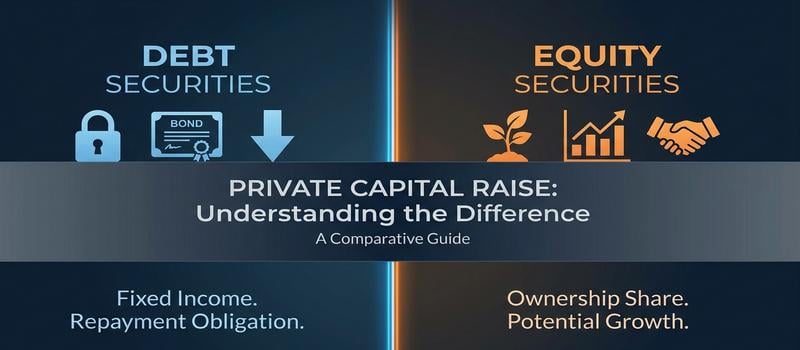
Why Calling It a Promissory Note Does Not Bypass the SEC
No. Calling your capital raise a loan or a promissory note does not get you out from under the securities laws.
A promissory note that you use to raise business capital from passive investors is presumed to be a security. The label on the document does not change that. If you are taking money from people who are counting on your efforts to pay them back, the SEC treats that note the way it treats any other security.
That is the whole point of this article. The word “note” is not a loophole. It is just a word.
The Label on the Document Is Legally Irrelevant
The federal courts look at economic reality, not the title at the top of the page.
Sponsors sometimes think that if they avoid words like “units,” “shares,” or “equity,” they have stepped outside securities regulation. So they draft a promissory note, hand it to investors, and assume the analysis is over.
It is not. What matters is how the money actually flows and why the investor handed it to you. If the investor is buying a fixed return and relying on you to run the deal, the note behaves like a security no matter what you named it.
You can title the document anything you want. The SEC is going to read past the title to the substance.
The Difference Between Commercial Borrowing and Capital Raising
There is a real line here, and it comes down to who is on the other side and why they gave you the money.
A traditional commercial loan is not a security. When you sit across from a bank or a commercial lender and negotiate a loan, that is a bilateral deal between two parties who both understand the risk. The bank is in the lending business. It is not a passive investor hoping you succeed.
Pooling money from individual passive investors is a different animal. When you take fixed-yield notes from a group of people to fund an operating company, a fund, or a real estate deal, that is almost always a security. Those investors are not underwriting you the way a bank does. They are relying on you to generate the return.
So the question is not “Did I write a note?” The question is “Am I borrowing from a commercial lender, or am I raising capital from investors?” If it is the second one, you are issuing a security, and you need to treat it like one.
The “Friends and Family Loan” Misconception
Borrowing from people you know does not change the legal classification. If your uncle lends you $100,000 for your business and he is counting on your efforts to get paid back, you have issued a security. The relationship is real, but it does not make the note something other than what it is.
This trips up a lot of sponsors who are expanding a business or building out a portfolio. They assume that because these are personal contacts, the SEC has no interest. That is not how the analysis works.
Why the Relationship Does Not Override the Legal Test
Knowing your investor is valuable, but it solves a different problem than you think.
A pre-existing, substantive relationship matters for qualifying under Rule 506(b). Under 506(b), you cannot generally solicit, so you have to raise from people you already have a real relationship with. Knowing your investor is how you stay inside that exemption.
But that is an exemption question, not a classification question. The relationship helps you sell the security legally. It does not turn the security back into a plain loan.
In plain English: you are still selling a security. You are just selling it to someone you know. You still need a valid exemption, and you still have disclosure obligations, even when the buyer is family.
The Danger of Pitching “Guaranteed” Fixed Yields
The bigger risk in a friends-and-family raise is how sponsors talk about the debt. The instinct is to reassure people you care about, so you tell them it is safe because the interest rate is fixed.
Fixed does not mean safe. A fixed 10% coupon tells the investor what they are owed. It says nothing about whether the money will actually be there to pay it.
If the operating company runs out of cash, or the project underperforms, the noteholder loses money like any other investor. The fixed rate does not protect them. It just defines the promise you failed to keep.
This is exactly why calling debt “risk-free” to a friend is dangerous. You have made a representation that is not true, to someone who trusts you, in a transaction that is a security. That is a disclosure problem, and it is worse when it is family, because they believed you.
How the Law Actually Tests Your Debt (The Reves Framework)
So how does a court or regulator actually decide whether your specific note is a security? They use the Reves test, which comes from a Supreme Court case called Reves v. Ernst & Young.
The test starts from a presumption that every note is a security. You then compare your note against a short list of instruments that everyone agrees are not securities – things like a home mortgage, a consumer loan, or short-term financing secured by inventory. The court calls this the “family resemblance” test. If your note does not resemble one of those ordinary commercial arrangements, it stays a security.
In plain English, the court looks at three things: why you raised the money, how you offered it, and what the people giving you money expected to get. If it looks like an investment, it gets regulated like one.
The Motivation of the Borrower and Lender
The first factor is why each side is doing the deal.
If you are raising money for general business use, to fund a fund, or to buy an asset, and the lender is handing you cash primarily to earn a yield, that leans hard toward a security. That is the classic investment motivation on both sides.
Compare that to a car loan. You borrow to buy a specific car; the lender lends to facilitate that purchase. Nobody is chasing an investment return. That commercial-purpose motivation is what keeps ordinary loans off the securities map.
Most capital raises fail this factor immediately. You want the money to run the venture, and the investor wants the interest. That is investment on both ends.
The Plan of Distribution
The second factor is how widely you offered the note.
Offering the note to multiple individuals, or to anyone who will listen, points toward a security. The broader the offering, the more it looks like you are raising capital from the market rather than borrowing from one counterparty.
That is the opposite of a bilateral loan you negotiate face-to-face with a single commercial bank. In that deal, there is one lender, real negotiation, and no plan to distribute the paper to a crowd of passive holders.
If you are lining up ten, twenty, or fifty noteholders, you have a plan of distribution. That is capital raising, and the SEC treats it that way.
The Reasonable Expectation of the Investing Public
The third factor is what the people giving you money reasonably expected.
If your noteholders think of themselves as investors, and they are relying entirely on your management to generate the return, that expectation makes it a security. They are betting on you, not negotiating a commercial credit line.
This is the same idea that runs through the Reg D analysis for equity. A passive person relying on the sponsor’s efforts is an investor, whether you handed them a promissory note or an LLC interest.
There is a fourth factor – whether some other regulatory scheme already covers the instrument and makes securities law unnecessary. For a private note raised from investors, there usually is not one. So on a normal syndication note, three of the four factors point the same direction, and the note is a security.
The 9-Month Commercial Paper Trap
No, you cannot dodge securities law by setting the maturity date under nine months. There is a narrow exemption for short-term commercial paper, but it does not cover a syndicator raising project capital from individual investors.
This is one of the most common pieces of bad advice floating around online, so it is worth killing directly.
Where the 9-Month Loophole Comes From
The myth comes from Section 3(a)(3) of the Securities Act. That section exempts certain notes that mature in nine months or less.
Someone reads that, does not read the rest, and concludes that any note under nine months is automatically exempt. That is not what it says, and that is not how the SEC or the courts apply it.
You see this on forums because the statutory language is short and easy to misquote. The real-world application is much narrower than the sentence looks.
Why It Fails for Real Estate and Business Syndications
The exemption is built for prime-quality, institutional commercial paper. Think of a large, creditworthy company issuing short-term paper to fund payroll and inventory, sold to sophisticated buyers who are not relying on the issuer’s project succeeding.
That is not a startup, a fund, or a real estate deal raising money from passive investors. When you market a note to the general investing public to raise capital for a venture, the maturity date does not save you.
The SEC treats these short-term exemptions as inapplicable in that context, and the Reves analysis I covered above still controls. A nine-month note sold to fund your operating company still looks like a security, because the investor is still relying on your efforts to get paid back.
So do not build your raise around the maturity date. It is not a loophole – it is a trap that gives sponsors false comfort.
What Actually Changes When Your Debt Is a Security
Once you accept that your note is a security, the job changes. You stop treating it like a handshake loan and start running it like an offering. That means picking a federal exemption, usually Regulation D, giving investors real disclosures, and filing a Form D after you close.
None of this makes the deal harder to raise. It makes the deal defensible.
The Shift From Casual Borrowing to Compliant Issuance
The mindset shift is the whole point. A casual loan is negotiated one-on-one. A securities offering is sold to investors under an exemption, with disclosures, eligibility checks, and filings.
If you sell unregistered notes without a valid exemption, you have an unregistered securities offering. That creates rescission risk, meaning an investor can demand their money back, plus interest, even if you paid every installment on time. It also creates enforcement exposure at the SEC and state level.
So the issuer does three things. You provide the disclosures the investor needs to make an informed decision. You evaluate whether your investors are accredited, which matters for the exemption you are relying on. And you treat the transaction as a formal offering rather than a favor between people who know each other.
That last one is the hard part for sponsors raising from their own network. The relationship is fine. The informal process is the problem.
The Role of the PPM in a Debt Offering
The Private Placement Memorandum does the disclosure work, and debt needs it just as much as equity. A fixed return does not mean a safe return. It means the payment is fixed if the operating company can pay it.
The PPM has to tell the investor the truth about how they actually get paid back. That includes whether the note is secured or unsecured, what collateral exists if any, and whether the debt is subordinated to other lenders. Subordination matters a lot. If a bank sits ahead of your noteholders, your investors get paid only after the bank is made whole.
The most important disclosure is the plain one. The fixed interest depends entirely on the solvency of the business or project. If the venture fails, the noteholder can lose principal, the same as any other creditor standing in line.
Do not sell around that risk. Disclose it. Disclosure is how you solve the risk, not how you advertise it away.
Form D and Blue Sky Filings
Two filing obligations follow a Regulation D offering. First, you file a Form D with the SEC, generally within 15 days of your first sale. It is a short notice filing, but skipping it is a common and avoidable mistake.
Second, you handle state-level blue sky notice filings wherever your noteholders live. Each state has its own notice and fee. If you take money from investors in five states, you likely have five state filings to track, not one.
These filings are administrative, but they are part of the exemption in practice. Get them done, and get them done on time.
Structuring Your Debt Offering Under Regulation D
Once you accept that the note is a security, the practical question becomes which exemption to use. For most private debt raises, the answer is Regulation D, and specifically one of its two Rule 506 pathways.
The choice between them comes down to one thing: whether you plan to advertise.
Rule 506(b) vs. Rule 506(c) for Issuing Notes
Rule 506(b) vs. Rule 506(c) for Issuing Notes
Rule 506(b) is the path when you are raising debt from a network you already know. You cannot generally solicit. You cannot post the deal on a website, email a cold list, or pitch it from a stage. You are talking to people you have a pre-existing substantive relationship with, and you can include a limited number of sophisticated non-accredited investors if you provide the right disclosures.
Rule 506(c) is the path when you want to advertise. You can market the note openly – website, email, social media, whatever. The tradeoff is that every purchaser must be accredited, and you must take reasonable steps to verify it. Taking their word for it is not enough under 506(c). You need third-party verification, usually through tax returns, bank statements, or a letter from their CPA or attorney.
If it were me, I would default to 506(b) for a debt raise unless you have a real reason to advertise. Most sponsors raising fixed-return notes are working a known network anyway, and 506(b) keeps you out of the verification burden. But if your model depends on reaching strangers at scale, use 506(c) and build the verification process in from day one. Do not advertise first and figure out the exemption later. That order gets people in trouble.
Building the Right Legal Architecture
The Promissory Note by itself is just a payment term sheet. It says what you owe, when you pay it, and at what rate. It does not make the offering compliant.
The note has to sit inside a broader framework. You need a Subscription Agreement that governs how the investor actually buys the note – the representations they make, the terms they agree to, and the mechanics of the purchase. You need an Investor Questionnaire to establish that they are qualified to buy it, whether that means accredited status under 506(c) or accredited-or-sophisticated status under 506(b). And in most cases you need a Private Placement Memorandum that discloses the real risks: subordination, collateral, and the fact that a fixed return still depends on the operating company staying solvent.
That integrated document stack is the actual legal structure for a business capital raise. The note is one piece of it, not the whole thing.
The point of building it this way is not paperwork for its own sake. It is that a compliant offering with real disclosures protects you if the deal underperforms. A handshake note with no exemption and no disclosure leaves you exposed to rescission and enforcement exactly when the project is already struggling. Get it on paper correctly the first time, and you have a deal you can actually operate.

Tilden Moschetti, Esq., is a highly sought-after syndication attorney with nearly two decades of experience. His clientele ranges from real estate developers and startups to established businesses and private equity funds. Tilden’s expertise in syndication law comes not only from his knowledge of syndication and securities law but from real, hands-on experience as an active syndicator himself in every real estate product type and nearly all markets in the US. His knowledge and experience set him apart and established him as the Reg D legal services leader.