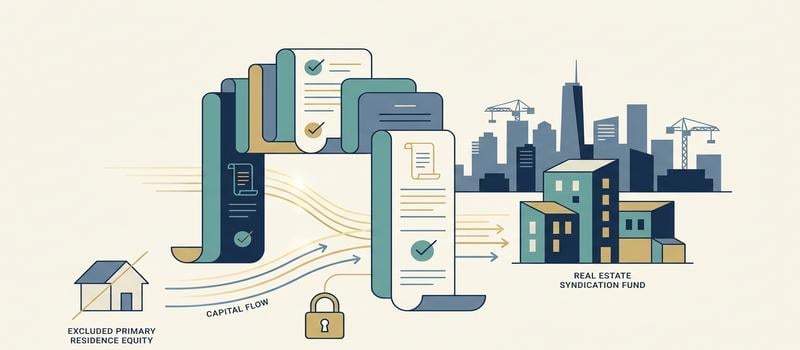
The Binding Contract (Not a Receipt for Funds)
A subscription agreement is the contract an investor signs to buy your securities. It is where the investor legally commits to purchase a specific number of units at a specific price, makes a set of promises about who they are, and agrees to the terms of the deal. It is not a receipt for their wire, and it does not put them into the deal on its own. You, the issuer, have to sign it too.
That last part is where most of the confusion lives. The investor signing and sending money is only half of the transaction. Until you countersign, nobody is bound to anything.
The Misconception of ‘Wiring the Money’
A lot of first-time sponsors think an investor is in the deal the moment the funds hit the bank account. That is not how it works.
Wiring money is the investor’s offer to buy. It is a strong signal of intent, and it usually means they are serious. But an offer is not a closed transaction.
Without the signed agreement, you do not have an investor. You have a wire transfer and a spreadsheet entry. There is no purchase, no legal commitment, and no admission to the deal until the paper is signed on both sides.
This matters because sponsors sometimes treat the money as the finish line. In the real world, the money is the middle of the process, not the end of it.
The Legal Function of the Document
The subscription agreement is the gateway contract for your private placement. It is the document that actually moves the securities from the issuer to the investor.
It sets the economic terms of the purchase in plain numbers. How many units the investor is buying. The price per unit. The total dollar amount they are committing. This is the document that says, in writing, exactly what the investor is getting for their money.
It also does the protective work. The subscription agreement is where the investor makes binding representations – about their accreditation status, their sophistication, their intent to hold the securities, and their understanding of the risk. Those promises are not decorative. They are the legal mechanism you rely on later if an investor’s situation was not what they claimed.
So the document does two jobs at once. It transfers the securities on defined terms, and it locks in the investor’s promises so you can enforce them. That is why it is the contract, not the receipt.
How It Differs from the PPM and Operating Agreement
Sponsors often ask why they need a subscription agreement when the investor already has the PPM and the Operating Agreement in hand. The answer is that these three documents do three different jobs. The PPM discloses the risk, the Operating Agreement governs how the company runs, and the subscription agreement is the actual contract the investor uses to buy in.
Conflating them is where sponsors get into trouble. Disclosure is not a contract. Governance is not a purchase. And the purchase document is the only one of the three that actually transfers the securities.
The PPM is Disclosure, Not a Contract
Investors do not sign the PPM. That surprises some first-time sponsors, but it is correct.
The Private Placement Memorandum is a disclosure document. Its job is to explain the strategy, lay out the risks, and describe how the deal is supposed to work. It is written to tell the investor what they are getting into, including everything that could go wrong.
Because it is disclosure and not a contract, the PPM does not, by itself, bind anyone to anything. It is the record of what you told the investor.
The binding acknowledgment happens in the subscription agreement. That is where the investor legally states they received the PPM, read it, and had the chance to ask questions. So the PPM does the disclosing, and the subscription agreement captures the investor’s promise that the disclosure was in fact delivered and reviewed.
That distinction matters if there is ever a dispute. If an investor later claims they never saw a risk factor, your protection is not the PPM sitting in their inbox. Your protection is the signed subscription agreement where they represented that they read it.
The Operating Agreement is Governance
The Operating Agreement, or the Limited Partnership Agreement if you are using an LP, controls the entity after the investor is inside. It is the rulebook for the fund or the SPV.
It handles manager authority, voting rights, how distributions flow through the waterfall, transfer approvals, and what happens if the manager wants to sell an asset or wind the thing down. It defines the relationship between the sponsor and the investors for the life of the deal.
But the Operating Agreement does not admit anyone. It assumes the investor is already a member and tells them what their rights and obligations are from that point forward.
The subscription agreement gets them in. The Operating Agreement tells them what happens once they are there. One is the door. The other is the house.
The Critical Step of Issuer Acceptance
You control whether an investor gets into your deal. Nobody buys their way in by wiring money. The subscription is not complete until you, the sponsor acting for the issuer, sign the agreement and accept them.
That signature is the whole point. It is called issuer acceptance, and it is the moment the contract actually binds both sides.
Why the Investor is Only ‘Applying’
When an investor signs the subscription agreement and wires the funds, they are making an offer to buy. They are not closing the deal. They are asking you to sell them the securities.
You then review the paperwork. You check that the questionnaire supports their accreditation status, that the representations hold up, and that letting them in does not break your exemption. Only when you countersign does the sale happen.
Until you sign, the investor is in a pending state. Think of it as an application, not an admission. Their money is sitting in the subscription account, but they are not on the cap table and they own nothing.
This matters because it keeps the last decision in your hands. You are never forced to take an investor just because they sent the wire. The document is built so the issuer makes the final call.
Rejecting Bad Capital
Here is where issuer acceptance earns its keep. Suppose you are running a 506(b) offering, and Rule 506(b) caps you at 35 non-accredited investors. You have already accepted 35. Then a 36th non-accredited investor sends in a signed subscription agreement and wires the money.
If wiring money admitted people automatically, you would have a problem. That 36th investor would blow your exemption, and the exemption covers the entire offering, not just that one person.
But it does not admit them automatically. You have not countersigned. So you protect the exemption by simply declining to sign.
The mechanics are clean. You do not sign the subscription agreement. You return the wired funds in full, without any deduction. And you notify the investor, in writing, that their subscription was not accepted.
That investor never became part of the deal. There is no rescission, no unwinding, no messy exit from the cap table, because they were never on it. The issuer acceptance step let you keep the door closed.
The same logic applies whenever the capital is wrong for the deal. Maybe the investor’s representations do not add up. Maybe you are already at your target raise and do not want to dilute the pool. Maybe something about the source of funds gives you pause. In each case, the answer is the same: you do not sign, you return the money, and you tell them the subscription was declined.
This is not a courtesy the drafting gives you. It is the core function of the document. The subscription agreement is written so the issuer holds the acceptance power, which means you decide who ends up in your deal.
The Legal Shield: Representations and the Investor Questionnaire
The questionnaire collects the facts about an investor. The subscription agreement turns those facts into binding legal promises. Together, they protect your Regulation D exemption.
Neither document does the job alone. The questionnaire without the agreement is just an unenforced form. The agreement without the questionnaire has nothing concrete to stand on.
Transforming Facts into Binding Warranties
The investor questionnaire is your intake tool. It asks the investor to state their net worth, their income, and enough about their background to establish whether they are accredited and, in a 506(b) deal, whether they are sophisticated.
That is data collection. It tells you who you are dealing with and whether they fit inside your exemption.
The subscription agreement is where that data becomes a warranty. The investor signs and legally promises that the answers in the questionnaire are true and complete, and that they will tell you if anything changes before the deal closes.
That promise is the whole point. Say an investor tells you their net worth is $3 million, and later it turns out that number was fiction. Because they represented it as true in a signed agreement, you have a record showing you relied in good faith on what they swore to you.
That does not make you bulletproof. But it moves the problem onto the investor who lied, not onto the sponsor who reasonably believed them.
This only works if the two documents are actually built to talk to each other. The accreditation standard in the questionnaire has to match the representation language in the subscription agreement, and both have to match the exemption you claimed. When the numbers or definitions drift between the documents, you get a gap, and a gap is exactly what a plaintiff’s lawyer looks for. This is why you want subscription agreement and investor questionnaire counsel integrating the package, not stitching together forms pulled from different deals.
Acknowledging the Disclosures
The subscription agreement also captures a set of acknowledgments that protect you on the disclosure side.
The investor warrants that they are relying only on the PPM, not on side promises, projections, or hallway conversations. That matters, because deals get sold in conversations, and people remember conversations selectively when an investment goes sideways.
The investor also acknowledges that the investment carries a high degree of risk, up to and including the total loss of their capital. It is not a formality. It is the investor stating, in writing, that nobody told them this was safe.
Neither clause guarantees you win a dispute. What they do is line up the written record with the reality you disclosed, so the story an unhappy investor tries to tell later has to fight against their own signature.
Enforcing Illiquidity: Transfer Restrictions
When your investor signs the subscription agreement, they are agreeing to something most people do not fully register on the way in: they cannot freely sell what they just bought.
Regulation D securities are restricted under federal law. The subscription agreement makes the investor formally acknowledge that reality and agree to live with it.
Acknowledging Restricted Securities
The units or shares in your private placement are “restricted securities” under SEC rules. That is a specific legal status, not just a description.
In plain English, it means there is no public market for these units. Your investor cannot log into a brokerage account and sell them the way they would sell shares of Apple. There is no exchange, no ticker, and no ready buyer standing by.
The subscription agreement pins this down. The investor represents that they are buying for their own account, for investment purposes, and not with a view toward reselling.
That representation does real work. It supports your position that you sold restricted securities in a private transaction, not a disguised public distribution. If the investor could turn around and flip the units to the general market, the whole exemption starts to look shaky.
So the document forces the acknowledgment up front. The investor is telling you, in writing, that they understand this is a long-term, illiquid position and they are not counting on selling next quarter.
Protecting Sponsor Control Over the Cap Table
Transfer restrictions also protect you, the sponsor, from a problem you do not want.
Without them, an investor could sell their interest to anyone. You could wake up one day and find an unknown party on your cap table, possibly someone who is not accredited, sitting inside an offering you built for accredited investors.
That creates an exemption problem and an admin problem at the same time. The transfer restrictions in the subscription agreement, backed up by the Operating Agreement, stop that from happening without your review and consent.
The practical benefit is control. You decide who ends up as an owner. You keep the investor group you actually vetted, and you keep the tax reporting and administrative burden at a level you can manage. If Bob wants to sell his units to Susan later, that transfer runs through you first, not around you.
The Practical Execution Sequence
Everything above comes together in a specific order. The investor reviews the disclosures, signs the questionnaire and the subscription agreement, wires the funds, and then waits for you to review and countersign. Money moving is a step in the middle, not the finish line.
The Funding Instructions
The subscription agreement usually carries the wiring instructions inside it. That is where the investor learns exactly where the money goes and how much to send.
In most deals, the funds are directed to a dedicated subscription account or an escrow account, not your operating account. The point is to keep investor capital separate until the deal closes or you formally accept that specific investor.
That separation matters if you end up rejecting a subscription. If the money is sitting in a subscription or escrow account rather than mixed into operating funds, returning it is clean. You did not commingle it, and you did not spend it.
The Step-by-Step Timeline
The sequence looks the same across almost every Regulation D offering.
Step one: the investor reviews the PPM and the Operating Agreement. This is where they understand the risks, the strategy, and how the entity is run once they are inside.
Step two: the investor completes the questionnaire, signs the subscription agreement, and submits both. At this point they have made their offer to buy, and they have put their representations in writing.
Step three: the investor wires the capital to the subscription or escrow account per the instructions in the document.
Step four: you review everything for compliance. You confirm the questionnaire supports their accreditation status, you confirm the signatures are in place, and you check that admitting this investor does not break your exemption. If it all holds, you sign for Issuer Acceptance and add them to the cap table.
Only after step four is the investor actually in the deal. The signature is the moment. Not the wire.

Tilden Moschetti, Esq., is a highly sought-after syndication attorney with nearly two decades of experience. His clientele ranges from real estate developers and startups to established businesses and private equity funds. Tilden’s expertise in syndication law comes not only from his knowledge of syndication and securities law but from real, hands-on experience as an active syndicator himself in every real estate product type and nearly all markets in the US. His knowledge and experience set him apart and established him as the Reg D legal services leader.