A Limited Partnership Agreement is the binding contract that runs a private fund. It sets the rules for how the fund operates, who controls it, and where the money goes. The Private Placement Memorandum does not do that job. The PPM explains the deal to investors so they can decide whether to invest.
Sponsors get these two documents confused all the time. They assume that if the PPM describes the terms, the fund is somehow governed by the PPM. It is not.
The PPM discloses. The LPA governs. That distinction matters the moment there is a dispute, a distribution, or a hard decision to make.
The PPM Discloses the Deal
The PPM is a disclosure document. Its job is to help investors make an informed decision by laying out the business plan, the risks, and the economic terms in plain English.
It tells the investor what the fund intends to do, who the sponsor is, and what could go wrong. It is written to be read and understood before anyone commits capital.
The PPM is not the contract that runs the fund. It is the explanation of the contract.
That difference has teeth. The PPM is critical for your Regulation D exemption because disclosure is how you address antifraud risk, but it does not dictate the governance mechanics of the entity. If an investor and the sponsor end up fighting over who had authority to sell an asset, the PPM does not decide that question.
If you want the full picture of what a Private Placement Memorandum actually does, that is a separate topic worth reading on its own.
The LPA Enforces the Deal
The Limited Partnership Agreement is the actual law of the entity. It legally binds the sponsor and the investors to a specific set of operational rules, and those rules are what a court, an accountant, or an administrator will look to.
The PPM explains the agreement. The LPA is the definitive instruction manual.
Here is the practical split. If an investor wants to understand the strategy, they read the PPM. If an accountant needs to calculate a distribution and cut a check, they read the LPA.
That is because the LPA contains the mechanics. It defines the management authority, the voting rights, the capital account treatment, and the exact math behind the waterfall.
The LPA gives the fund its actual structure. It supports the legal package by turning the plain-English description in the PPM into enforceable rules the entity can operate under.
How the LPA Divides Power: General Partners and Limited Partners
The LPA does two things at once. It hands the General Partner broad authority to run the fund, and it keeps the Limited Partners passive so they can hold onto their limited liability.
That split is the whole point of the structure. The GP operates. The LPs invest and wait.
The General Partner’s Broad Authority
The LPA gives the GP the power to run the fund without stopping to poll investors. That means making day-to-day decisions, buying and selling assets, hiring vendors, and executing the strategy the fund was raised to pursue.
The sponsor needs that flexibility to actually operate. If the GP had to get investor sign-off on every acquisition or every lease, the fund would grind to a halt, and no deal would ever close on time.
That does not mean the GP has unlimited power. The GP is a fiduciary, and the LPA sets explicit boundaries on what the GP can and cannot do on its own.
Here is a concrete example. The LPA might let the GP buy assets freely, but require an LP vote before the GP takes on debt above a set loan-to-value ratio. The GP runs the business, but the document draws the lines the GP cannot cross alone.
The Boundaries of Limited Partner Liability
Limited Partners generally enjoy limited liability. Their downside is capped at what they invested, provided they stay out of the day-to-day management of the fund.
There is a catch built into state partnership law. If an LP starts acting like management – directing operations, making the calls the GP is supposed to make – that LP can lose the liability shield. This is the “control rule,” and it exists in most limited partnership statutes.
A well-drafted LPA protects the LP from that outcome by stripping operational voting rights out of the LP role entirely. The LP cannot accidentally take control because the document does not give them the mechanism to try.
That is a feature, not a bug. Passive investors want to be passive. The whole reason someone buys an LP interest instead of running their own deal is to stay hands-off and keep the liability protection that comes with it.
Permitted LP Voting Rights
Limited Partners do not vote on operations, but they usually get a vote on a short list of structural events. These are the decisions that go to the nature of the investment itself, not the running of it.
The common ones are removing the GP for cause, dissolving the fund early, extending the fund’s term, and amending the LPA in ways that change the fundamental deal. Some LPAs also give LPs a vote on changing the fund’s core investment mandate.
These rights are enumerated carefully and narrowly. The drafter is threading a needle: give LPs a say on the big structural questions without handing them so much operational control that the control rule kicks in and puts their limited liability at risk.
So the LPA is not just dividing power. It is dividing it in a way that keeps the GP able to operate and keeps the LPs protected at the same time.
Controlling the Economics: The Distribution Waterfall
The LPA is where the money math actually lives. It contains the exact covenants that decide how profits are split, when the preferred return gets paid, and how capital comes back to investors.
The PPM tells the investor what the deal is supposed to feel like. The LPA tells the CPA how to cut the check. Those are two very different jobs, and the LPA is the one that controls when there is real money on the table.
Moving from Plain English to Legal Covenants
The PPM might say “Investors receive an 8% preferred return.” That sentence is easy to read, and it is supposed to be.
The LPA has to translate that sentence into accounting logic. Is the 8% simple or compounding? Is it cumulative, meaning unpaid amounts carry forward, or does it reset each year? Is it calculated on contributed capital, unreturned capital, or something else? When exactly does the clock start?
None of that shows up in the PPM’s plain-English summary. All of it lives in the LPA.
In the real world, the sponsor’s CPA does not open the PPM to run distributions. The CPA reads the LPA, sets up the distribution model around that language, and cuts checks based on it.
So if the LPA is vague on any of those points, the distributions get calculated wrong. And a distribution error is not a paperwork problem. It is money going to the wrong party, which is exactly the kind of thing that turns a happy investor into a plaintiff.
Structuring Priority of Payments
The distribution waterfall sets the order of payments, and the LPA is what makes that order legally binding.
A common structure runs in tiers. First, return the investors’ capital. Second, pay the preferred return. Third, run a GP catch-up. Then split the remaining profit according to the agreed carry.
The point of writing this into the LPA is priority. The LPA establishes that the Limited Partners get their capital and their preferred return before the General Partner takes a share of the upside.
That priority is the whole promise of a passive investment. The LP is trusting that the sponsor does not get paid on the profit split until the LP has been made whole first. The LPA is what actually holds the GP to that.
Handling Capital Calls and Shortfalls
The LPA also decides what happens when the fund needs more cash. It says whether the General Partner can issue a mandatory capital call and how much notice the LPs get.
If the GP can call capital, the LPA needs to spell out the consequence when an LP does not fund. Otherwise you have a right with no teeth.
The usual remedies are dilution, default, or a penalty. The LPA might dilute the non-funding LP’s interest, treat the missed amount as a defaulted loan, or apply a penalty rate. Sometimes it lets other LPs step in and cover the shortfall in exchange for a larger stake.
The sponsor needs that mechanism documented in advance. If the fund is short on cash and one investor refuses to write the check, that is not the moment to figure out what your remedy is. The LPA has to already answer it.
The Danger of the Standalone LPA Template
Buying an LPA off the shelf and drafting it separately from the PPM is where sponsors get into real trouble. The problem is not that a template LPA looks wrong on its own. The problem is that it almost never matches the promises the PPM makes to investors.
When the two documents disagree, you have created a legal problem you do not need.
The Contradiction Trap
The most common mismatch is a promise in the PPM that the LPA does not honor.
Say the PPM tells investors they get a vote before the fund sells a major asset. Then the boilerplate LPA gives the GP absolute authority to sell whatever it wants, whenever it wants, with no vote at all. Now you have two documents that describe two different deals.
In the real world, that is a disclosure problem. You told investors one thing in the document designed to inform their decision, and the governing document says the opposite. If a sale goes badly and an investor is unhappy, the first thing they point to is the gap between what you promised and what you did.
I am not going to tell you a mismatch automatically blows your exemption or guarantees a lawsuit. That is not how it works.
What I will tell you is that inconsistencies quietly destroy the legal framework of the deal. When your own documents contradict each other, defending your decisions gets much harder, because you cannot point to a clean, consistent set of rules that everyone agreed to. You are left arguing about which document controls, and that is a fight you would rather never have.
Why Boilerplate Fails Private Funds
Generic LPAs fail because they were built for a different kind of deal.
Most standard partnership forms you find online are written for a simple, active joint venture. Two or three people go into business together, everyone participates, and the form assumes active involvement. That is not a passive investment vehicle raising money from investors under Regulation D.
A Reg D fund needs things the generic form does not have. It needs securities law caveats that reflect the offering. It needs a distribution waterfall that actually matches the economics in the PPM. And it needs to line up with the specific state statute you are organizing under, such as the Delaware Revised Uniform Limited Partnership Act.
Boilerplate does not carry any of that. It gives you a document that reads like a contract but does not do the job of governing a private fund.
This is why the LPA has to be drafted as part of the same full legal package as the PPM and the subscription documents, not bought as a standalone form and hoped into alignment later.
Integrating the Full Legal Package
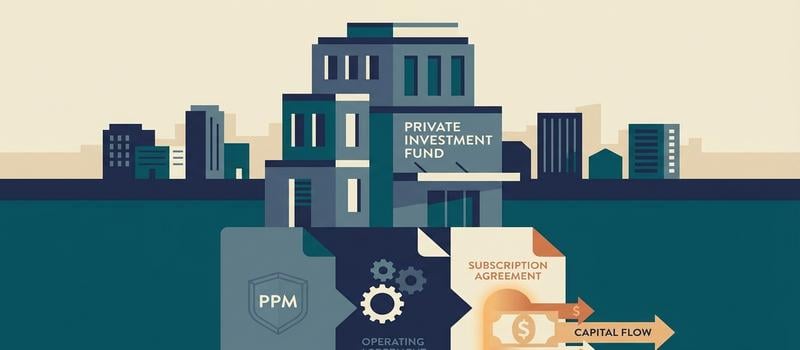
The LPA is not a standalone document. It is one piece of an integrated legal system that includes the PPM and the Subscription Agreement, and all three have to be drafted together.
The reason is simple. Each document does a different job, but they all describe the same deal. If they describe it differently, you have a problem.
Tying the LPA to the Subscription Agreement
An investor does not become bound to the LPA by reading it. They become bound through the Subscription Agreement.
Here is the actual flow. The investor reads the PPM to understand the deal. They fill out the Investor Questionnaire so the sponsor can confirm they are accredited or otherwise qualified. Then they sign the Subscription Agreement.
The Subscription Agreement is the bridge. It is the document where the investor agrees to buy the interest and, in doing so, agrees to be bound by the rules in the LPA.
So the LPA sets the rules, but the Subscription Agreement is what officially attaches a specific investor to those rules. Without it, you have a rulebook with no one signed up to follow it.
The Full Legal Package
You cannot draft one of these documents well in isolation. The PPM explains the deal, the LPA governs it, and the Subscription Agreement executes it. Change one and you usually have to change the others.
A waterfall you describe in the PPM has to match the covenant language in the LPA. A voting right you promise in the PPM has to actually exist in the LPA. The representations an investor makes in the Subscription Agreement have to line up with the exemption the PPM relies on.
When these documents are built together, the framework helps structure the deal so the sponsor can focus on raising and deploying capital instead of untangling contradictions later.
That is why you need experienced operating agreement and LPA counsel to draft the LPA as part of the same full legal package as the rest of the offering documents, not bought off a shelf and bolted on afterward.
Think of the LPA as one wall in a structure, not a freestanding thing. It only holds up because the rest of the package is built around it.

Tilden Moschetti, Esq., is a highly sought-after syndication attorney with nearly two decades of experience. His clientele ranges from real estate developers and startups to established businesses and private equity funds. Tilden’s expertise in syndication law comes not only from his knowledge of syndication and securities law but from real, hands-on experience as an active syndicator himself in every real estate product type and nearly all markets in the US. His knowledge and experience set him apart and established him as the Reg D legal services leader.