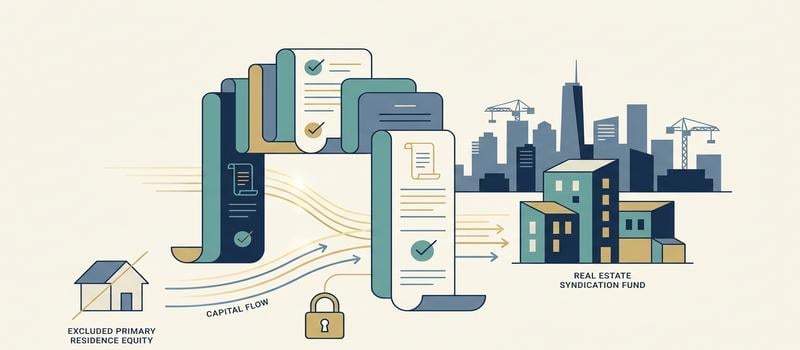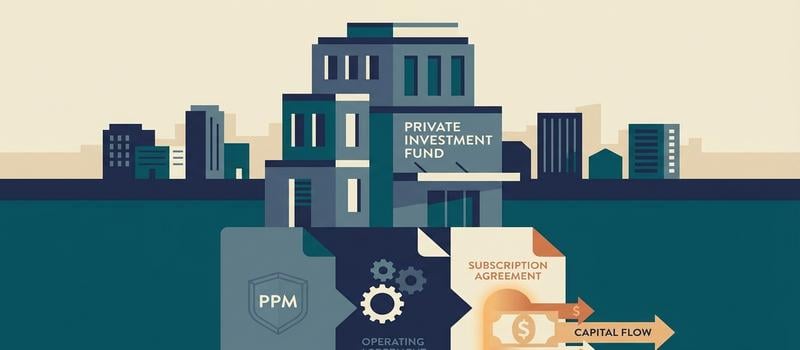
The Short Answer: How the Big Three Documents Work Together
In a Reg D raise, three documents do three different jobs. The Private Placement Memorandum explains the offering and discloses the risks. The Operating Agreement (or Limited Partnership Agreement) governs the internal economics and control of the issuer. The Subscription Agreement controls who gets in and on what terms.
They are not interchangeable. They are one system, and they have to agree with each other.
That is the whole model. Everything else in this article is just detail on how those three pieces fit together and what happens when they do not.
The Source of the Confusion
Most sponsors treat the paperwork as a checklist of separate legal forms. Get a PPM. Get an LLC agreement. Get a subscription form. Cross them off the list.
The common line I hear is some version of this: “I just need a lawyer to write the PPM, and I’ll grab an LLC operating agreement online.”
That is a real problem, and it is not a small one. These documents do entirely different jobs, and when they are drafted in isolation, they end up contradicting each other. A contradiction between your disclosure document and your governing contract is exactly the kind of thing an investor’s lawyer looks for later.
Explain, Govern, and Accept
The cleanest way to hold these three documents in your head is by the job each one does.
The PPM explains. It tells the investor what the deal is, how the money works, and everything that could go wrong. It is disclosure.
The Operating Agreement or Limited Partnership Agreement governs. It is the binding contract that controls the economics and management of the issuer – the waterfall, the manager’s authority, voting, capital calls. This is where the actual legal rules live.
The Subscription Agreement, together with the Investor Questionnaire, accepts. It is the gate. It controls who is allowed into the offering, gathers the facts you need to qualify them, and binds them to the terms once the sponsor accepts.
Explain, govern, accept. Three jobs, three documents.
The point is that these are not standalone products you buy separately and staple together. They have to function as a single synchronized private placement memorandum legal package. When one term changes, it has to change in all three, or the framework breaks.
The Private Placement Memorandum: The Disclosure Shield
The PPM’s job is to disclose. It explains the risks, the strategy, and the terms of the deal so the investor knows what they are getting into. It is an explanation to the investor – not a binding contract between the parties.
That distinction matters, because most sponsors treat the PPM as the deal itself. It is not. It is what a PPM actually is: a disclosure document that describes what the governing agreement says and what the investor is signing up for.
It Is an Explanation, Not a Contract
Investors do not sign the PPM to make it binding. There is no signature block that turns the PPM into a contract, because the PPM is not the thing they are agreeing to.
The PPM is a unilateral disclosure by the issuer. The sponsor is telling the investor, in writing, here is the deal, here is how the money works, here is everything that can go wrong.
Compare that to the Operating Agreement. The Operating Agreement is the actual contract that governs the entity. The PPM tells the investor what the Operating Agreement says – the preferred return, the manager’s authority, the fees – but the PPM itself does not control any of it.
So if there is ever a fight over economics, the answer is not in the PPM. The PPM described the deal. The Operating Agreement is the deal.
Why the SEC Cares About the PPM
The PPM is an anti-fraud shield. Regulation D gets you out of registration, but it does not get you out of the anti-fraud rules. You still cannot mislead investors, and you still cannot leave out material facts.
The PPM is how you meet that obligation. By spelling out every risk, every conflict of interest, and every fee, you take away the investor’s ability to later claim they were deceived.
Here is why that matters in the real world. Say the operating company misses its projections and the fund can’t pay distributions for two years. Or the tech startup pivots away from the plan the investor bought into. The investor is unhappy, and unhappy investors look for a lawsuit.
The PPM is the document that proves you warned them. If the risk factor said “we may pivot” or “distributions are not guaranteed,” you disclosed it. That is the whole point of the shield.
The Marketing Misconception
The PPM is not a pitch deck. It contains the business plan, and it explains why the deal makes sense, but it is not written to sell.
It is written defensively. The risk factors are blunt. The fees are laid out plainly. The conflicts are named, not softened.
A good PPM should make a nervous investor pause. That is not a flaw – that is the document doing its job. You sell the deal in your conversations and your presentation. The PPM’s job is to make sure that when the investor says yes, they said yes with their eyes open.
The Operating Agreement: The Economic Engine
The Operating Agreement is the binding contract that runs the entity. It dictates the rules, the economics, and who controls what. The PPM explains the deal to investors, but the Operating Agreement is where the actual legal authority lives.
If your issuer is an LP instead of an LLC, the same job is done by the Limited Partnership Agreement. The name changes; the function does not.
The Rules of the Game
Whether you are working with an LLC Operating Agreement or an LP Limited Partnership Agreement, this is the real contract among the parties inside the entity.
It sets the manager’s authority. It sets the members’ voting rights. It sets when and how a manager can be removed, what investors get to approve, and what the manager can do without asking anyone.
In plain English, this is the document that answers the question, “Who gets to decide?” When an investor asks whether you can borrow money, buy another asset, or bring in a new member, the answer is in the Operating Agreement.
If the document is silent or vague on those powers, you have a problem. Ambiguity in the governance document is where fights start.
Controlling the Cash
The Operating Agreement is where the math lives. Preferred returns, promote splits, catch-ups, and capital call mechanics are all defined and legally enforced here.
The PPM might describe an 8% preferred return and an 80/20 split above it. That description is disclosure. The Operating Agreement is what actually makes the money move that way.
So the waterfall is not just explained in the Operating Agreement – it is created by it. The formula in this document is what the manager has to follow when the checks go out.
If there is ever a dispute over a distribution, the court reads the Operating Agreement. It does not read the pitch deck, and it does not read the summary bullet in the PPM. It reads the operative language in the governing contract.
That is why the numbers in your marketing and your PPM have to match the numbers in your Operating Agreement exactly. If they disagree, the Operating Agreement wins, and you are left explaining why you promised one thing and drafted another.
The Subscription Agreement: The Investor Gatekeeper
The Subscription Agreement is where the investor formally asks to invest, makes a set of legally binding promises, and – once the sponsor accepts – becomes bound to the terms of the offering. The PPM explained the deal. The Operating Agreement or LPA controls the internal economics. The subscription documents control who actually gets in.
Think of it as the entry point. Nobody becomes an investor until the Subscription Agreement is signed by the investor and accepted by the sponsor.
The Application to Enter
The Subscription Agreement is an offer to buy coming from the investor. The investor signs it and says, in effect, “I want to purchase these interests on these terms.”
That offer does nothing until the sponsor accepts it. The sponsor countersigns, and only then is the investor admitted to the issuer.
Here is the part sponsors often miss. The Subscription Agreement is the mechanism that binds the investor to the Operating Agreement without making them physically sign the master Operating Agreement itself.
You do not want every investor marking up your governing document. So the subscription language ties them to it. When they sign the Subscription Agreement, they agree to be bound by the LLC Operating Agreement or LP Limited Partnership Agreement as if they had signed it directly. That keeps the governance document clean and consistent for everyone.
The Investor’s Legal Promises
The Subscription Agreement is where the investor makes representations, and those representations are your protection in writing.
The investor states that they received the PPM, that they read the risk factors, and that they agree to the terms of the offering. They confirm they are investing for their own account and understand the interests are not liquid.
If a dispute comes up later, this is the document that shows the investor told you, in their own signature, that they knew what they were buying. That is why sloppy subscription language is dangerous. Weak representations mean weak protection.
The Role of the Investor Questionnaire
The Investor Questionnaire is a separate document, and it does a different job. It gathers the facts you need to prove the investor qualifies.
The Subscription Agreement is the contract. The questionnaire is the evidence file. It collects income, net worth, and sophistication information so you can show the investor was eligible to be in the deal.
Under Rule 506(b), the questionnaire supports the pre-existing, substantive relationship and helps you confirm the investor is accredited or sophisticated. Under Rule 506(c), it feeds into the reasonable-steps verification you are required to perform, because 506(c) demands that every purchaser actually be accredited and that you take steps to confirm it.
The practical point is this. The Subscription Agreement admits the investor and binds them to the terms. The questionnaire proves you were allowed to let them in.
The Danger of Generic Templates and Mismatched Clauses
Sourcing these documents separately is where sponsors get hurt. When the PPM, the Operating Agreement, and the Subscription Agreement come from three different places, they contradict each other, and those contradictions turn into compliance problems and investor lawsuits.
The documents only protect you if they say the same thing. When they don’t, you lose.
The ‘Plug-and-Play’ Illusion
Sponsors try to save money by downloading an online LLC template and pairing it with a standalone PPM. It looks efficient. It isn’t.
The Operating Agreement you pulled off the internet was written for some other deal – probably a two-partner business with no outside investors, no manager fees, and no waterfall. It has no idea what your PPM promises.
The Subscription Agreement is the same problem. It is not a plug-and-play form. It has to reference the exact economic terms of your deal, bind the investor to your specific Operating Agreement, and capture the representations your offering actually relies on.
If the Subscription Agreement doesn’t match the deal, it isn’t protecting you. It is just paper.
What Happens When Documents Disagree
Say your PPM discloses that the manager earns a 2% acquisition fee. That’s a normal fee, disclosed the right way. But the generic Operating Agreement you downloaded says the manager serves without compensation.
Now you have a real problem. You take the 2% fee because the PPM told investors you would. An investor reads the Operating Agreement, sees that the manager isn’t authorized to be paid, and sues you for taking money the governing contract never allowed.
Here’s the part sponsors miss: the Operating Agreement wins. The PPM discloses the deal, but it does not govern the entity. When there is a dispute over economics, the court looks at the contract that controls the money – the Operating Agreement – not the disclosure document.
So disclosing the fee in the PPM does not save you if the governing agreement forbids it.
These inconsistencies also create rescission risk. That means investors can argue the offering was defective and demand their money back – at exactly the moment the cash is already deployed and you don’t have it to return.
Regulators think the same way. When they review an offering, they look for alignment across the documents. Consistent documents look like a real, deliberate offering. Documents that fight each other look sloppy at best and misleading at worst.
The lesson is simple. You cannot stitch a raise together from separate sources and hope the pieces line up. They won’t, and the sponsor is the one holding the risk when they don’t.
The Practical Mechanics of an Integrated Legal Package
Integration means one operational term shows up the same way in all three documents. The PPM discloses it, the Operating Agreement enforces it, and the Subscription Agreement binds the investor to it. When those three do not match, you have a problem.
The easiest way to see this is to follow a single deal term through the whole package.
The Ripple Effect of a Single Deal Term
Say the sponsor decides to offer an 8% preferred return. That one decision has to land in three places, and it has to land consistently.
The Operating Agreement carries the actual math. It writes the formula for how the 8% is calculated, whether it accrues and compounds, and where it sits in the distribution waterfall. This is the document a court reads if an investor later disputes a distribution.
The PPM discloses that the preferred return exists and explains what it does not guarantee. It has to say plainly that the 8% is a priority, not a promise, and that if the venture does not generate enough cash, the preferred return goes unpaid. That disclosure is what protects you when the cash is short.
The Subscription Agreement ties the investor to the specific Operating Agreement that contains that formula. The investor signs acknowledging they received the PPM, reviewed the terms, and agree to be bound by the distribution rules in that governing agreement. That is how the investor becomes bound to the waterfall without physically signing the master Operating Agreement.
Change the 8% to a 7% preferred with a catch-up, and all three documents have to move together. Update one and forget the others, and you have created the exact contradiction that gets sponsors sued.
The Bottom Line for Sponsors
Do not treat this as three separate chores you can check off a list. The PPM, the Operating Agreement, and the subscription documents are one system built around the same set of deal terms.
The disclosure explains, the governing agreement controls the internal economics, and the subscription documents control investor entry. Those are different jobs, but they describe the same deal.
If you change a term while the documents are still being drafted, make sure counsel runs that change through the entire package. A revised fee, a new voting right, a different waterfall – it has to be reflected everywhere or it is not really in the deal.

Tilden Moschetti, Esq., is a highly sought-after syndication attorney with nearly two decades of experience. His clientele ranges from real estate developers and startups to established businesses and private equity funds. Tilden’s expertise in syndication law comes not only from his knowledge of syndication and securities law but from real, hands-on experience as an active syndicator himself in every real estate product type and nearly all markets in the US. His knowledge and experience set him apart and established him as the Reg D legal services leader.